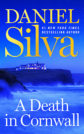
Excerpt

Pontedera PROLOGUE PORT NAVAS, CORNWALL
By coincidence it was Timothy Peel who first learned that the stranger had returned to Cornwall. He made the discovery shortly before midnight on a rain-swept Wednesday in mid- September. And only because he had politely declined the persis­tent entreaties from the boys at work to attend the midweek bash at the Godolphin Arms up in Marazion.

It was a mystery to Peel why they still bothered to invite him. Truth be told, he had never cared much for the company of drinkers. And these days, whenever he set foot in a pub, there was at least one intoxicated soul who would try to badger him into talking about “little Adam Hathaway.” Six months earlier, in one of the most dramatic rescues in the history of the Royal Na­tional Lifeboat Institution, Peel had plucked the six-year-old boy from the treacherous surf off Sennen Cove. The newspapers had crowned Peel a national hero but were then dumbfounded when the broad-shouldered twenty-two-year-old with movie-idol looks refused to grant a single interview. Peel’s silence privately an­noyed his colleagues, any one of whom would have leapt at the chance for a few moments of celebrity, even if it meant reciting the old clichés about “the importance of teamwork” and “the proud traditions of a proud service.” Nor did it sit well with the beleaguered residents of West Cornwall, who were always look­ing for a good reason to boast about a local boy and stick it to the English snobs from “up-country.” From Falmouth Bay to Land’s End, the mere mention of Peel’s name invariably provoked a puzzled shake of the head. A bit odd, they would say. Always was. Must have been the divorce. Never knew his real father. And that mother! Always took up with the wrong sort. Remember Derek, the whiskey-soaked playwright? Heard he used to beat the lad. At least that was the rumor in Port Navas.

It was true about the divorce. And even the beatings. In fact, most of the idle gossip about Peel had a ring of accuracy. But none of it had anything to do with his refusal to accept his role as hero. Peel’s silence was a tribute to a man he had known only briefly, a long time ago. A man who had lived just up Port Navas Quay in the old foreman’s cottage near the oyster farm. A man who had taught him how to sail and how to repair old mo­torcars; who had taught him about the power of loyalty and the beauty of opera. A man who had taught him there was no reason to boast simply for doing one’s job.

The man had a poetic foreign-sounding name, but Peel had always thought of him only as the stranger. He had been Peel’s accomplice, Peel’s guardian angel. And even though he had been gone from Cornwall for many years now, Peel occasionally still watched for him, just as he had when he was a boy of eleven. Peel still had the dog-eared logbook he had kept of the stranger’s erratic comings and goings, and the photos of the eerie white lights that used to glow in the stranger’s cottage at night. And even now, Peel could picture the stranger at the wheel of his be­loved wooden ketch, coming up the Helford Passage after a long night alone on the sea. Peel would always be waiting in his bed­room window, his arm raised in a silent salute. And the stranger, when he spotted him, would always flash his running lights twice in response.

There were few reminders of those days left in Port Navas. Peel’s mother had moved to the Algarve coast of Portugal with her new lover. Derek the drunken playwright was rumored to be living in a beachfront hut in Wales. And the old foreman’s cottage had been completely renovated and was now owned by posh weekenders from London who threw loud parties and were for­ever yelling at their spoiled children. All that remained of the stranger was his ketch, which he had bequeathed to Peel the night he fled Cornwall for parts unknown.

On that rainy evening in mid-September, the boat was bob­bing at its mooring in the tidal creek, waves nudging gently against its hull, when an unfamiliar engine note lifted Peel from his bed and carried him back to his familiar outpost in the window. There, peering into the wet gloom, he spotted a metallic gray Range Rover making its way slowly along the road. It came to a stop outside the old foreman’s cottage and idled a moment, headlamps doused, wipers beating a steady rhythm. Then the driver’s-side door suddenly swung open, and a figure emerged wearing a dark green Barbour raincoat and a waterproof flat cap pulled low over his brow. Even from a distance, Peel knew instantly it was the stranger. It was the walk that betrayed him—the confident, pur­poseful stride that seemed to propel him effortlessly toward the edge of the quay. He paused there briefly, carefully avoiding the pool of light from the single lamp, and stared at the ketch. Then he quickly descended the flight of stone steps to the river and disappeared from view.

At first, Peel wondered whether the stranger had come back to lay claim to the boat. But that fear receded when he sud­denly reappeared, clutching a small parcel in his left hand. It was about the size of a hardcover book and appeared to be wrapped in plastic. Judging from the coat of slime on the surface, the package had been concealed for a long time. Peel had once imag­ined the stranger to be a smuggler. Perhaps he had been right after all.

It was then Peel noticed that the stranger was not alone. Someone was waiting for him in the front seat of the Rover. Peel couldn’t quite make out the face, only a silhouette and a halo of riotous hair. He smiled for the first time. It seemed the stranger finally had a woman in his life.

Peel heard the muffled thump of a door closing and saw the Rover lurch instantly forward. If he hurried, there was just enough time to intercept it. Instead, in the grips of a feeling he had not known since childhood, he stood motionless in the window, arm raised in a silent salute. The Rover gathered speed and for an in­stant Peel feared the stranger had not seen the signal. Then it slowed suddenly and the headlamps flashed twice before passing beneath Peel’s window and vanishing into the night.

Peel remained at his post a moment longer, listening as the sound of the engine faded into silence. Then he climbed back into bed and pulled his blankets beneath his chin. His mother was gone, Derek was in Wales, and the old foreman’s cottage was under foreign occupation. But for now, Peel was not alone. The stranger had returned to Cornwall.

http://spidercreative.co.uk/category/digital/ PART 1
PROVENANCE I GLASTONBURY, ENGLAND

Though the stranger did not know it, two disparate series of events were by that night already conspiring to lure him back onto the field of battle. One was being played out behind the locked doors of the world’s secret intelligence services while the other was the subject of a global media frenzy. The newspapers had dubbed it “the summer of theft,” the worst epidemic of art heists to sweep Europe in a generation. Across the Continent, priceless paintings were disappearing like postcards plucked from the rack of a sidewalk kiosk. The anguished masters of the art universe had professed shock over the rash of robberies, though the true professionals inside law enforcement admitted it was small wonder there were any paintings left to steal. “If you nail a hundred million dollars to a poorly guarded wall,” said one be­leaguered official from Interpol, “it’s only a matter of time before a determined thief will try to walk away with it.”

The brazenness of the criminals was matched only by their competence. That they were skilled was beyond question. But what the police admired most about their opponents was their iron discipline. There were no leaks, no signs of internal intrigue, and not a single demand for ransom—at least not a real one. The thieves stole often but selectively, never taking more than a single painting at a time. These were not amateurs looking for quick scores or organized crime figures looking for a source of underworld cash. These were art thieves in the purest sense. One weary detective predicted that in all likelihood the paintings taken that long, hot summer would be missing for years, if not decades. In fact, he added morosely, chances were extremely good they would find their way into the Museum of the Missing and never be seen by the public again.

Even the police marveled at the variety of the thieves’ game. It was a bit like watching a great tennis player who could win on clay one week and grass the next. In June, the thieves recruited a disgruntled security guard at the Kunsthistorisches Museum in Vienna and carried out an overnight theft of Caravaggio’s David with the Head of Goliath. In July, they opted for a daring commando-style raid in Barcelona and relieved the Museu Picasso of Portrait of Señora Canals. Just one week later, the lovely Maisons à Fenouil­let vanished so quietly from the walls of the Matisse Museum in Nice that bewildered French police wondered whether it had grown a pair of legs and walked out on its own. And then, on the last day of August, there was the textbook smash-and-grab job at the Courtauld Gallery in London that netted Self-Portrait withBandaged Ear by Vincent van Gogh. Total time of the operation was a stunning ninety-seven seconds—even more impressive given the fact that one of the thieves had paused on the way out a second- floor window to make an obscene gesture toward Mo­digliani’s lusciousFemale Nude. By that evening, the surveillance video was required viewing on the Internet. It was, said the Cour­tauld’s distraught director, a fitting end to a perfectly dreadful summer.

The thefts prompted a predictable round of finger-pointing over lax security at the world’s museums. The Times reported that a recent internal review at the Courtauld had strongly recom­mended moving the Van Gogh to a more secure location. The findings had been rejected, however, because the gallery’s director liked the painting exactly where it was. Not to be outdone, the Telegraph weighed in with an authoritative series on the financial woes affecting Britain’s great museums. It pointed out that the Na­tional Gallery and the Tate didn’t even bother to insure their col­lections, relying instead on security cameras and poorly paid guards to keep them safe. “We shouldn’t be asking ourselves how it is great works of art disappear from museum walls,” the renowned London art dealer Julian Isherwood told the newspaper. “Instead, we should be asking ourselves why it doesn’t happen more often. Little by little, our cultural heritage is being plundered.”

The handful of museums with the resources to increase secu­rity rapidly did so while those living hand to mouth could only bar their doors and pray they were not next on the thieves’ list. But when September passed without another robbery, the art world breathed a collective sigh of relief and blithely reassured itself the worst had passed. As for the world of mere mortals, it had already moved on to weightier matters. With wars still raging in Iraq and Afghanistan, and the global economy still teetering on the edge of the abyss, few could muster a great deal of moral outrage over the loss of four rectangles of canvas covered in paint. The head of one international-aid organization estimated that the combined value of the missing works could feed the hungry in Africa for years to come. Would it not be better, she asked, if the rich did something more useful with their excess millions than line their walls and fill their secret bank vaults with art?

Such words were heresy to Julian Isherwood and his brethren, who depended on the avarice of the rich for their living. But they did find a receptive audience in Glastonbury, the ancient city of pilgrimage located west of London in the Somerset Levels. In the Middle Ages, the Christian faithful had flocked to Glastonbury to see its famous abbey and to stand beneath the Holy Thorn tree, said to have sprouted when Joseph of Arimathea, disciple of Jesus, laid his walking stick upon the ground in the Year of Our Lord 63. Now, two millennia later, the abbey was but a glorious ruin, the remnants of its once-soaring nave standing forlornly in an emerald parkland like gravestones to a dead faith. The new pil­grims to Glastonbury rarely bothered to visit, preferring instead to traipse up the slopes of the mystical hill known as the Tor or to shuffle past the New Age paraphernalia shops lining the High Street. Some came in search of themselves; others, for a hand to guide them. And a few actually still came in search of God. Or at least a reasonable facsimile of God.

Christopher Liddell had come for none of these reasons. He had come for a woman and stayed for a child. He was not a pil­grim. He was a prisoner.

It was Hester who had dragged him here—Hester, his great­est love, his worst mistake. Five years earlier, she had demanded they leave Notting Hill so she could find herself in Glastonbury. But in finding herself, Hester discovered the key to her happiness lay in shedding Liddell. Another man might have been tempted to leave. But while Liddell could live without Hester, he could not contemplate life without Emily. Better to stay in Glastonbury and suffer the pagans and druids than return to London and become a faded memory in the mind of his only child. And so Liddell buried his sorrow and his anger and soldiered on. That was Lid­dell’s approach to all things. He was reliable. In his opinion, there was no better thing a man could be.

Glastonbury was not entirely without its charms. One was the Hundred Monkeys café, purveyor of vegan and environmen­tally friendly cuisine since 2005, and Liddell’s favorite haunt. Lid­dell sat at his usual table, a copy of the Evening Standard spread protectively before him. At an adjacent table, a woman of late middle age was reading a book entitledAdult Children: The Secret Dysfunction. In the far back corner, a bald prophet in flowing white pajamas was lecturing six rapt pupils about something to do with Zen spiritualism. And at the table nearest the door, hands bunched contemplatively beneath an unshaved chin, was a man in his thir­ties. His eyes were flickering over the bulletin board. It was filled with the usual rubbish—an invitation to join the Glastonbury Positive Living Group, a free seminar on owl pellet dissection, an advertisement for Tibetan pulsing healing sessions—but the man appeared to be scrutinizing it with an unusual devotion. A cup of coffee stood before him, untouched, next to an open notebook, also untouched. A poet searching for the inspiration, thought Lid­dell. A polemicist waiting for the rage.

Liddell examined him with a practiced eye. He was dressed in tattered denim and flannel, the Glastonbury uniform. His hair was dark and pulled back into a stubby ponytail, his eyes were nearly black and slightly glazed. On the right wrist was a watch with a thick leather band. On the left were several cheap silver bracelets. Liddell searched the hands and forearms for evidence of tattoos but found none. Odd, he thought, for in Glastonbury even grandmothers proudly sported their ink. Pristine skin, like sun in winter, was rarely seen.

The waitress appeared and flirtatiously placed a check in the center of Liddell’s newspaper. She was a tall creature, quite pretty, with pale hair parted in the center and a tag on her snug-fitting sweater that read GRACE. Whether it was her name or the state of her soul, Liddell did not know. Since Hester’s departure, he had lost the capacity to converse with strange women. Besides, there was someone else in his life now. She was a quiet girl, forgiving of his failings, grateful for his affections. And most of all, she needed him as much he needed her. She was the perfect lover. The perfect mistress. And she was Christopher Liddell’s secret.

He paid the bill in cash—he was at war with Hester over credit cards, along with nearly everything else—and made for the door. The poet-polemicist was scribbling furiously on his pad. Liddell slipped past and stepped into the street. A prickly mist was falling, and from somewhere in the distance he could hear the beating of drums. Then he remembered it was a Thursday, which meant it was shamanic drum therapy night at the Assembly Rooms.

He crossed to the opposite pavement and made his way along the edge of St. John’s Church, past the parish preschool. Tomor­row afternoon at one o’clock, Liddell would be standing there among the mothers and the nannies to greet Emily as she emerged. By judicial fiat he had been rendered little more than a babysitter. Two hours a day was his allotted time, scarcely enough for more than a spin on the merry-go-round and a bun in the sweets shop. Hester’s revenge.

He turned into Church Lane. It was a narrow alleyway bordered on both sides by high stone walls the color of flint. As usual, the only lamp was out, and the street was black as pitch. Liddell had been meaning to buy a small torch, like the ones his grand­parents had carried during the war. He thought he heard foot­falls behind him and peered over his shoulder into the gloom. It was nothing, he decided, just his mind playing tricks. Silly you, Christopher, he could hear Hester saying. Silly, silly you.

At the end of the lane was a residential district of terraced cot­tages and semidetached houses. Henley Close lay at the northern­most edge, overlooking a sporting field. Its four cottages were a bit larger than most in the neighborhood and were fronted by walled gardens. In Hester’s absence, the garden at No. 8 had taken on a melancholy air of neglect that was beginning to earn Liddell nasty looks from the couple next door. He inserted his key and turned the latch. Stepping into the entrance hall, he was greeted by the chirping of the security alarm. He entered the disarm code into the keypad—an eight-digit numeric version of Emily’s birth date—and climbed the stairs to the top floor. The girl waited there, cloaked in darkness. Liddell switched on a lamp.

She was seated in a wooden chair, a wrap of jeweled silk draped over her shoulders. Pearl earrings dangled at the sides of her neck; a gold chain lay against the pale skin of her breasts. Liddell reached out and gently stroked her cheek. The years had lined her face with cracks and creases and yellowed her alabaster skin. It was no matter; Liddell possessed the power to heal her. In a glass beaker, he prepared a colorless potion—two parts acetone, one part methyl proxitol, and ten parts mineral spirits—and moist­ened the tip of a cotton-wool swab. As he twirled it over the curve of her breast, he looked directly into her eyes. The girl stared back at him, her gaze seductive, her lips set in a playful half smile.

Liddell dropped the swab to the floor and fashioned a new one. It was then he heard a noise downstairs that sounded like the snap of a lock. He sat motionless for a moment, then tilted his face toward the ceiling and called, “Hester? Is that you?” Receiv­ing no reply, he dipped the fresh swab in the clear potion and once again twirled it carefully over the skin of the girl’s breast. A few seconds later came another sound, closer than the last, and dis­tinct enough for Liddell to realize he was no longer alone.

Rotating his body quickly atop the stool, he glimpsed a shad­owed figure on the landing. The figure took two steps forward and calmly entered Liddell’s studio. Flannel and denim, dark hair pulled into a stubby ponytail, dark eyes—the man from the Hun­dred Monkeys. It was clear he was neither a poet nor a polemicist. He had a gun in his hand, and it was pointed directly at Liddell’s heart. Liddell reached for the flask of solvent. He was reliable. And for that he would soon be dead.

Share

Praise

Hypnotic prose, well-drawn characters and nonstop action will thrill Silva’s fans and convert the uninitiated.”
—People magazine

In [Gabriel] Allon, Silva has created a credible secret agent with skills that would make James Bond weep.”
—NPR Commentator Alan Cheuse/The Dallas Morning News
Read the full book review

THE REMBRANDT AFFAIR is Daniel Silva’s best thriller to date, and that’s saying a lot, for all of the books in the Gabriel Allon series have been stellar. Silva has an uncanny handle on world politics and how they affect the global population, not to mention an entertaining forum for getting his audience to pay attention to current affairs. There couldn’t be a much more time-appropriate plot than this one, nor one that can so touch its readers’ hearts. This is definitely a novel not to be missed!”
—Kate Ayers, Bookreporter.com

The latest Allon thriller is a terrific tale that has a different feel to the story line. The tale starts off as a mystery, but the clues turn the plot into an action-packed espionage thriller. Fast-paced regardless of genre, The Rembrandt Affair has the hero doing his usual quality job as he comes out of retirement to try to prevent the illegal sales to Iran. The escapades never stop until after the final confrontation; yet the key that refreshes this entry is Allon, who on the surface seems the same as in his previous appearances, but long time fans will notice subtle but fascinating differences.”
—Harriet Klausner, Genre Go Round Reviews

Share

Interview with Ari Shamron

Ari Shamron, the legendary spymaster from the acclaimed Gabriel Allon series, answers the ten questions from the Pivot Questionnaire made familiar by James Lipton, host of “Inside the Actors Studio” on  Bravo.

By Daniel Silva

It was a few minutes past ten p.m. when the phone in my Jerusalem hotel room finally rang. I let it ring two more times before answering. I’d been waiting for three days to have a word with Ari Shamron, and didn’t want to seem too eager.

“Is this Daniel?” asked the voice at the other end.

“Who else would it possibly be?”

“A friend? A cousin? How should I know?”

“You should know,” I said, unable to conceal my irritation, “because this room is thoroughly bugged.”

“You have a vivid imagination, Daniel.”

“It’s a professional affliction.”

“This is your lucky night. He’s agreed to see you.”

“When?”

“Now, of course.”

“It’s late.”

“Not for him. He hasn’t slept in years.”

“Where should I go?”

“There’s a car in front of the hotel. Get in it.”

The line went dead. I dressed quickly and went downstairs. The “car” turned out to be an armored Peugeot limousine with bulletproof windows. Judging by the smell of stale smoke, it was Shamron’s.

It was a cloudless night, and the sky above Jerusalem was awash with stars. We headed down the Judean Hills toward Tel Aviv, then north toward Nazareth. By the time we reached the Sea of Galilee, it was approaching midnight. Shamron’s fortress-like villa was just outside Tiberias, overlooking the lakeshore. As we eased slowly up the steep drive, I could see him standing along the balustrade of his famous terrace. He remained that way for an uncomfortably long moment after Rami, the chief of his security detail, announced my arrival.

“This is a first for me,” he said finally. “I’ve never spoken to a reporter for any reason other than to mislead one of my enemies.”

“I’m not a reporter,” I said defensively. “Not anymore.”

“Once a reporter, always a reporter.”

He turned to face me. He was smaller than I’d imagined and obviously in dreadful health. Even so, he was still not someone I would care to meet in a dark alley.

“How many questions are there?” he asked, his tone accusatory.

“Ten,” I replied.

“Like the Commandments?”

“They’re nowhere near as important as the Commandments, Mr. Shamron.”

“Then why wouldn’t you give me them in advance?”

“I wanted your responses to be spontaneous.”

He frowned. A professional spy, Ari Shamron regarded spontaneity as the vice of weaker minds.

Annoyed, he sighed heavily and raised a liver-spotted hand toward a pair of comfortable patio chairs. I sat in the chair on the right, the one usually reserved for Gabriel, and admired the view of the lake. Shamron’s old Zippo lighter flared, and a cloud of acrid smoke drifted into my face. I resisted the impulse to wave it away. Gabriel had warned me that Shamron was easily irritated.

“You saw him in Cornwall?” he asked after a moment.

I nodded.

“He was well?”

“As well as could be expected.”

Shamron smiled sadly. “All right,” he said, “let’s get this over with. What’s the first question?”

“What is your favorite word?”

“Are they all going to be so trite?” He deliberated a moment before answering. “Peace is my favorite word. I’ve never known a single days’ peace in my life. Not in Poland. Not here. I would like to know what peace feels like before I die.”

“What is your least favorite word?”

“How did Gabriel answer that question?”

“I’d rather not say.”

Shamron regarded me suspiciously. “My least favorite word is ‘no.’ Now that I’m old, it seems to happen with far greater frequency.”

“What turns you on creatively, spiritually or emotionally?”

“A problem no one else can solve.”

“What turns you off?”

“Answering personal questions.”

“What sound or noise do you love?”

“I loved the sound Adolf Eichmann made when I clamped my hand over his mouth that night in Argentina.” Shamron squeezed my forearm. “It was a most satisfying sound.”

“What sound or noise do you hate?”

“The sound of the telephone ringing late at night. It is rarely good news.”

“What is your favorite curse word?”

“That depends on what language I’m speaking.”

“Your first language is Polish?”

“Yiddish, actually.”

“So what is your favorite curse word in Yiddish?”

“It is not translatable.”

“What profession other than your own would you like to attempt?”

“My mother wanted me to be a rabbi.”

“Did you ever consider it?”

“I built a country for my people instead. And then I spent the rest of my life defending it.”

“What profession would you not like to do?”

“I could never be a therapist. I don’t like listening to people complain.” He tapped his cigarette impatiently against the side of his overflowing ashtray. “By my count, you have one more question.”

“If Heaven exists, what would you like to hear God say when you arrive at the Pearly Gates?”

“God and I confer on a regular basis,” he said, smiling. “Our conversations are private, and they will remain so.”

I closed my notebook. He seemed disappointed.

“Are you sure there’s nothing else you wish to ask me? This will be your only chance.”

I opened my notebook and said, “Tell me about that night in Argentina. The night you captured Eichmann.”

Shamron lapsed into silence. When finally he spoke again, it was with the voice of a younger man. “It was raining,” he said, gazing out at the black waters of the lake, “and very cold. The moment Eichmann stepped off that bus, I knew it was him … ”

Share

Interview with Gabriel Allon

Art restorer, spy, and assassin Gabriel Allon answers the ten questions from the Pivot Questionnaire made familiar by James Lipton, host of the “Inside the Actors Studio” on the Bravo television channel.

BY DANIEL SILVA

THERE WERE PHONE CALLS that went unanswered and e-mails that received no reply, but then, I expected nothing less. I knew him well enough to realize it wasn’t something he would relish doing. Finally, after much pleading and negotiation, he agreed to my request. There was only one condition: he insisted on seeing me face-to-face. Through an intermediary, he instructed me to come to the Polpeor Café at the tip of the Lizard Peninsula, in West Cornwall. I arrived, as instructed, promptly at two in the afternoon, and at 2:15 saw him emerge from a veil of sea fog along the rim of Kynance Cove. He wore a dark green Barbour raincoat and a flap cap pulled low over his brow. After carefully shaking my hand, he led me to a table near the window. He had tea but nothing else. He made me feel uncomfortable. It was one of his many gifts.

“Do we really have to do this?” he asked.

“They say it’s necessary.”

“For what?”

“It’s complicated.”

“You’re just a writer. How complicated can it be?” He added milk to

his tea and stirred it solemnly. “You know I don’t like to do these things.”

He sighed heavily, as if resigned to his fate. “All right,” he

said, “let’s get this over with. What’s the first question?”

“What is your favorite word?”

“What kind of question is that?”

“Just answer it.”

“Chiara,” he said. “Chiara is my favorite word.”

“What is your least favorite word?”

“Shamron.”

“You don’t really mean that.”

“No, but it felt good to say it.”

“How is he, by the way?”

“As ever.”

“And Gilah?”

“She lives with Shamron. How do you think she’s doing?”

“What is your least favorite word?” I asked again.

“Switzerland.” His emerald-green eyes seemed to twinkle.

“What turns you on creatively, spiritually or emotionally?”

“You don’t really expect me to answer that?”

“Just try.”

He thought it over for a moment and smiled. “Listening to Chiara

sing when she thinks she’s alone.”

“What turns you off?”

“Answering these questions.”

“What sound or noise do you love?”

“The silence of a Venetian church at dawn.”

“What sound or noise do you hate?”

“The sound of a bomb exploding.”

“What is your favorite curse word?”

“I try not to swear.”

“What profession other than your own would you like to attempt?”

“I already have two professions.”

“What profession would you not like to do?”

“I could never work in a hospital.” He frowned. “How many more?”

“Just one,” I said. “If Heaven exists, what would you like to hear

God say when you arrive at the Pearly Gates?”

“Your son is waiting for you,” he said without hesitation. He looked

at me seriously for a moment. “Are we finished?”

“We’re finished.”

“Can I go now?”

I nodded. He swallowed the last of his tea and rose to his feet. I

saw him one last time as he made his way swiftly along the cliffs tops.

Then he vanished into the mist and was gone.


Share

Behind the Series

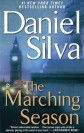
In 2000, after publishing The Marching Season, the second book in the Michael Osbourne series, I decided it was time for a change. We were nearing the end of the Clinton administration, and the president was about to embark on a final, last-ditch effort to bring peace to the Middle East. I had the broad outlines of a story in mind. It was the story of a hard-line Palestinian terrorist who wanted to torpedo the peace process by carrying out a wave of high-profile attacks in Europe and America. And it was the story of an Israeli assassin and intelligence officer who would be given the assignment of stopping him. The Palestinian would be called Tariq al-Hourani. The Israeli, as yet, had no name, and I thought long and hard before giving him one. I wanted it to be biblical, like my own. I finally decided to name him after the archangel Gabriel. It is a beautiful name, and it is filled with much religious and historical symbolism. Gabriel is the mightiest of God’s angels and His most important messenger. He is the prince of fire and the guardian of Israel. And, perhaps most important, Gabriel is the angel of revenge. I decided that Gabriel’s last name should short, simple, and somewhat neutral: Allon. In Hebrew, it means “oak tree.” I liked the image it conveyed, for Gabriel Allon was definitely solid as an oak.

Unlike the archangel Gabriel, who is said to reside at the right hand of God, Gabriel Allon the man was born in a small, dusty agricultural town in the Jezreel Valley of Israel. His parents were German Holocaust survivors and spoke German at home. As a result, young Gabriel’s first language was German rather than Hebrew, and German remains the language of his dreams to this day. We know little about Gabriel’s father, other than the fact that he was killed during the Six-Day War in 1967. His mother, Irene, was the far more dominant force in his life. The daughter of Viktor Frankel, a well-known German expressionist painter who was murdered at Auschwitz in 1942, she was one of the most important painters in the young State of Israel. Gabriel inherited his mother’s artistic talent and, after completing his mandatory service in the Israeli army, entered the Bezalel Academy of Art and Design in Jerusalem, Israel’s national school of art. He was studying there in September 1972, when Palestinian terrorists kidnapped and murdered eleven Israeli athletes and coaches at the Olympic Games in Munich, Germany. A week after the massacre, a man came to Bezalel to see Gabriel. He was a small, wiry figure with hands that looked as though they had been borrowed from someone twice his size and teeth that looked like a steel trap. His name was Ari Shamron, and he was about to forever change the course of young Gabriel’s life.

Ari Shamron was a legendary operative in the Israeli secret service whose exploits included the 1960 capture of Adolf Eichmann, the architect of the Final Solution. On that day in September 1972, he had just been given a new assignment by Prime Minister Golda Meir: to hunt down and kill the Black September terrorists responsible for the massacre in Munich, many of whom were living openly in Europe. To carry out that task, he needed a young man who could move around the continent without attracting unwanted attention. He needed a young man who could speak a European language and who had the emotional coldness necessary to kill many men at close quarters. He chose the child of Holocaust survivors who still spoke German in his dreams. After undergoing a month of intense training, Gabriel was sent to Rome, where he killed a man named Wadal Abdel Zwaiter, Black September’s chief of operations in Italy. Over the next three years, Gabriel would kill five more terrorists, all at close range with a .22 caliber Beretta.

In 1975, when returned to Israel at the end of the mission, his appearance had changed dramatically. He looked much older than his twenty-five years and his hair had gone to gray at his temples—“smudges of ash on the prince of fire,” as Shamron liked to say. Haunted by the faces of the men whom he had killed, Gabriel found he could no longer paint. With Shamron’s help, he settled in Venice under an assumed identity and served an apprenticeship with master art restorer Umberto Conti. For the next fifteen years, he lived exclusively in Europe, restoring paintings under the name Mario Delvecchio and carrying out assassinations for the State of Israel. In 1991, at the beginning of the first Gulf War, he was tracking the movements of a terrorist in Vienna when a concealed bomb exploded in his car, killing his young son and grievously wounding his wife, Leah. The terrorist who carried out the attack was named Tariq al-Hourani, the man whom Gabriel would be assigned to kill nine years later.

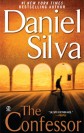
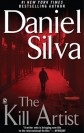
The story of that assignment is told in The Kill Artist, which was supposed to be the first and only Gabriel Allon novel. I never liked the title. In fact, I loath it to this day. It was forced on me by an editor I otherwise adored because he didn’t like the title I had placed on the manuscript, which was Prince of Fire. Despite the title, the book was an instant New York Times bestseller. When I moved to Putnam in 2001, the legendary publisher Phyllis Grann suggested that I turn Gabriel into a continuing character. I thought it was a terrible idea, and I told her so. I felt there was too much anti-Semitism in the world, and far too much hatred of Israel, to make a continuing Israeli character palatable to a mass audience. She told me I was wrong and ordered me to get to work on the follow-up. It was called The English Assassin, and it sold nearly twice as many copies as The Kill Artist. The next book, The Confessor, sold even more. In fact, each of the novels as sold more than its predecessor. For the record, Phyllis Grann was right, and I was wrong.

I am asked often whether it is necessary to read the novels in order. The answer is no, but it probably doesn’t hurt. For the record, the order of publication is as follows: The Kill ArtistThe English AssassinThe ConfessorA Death in ViennaPrince of FireThe MessengerThe Secret Servant, and Moscow Rules. The stories follow a familiar pattern fans of the series have come to expect: Gabriel is drawn out of retirement or seclusion, usually by a murder or some other act of violence, and soon finds himself at the center of a fast-paced, swirling international adventure. Several memorable sub-characters appear throughout the series: Eli Lavon, the surveillance artist and Gabriel’s old friend from the Black September operation; Uzi Navot, the chief of the Special Operations directorate who forever toils in Gabriel’s shadow; Julian Isherwood, the London art dealer and volunteer helper of Israeli intelligence who provides legitimate work for Gabriel’s cover; Adrian Carter, the deputy director of the CIA; and, of course, Ari Shamron, the legendary former chief of Israeli intelligence who refuses to allow Gabriel to live in peace.

The series contains two internal trilogies. The first consists of The English AssassinThe Confessor, and A Death in Vienna and explores what I call “the unfinished business of the Holocaust.” The English Assassin deals with Nazi art looting and the actions of Switzerland during the Second World War. The Confessor wrestles with the role of the Roman Catholic Church during the Holocaust and the actions, or lack thereof, of Pope Pius XII. A Death in Vienna tells the story of Gabriel’s quest to bring justice to a Nazi war criminal, a man whom his mother encountered during the Death March from Auschwitz in January 1945. It remains my favorite.

The second internal trilogy consists of Prince of FireThe Messenger, and The Secret Servant and deals with the question of terrorism in the modern world. Prince of Fire explores the roots of Palestinian terrorism through a story of revenge, The Messenger takes a hard look at the role Saudi Arabia played in creating al-Qaeda and its affiliates, and The Secret Servant surveys the rise of militant Islam in Europe.

Moscow Rules, the eighth book in the series, finds Gabriel on assignment in the New Russia. He has changed much since we first met him. He is a bit older, much wiser, and his cover has been blown many times over. He is a friend of both the American president and the Pope, and moves at the highest levels of Western intelligence in London and Washington. He has returned to Europe and resides now on a secluded estate in Umbria, where he restores paintings in secret for the Vatican Picture Gallery. After many years of dithering, he has finally come to his senses and married Chiara Zolli, a beautiful Venetian Jew whom he first met during the course of The Confessor. Like Gabriel, Chiara works as an undercover operative for Israeli intelligence. She is interested in starting a family. Gabriel, who lost one family to his enemies, is not at all sure he’s capable of having another.

As for his first wife, Leah, she resides now in a psychiatric hospital on Mount Herzl in Jerusalem, locked in a prison of memory. From her favorite spot in the hospital’s garden, she can see across Jerusalem to the spot on the Mount of Olives, where her only son is buried. Gabriel’s encounters with Leah are some of the most touching and memorable scenes in the series. They are also highly symbolic. Scarred by fire, Leah resembles a canvas that has suffered significant paint losses. She is the one thing Gabriel cannot restore. She is the price he has paid for a life spent battling the forces of evil—a life that began one day in September 1972, when a man named Ari Shamron came to the Bezalel Academy of Fine Art and Design and asked a gifted young painter to lay down his brushes and pick up a gun instead.


Share

Excerpt

Part One: Death in the Garden

1. THE LIZARD PENINSULA, CORNWALL

It was the Rembrandt that solved the mystery once and for all. Afterward, in the quaint shops where they did their marketing and the dark little seaside pubs where they did their drinking, they would chide themselves for having missed the tell-tale signs, and they would share a good-natured laugh at some of their more outlandish theories about the true nature of his work. Because in their wildest dreams there was not one among them who ever considered the possibility that the taciturn man from the far end of Gunwalloe Cove was an art restorer, and a world-famous art restorer at that.

He was not the first outsider to wander down to Cornwall with a secret to keep, yet few had guarded theirs more jealously, or with more style and intrigue. A case in point was the peculiar manner in which he had secured lodgings for himself and his beautiful but much younger wife. Having chosen the picturesque cottage at the edge of the cliffs—by all accounts, sight unseen—he had paid the entire twelve-month lease in advance, with all the paperwork handled discreetly by an obscure lawyer in Hamburg. He settled into the cottage a fortnight later as if he were conducting a raid on a distant enemy outpost. Those who met him during his first forays into the village were struck by his notable lack of candor. He seemed to have no name—at least not one he was willing to share—and no country of origin that any of them could place. Duncan Reynolds, thirty years retired from the railroad and regarded as the worldliest of Gunwalloe’s residents, described him as “a cipher of a man” while other reviews ranged from “standoffish” to “unbearably rude.” Even so, all agreed that, for better or worse, the little west Cornish village of Gunwalloe had become a far more interesting place.

With time, they were able to establish that his name was Giovanni Rossi and that, like his beautiful wife, he was of Italian descent. Which made it all the more curious when they began to notice government-issue cars filled with government-issue men prowling the streets of the village late at night. And then there were the two blokes who sometimes fished the cove. Opinion was universal that they were the worst fishermen anyone had ever seen. In fact, most assumed they were not fishermen at all. Naturally, as is wont to happen in a small village like Gunwalloe, there began an intense debate about the true identity of the newcomer and the nature of his work—a debate that was finally resolved by Portrait of a Young Woman, oil on canvas, 104 by 86 centimeters, by Rembrandt van Rijn.

Precisely when it arrived would never be clear. They assumed it was sometime in mid-January because that was when they noticed a dramatic change in his daily routine. One day he was marching along the rugged cliff tops of the Lizard Peninsula as though wrestling with a guilty conscience; the next he was standing before an easel in his living room, a paintbrush in one hand, a palette in the other, and opera music blasting so loudly you could hear the wailing clear across Mount’s Bay in Marazion. Given the proximity of his cottage to the Coastal Path, it was possible—if one paused in just the right spot, mind you, and craned one’s neck at just the right angle—to see him in his studio. At first, they assumed he was working on a painting of his own. But as the weeks ground slowly past, it became clear he was involved in the craft known as conservation or, more commonly, as restoration.

“Hell’s that mean?” Malcolm Braithwaite, a retired lobsterman who smelled perpetually of the sea, asked one evening at the Lamb and Flag pub.

“It means he’s fixing the bloody thing,” said Duncan Reynolds. “A painting is like a living, breathing thing. When it gets old, it flakes and sags—just like you, Malcolm.”

“I hear it’s a young girl.”

“Pretty,” said Duncan, nodding his head. “Cheeks like apples. She looks positively edible.”

“Do we know the artist?”

“Still working on that.”

And work on it they did. They consulted many books, searched many sites on the Internet, and sought out people who knew more about art than they did—a category that included most of the population of West Cornwall. Finally, in early April, Dottie Cox from the village store screwed up the nerve to simply ask the beautiful young Italian woman about the painting when she came into town to do her marketing. The woman evaded the question with an ambiguous smile. Then, with her straw bag slung over her shoulder, she sauntered back down to the cove, her riotous dark hair tossed by the springtime wind. Within minutes of her arrival, the wailing of the opera ceased and the window shades of the cottage fell like eyelids.

They remained tightly closed for the next week, at which point the restorer and his beautiful wife disappeared without warning. For several days, the residents of Gunwalloe feared they might not be planning to return, and a few actually berated themselves for having snooped and pried into the couple’s private affairs. Then, while leafing through theTimes one morning at the village store, Dottie Cox noticed a story from Washington, D.C., about the unveiling of a long-lost portrait by Rembrandt—a portrait that looked precisely like the one that had been in the cottage at the far end of the cove. And thus the mystery was solved.

Coincidentally, that same edition of the Times contained a front-page article about a series of mysterious explosions at four secret Iranian nuclear facilities. No one in Gunwalloe imagined there might be any connection. At least not yet.

***

The restorer was a changed man when he came back from America; they could see that. Though he remained guarded in his personal encounters—and he was still not the sort you would want to surprise in the dark—it was obvious a great burden had been lifted from his shoulders. They saw a smile on his angular face every now and again, and the light emitted by his unnaturally green eyes seemed a shade less defensive. Even his long daily walks had a different quality. Where once he had pounded along the footpaths like a man possessed, he now seemed to float atop the mist-covered cliffs like an Arthurian spirit who had come home after a long time in a distant land.

“Looks to me as if he’s been released from a sacred vow,” observed Vera Hobbs, owner of the village bakeshop. But when asked to venture a guess as to what that vow might have been, or to whom he had sworn it, she refused. Like everyone else in town, she had made a fool of herself trying to divine his occupation. “Besides,” she advised, “it’s better to leave him in peace. Otherwise, the next time he and his pretty wife leave the Lizard, it might be for good.”

Indeed, as that glorious summer slowly faded, the restorer’s future plans became the primary preoccupation of the entire village. With the lease on the cottage running out in September, and with no tangible evidence he was planning to renew it, they embarked on a covert effort to persuade him to stay. What the restorer needed, they decided, was something to keep him tethered to the Cornish coast—a job that utilized his unique set of skills and gave him something to do other than walk the cliffs. Exactly what that job might entail, and who would give it to him, they had no idea, but they entrusted to themselves the delicate task of trying to find it.

After much deliberation, it was Dottie Cox who finally hit upon the idea of the First Annual Gunwalloe Festival of Fine Arts, with the famous art restorer Giovanni Rossi serving as honorary chairman. She made the suggestion to the restorer’s wife the following morning when she popped into the village store at her usual time. The woman actually laughed for several minutes. The offer was flattering, she said after regaining her composure, but she didn’t think it was the sort of thing Signor Rossi would agree to. His official rejection came soon after, and the Gunwalloe Festival of Fine Arts quietly withered on the vine. It was no matter; a few days later, they learned that the restorer had taken the cottage for another year. Once again, the lease was paid in full, with all the paperwork handled by the same obscure lawyer in Hamburg.

With that, life returned to something like normal. They would see the restorer in mid-morning when he came to the village with his wife to do their marketing, and they would see him again in mid-afternoon when he hiked along the cliff tops in his Barbour coat and his flat cap pulled low over his brow. And if he failed to give them a proper greeting, they took no offense. And if he seemed uneasy about something, they gave him room to work it out on his own. And if a stranger came to town, they tracked his every move until he was gone. The restorer and his wife might have come from Italy originally, but they belonged to Corn-wall now, and heaven help the fool who ever tried to take them away again.

There were, however, some on the Lizard who believed there was more to the story—and one man in particular who believed he knew what it was. His name was Teddy Sinclair, owner of a rather good pizzeria in Helston and a subscriber to conspiracy theories large and small. Teddy believed the moon landings were a hoax. Teddy believed 9/11 was an inside job. And Teddy believed the man from Gunwalloe Cove was hiding more than a secret ability to heal paintings.

To prove his case once and for all, he summoned the villagers to the Lamb and Flag on the second Thursday of November and unveiled a chart that looked a bit like the periodic table of elements. It purported to establish, beyond a shadow of a doubt, that the explosions at the Iranian nuclear facilities were the work of a legendary Israeli intelligence officer named Gabriel Allon—and that the same Gabriel Allon was now living peacefully in Gunwalloe under the name Giovanni Rossi. When the laughter finally died down, Duncan Reynolds called it the dumbest thing he’d heard since some Frenchman decided that Europe should have a common currency. But this time Teddy stood his ground, which in hindsight was the right thing to do. Because Teddy might have been wrong about the moon landings, and wrong about 9/11, but when it came to the man from Gunwalloe Cove, his theory was in every respect true.

The next morning, Remembrance Day, the village woke to the news that the restorer and his wife had disappeared. In a panic, Vera Hobbs hurried down to the cove and peered through the windows of the cottage. The restorer’s supplies were scattered across a low table, and propped on the easel was a painting of a nude woman stretched upon a couch. It took Vera a moment to realize that the couch was identical to the one in the living room, and that the woman was the same one she saw each morning in her bakeshop. Despite her embarrassment, Vera couldn’t seem to summon the will to look away, because it happened to be one of the most strikingly beautiful paintings she had ever seen. It was also a very good sign, she thought as she headed back to the village. A painting like that was not the sort of thing a man left behind when he was making a run for it. Eventually, the restorer and his wife would come back. And heaven help that bloody Teddy Sinclair if they didn’t.

2. PARIS

The first bomb exploded at 11:46 a.m., on the Avenue des Champs-Élysées in Paris. The director of the French security service would later say he received no warning of the impending attack, a statement his detractors might have found laughable were the death toll not so high. The warning signs were plain to see, they said. Only the blind or the willfully ignorant could have possibly missed them.

From Europe’s point of view, the timing of the attack could not have been worse. After decades of lavish social spending, much of the Continent was teetering on the brink of fiscal and monetary disaster. Its debt was soaring, its treasuries were empty, and its pampered citizenry was aging and disillusioned. Austerity was the order of the day. In the current climate, no cow was considered too sacred; health care, university tuition, support for the arts, and even pension benefits were all undergoing drastic cuts. Along Europe’s so-called periphery, the smaller economies were falling like dominoes. Greece was sinking slowly into the Aegean, Spain was on life support, and the Irish Miracle had turned out to be nothing more than a mirage. In the smart salons of Brussels, many Eurocrats were daring to say aloud what had once been unthinkable— that the dream of European integration was dying. And in their darker moments, a few of them actually wondered whether Europe as they knew it might be dying, too.

Another article of faith lay in tatters that November—the belief that Europe could absorb an endless tide of Muslim immigrants from its former colonies while preserving its culture and basic way of life. What had started as a temporary program to relieve a postwar labor shortage had now permanently altered the face of an entire continent. Restive Muslim suburbs ringed nearly every city, and several countries appeared demographically fated to Muslim majorities before the end of the century. No one in a position of power had bothered to consult the native population of Europe before throwing open the doors, and now, after years of relative passivity, the natives were beginning to push back. Denmark had imposed draconian restrictions on immigrant marriages. France had banned the wearing of the full facial veil in public. And the Swiss, who barely tolerated one another, had decided they wanted to keep their tidy little cities and towns free of unsightly minarets. The leaders of Britain and Germany had declared multiculturalism, the virtual religion of post-Christian Europe, a dead letter. No longer would the majority bend to the will of the minority, they declared. Nor would it turn a blind eye to the extremism that flourished within its midst. Europe’s age-old contest with Islam, it seemed, had entered a new and potentially dangerous phase. There were many who feared it would be an uneven fight. One side was old, tired, and largely content with itself. The other could be driven into a murderous frenzy by a doodle in a Danish newspaper.

Nowhere were the problems facing Europe on clearer display than in Clichy-sous-Bois, the volatile Arab banlieue located just outside Paris. The flashpoint for the deadly riots that swept France in 2005, the suburb had one of the country’s highest unemployment rates, along with one of the highest rates of violent crime. So dangerous was Clichy-sous-Bois that even the French police refrained from entering its seething public housing estates—including the one where Nazim Kadir, a twenty-six-year-old Algerian employed by the celebrated Fouquet’s restaurant, lived with twelve other members of his extended family.

On that morning in November, he left his apartment in darkness to purify himself at a mosque built with Saudi money and staffed by a Saudi-trained imam who spoke no French. After completing this most important pillar of Islam, he rode a 601AB bus to the suburb of Le Raincy and then boarded an RER train to the Gare Saint-Lazare. There he switched to the Paris Métro for the final leg of his journey. At no point did he arouse the suspicions of the authorities or his fellow passengers. His heavy coat concealed the fact he was wearing an explosive vest.

He emerged from the George V stop at his usual time, 11:40, and started up the Avenue des Champs-Élysées. Those lucky enough to survive the inferno to come would later say there was nothing unusual in his appearance, though the owner of a popular flower shop claimed to notice a curious determination in his gait as he closed in on the entrance of the restaurant. Among those standing outside were a deputy minister of justice, a newsreader from French television, a fashion model currently gracing the cover of Vogue magazine, a Gypsy beggar clutching the hand of a small child, and a noisy group of Japanese tourists. The bomber made one final check of his watch. Then he unzipped his coat.

It was never clearly established whether the act was preceded by the traditional scream of “Allahu Akbar.” Several survivors claimed to have heard it; several others swore the bomber detonated his device in silence. As for the sound of the explosion itself, those closest had no memory of it at all, for their eardrums were too badly damaged. To a person, all recalled seeing a blinding white flash of light. It was the light of death, said one. The light one sees at the moment he confronts God for the first time.

The bomb itself was a marvel of design and construction. It was not the kind of device built from Internet manuals or the how-to pamphlets floating around the Salafist mosques of Europe. It had been perfected under battle conditions in Palestine and Mesopotamia. Packed with nails soaked in rat poison—a practice borrowed from the suicide bombers of Hamas—it carved through the crowd like a circular saw. So powerful was the explosion that the Louvre Pyramid, located a mile and a half to the east, shivered with the blast wave. Those closest to the bomber were blown to pieces, sheared in half, or decapitated, the preferred punishment for unbelievers. Even at forty paces, limbs were lost. At the farthest edge of the kill zone, the dead appeared pristine. Spared outward trauma, they had been killed by the shock wave, which ravaged their internal organs like a tsunami. Providence had granted them the tender mercy of bleeding to death in private.

The first gendarmes to arrive were instantly sickened by what they saw. Extremities littered the paving stones, along with shoes, smashed wristwatches frozen at 11:46, and mobile phones that rang unanswered. In one final insult, the murderer’s remains were scattered among his victims—everything but the head, which came to rest on a delivery truck more than a hundred feet away, the bomber’s expression oddly serene.

The French interior minister arrived within ten minutes of the explosion. Seeing the carnage, he declared, “Baghdad has come to Paris.” Seventeen minutes later, it came to the Tivoli Gardens in Copenhagen, where, at 12:03 p.m., a second suicide bomber detonated himself amid a large group of children waiting impatiently to board the park’s roller coaster. The Danish security service, the PET, quickly established that the shahid had been born in Copenhagen, had attended Danish schools, and was married to a Danish woman. It seemed not to trouble him that his own children attended the same school as his victims.

For the security professionals across Europe it was the nightmare scenario come true—coordinated and highly sophisticated attacks that appeared to have been planned and executed by a skilled mastermind. They feared the terrorists would strike again soon, though two critical pieces of information eluded them. They did not know where. And they did not know when.

Share

Praise

Silva’s 11th thriller about ex-Mossad operative and art restorer Gabriel Allon finds his hero in a tough spot. He must persuade Nadia, the daughter of a terrorist he killed, to spy for the West. Can she forgive him and infiltrate a group of extremists? All we’ll reveal: The courageous Nadia will seize your attention, as will Allon’s frantic efforts to stop a future terrorist attack.”
—Parade magazine

If you are not yet in the Silva fold, pick up Portrait of a Spy and get introduced. This is suspense writing at its best and character writing that will stay with you for a long, long time.”
—Huffington Post

A must-read. Scary, intelligent and paced with the speed of a bullet, Silva’s latest Allon installment is a blockbuster…. Daniel Silva seems to have an uncanny understanding of the extremist mindset. His novels can serve as much more than entertainment; they can be looked at as wake-up calls.”
—Bookreporter

A superb story…an exciting, action-packed thriller that takes the reader on a journey through such locales as England, Paris, Washington DC, Saudi Arabia, and New York.”
—American Thinker

Share

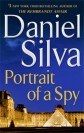
Portrait of a Spy

Gabriel Allon, master art restorer and spy, returns in a spellbinding new novel from the #1 New York Timesbestselling author Daniel Silva.

Gabriel Allon has been hailed as the most compelling creation since “Ian Fleming put down his martini and invented James Bond” (Rocky Mountain News),and “one of the most intriguing heroes of any thriller series” (Philadelphia Inquirer). A man with a deep appreciation for all that is beautiful, Gabriel is also an angel of vengeance who will stop at nothing to see justice done. Sometimes he must journey far in search of evil. And sometimes evil comes to him.

In a dangerous world, one extraordinary woman can mean the difference between life and death . . .

For Gabriel and his beautiful Venetian-born wife, Chiara, a pleasant weekend in London turns deadly when the newly retired operative spots a man exhibiting traits common to suicide bombers. But before Gabriel can prevent the attack, he is knocked to the pavement and can only watch as a scene from his nightmares unfolds.

Haunted by his failure to stop the massacre of innocents, Gabriel returns to his isolated cottage on the cliffs of Cornwall, until a summons brings him to Washington and he is drawn into a confrontation with the new face of global terror. At the center of the threat is an American-born cleric in Yemen to whom Allah has granted “a beautiful and seductive tongue.” A gifted deceiver, who was once a paid CIA asset, the mastermind is plotting a new wave of attacks.

Gabriel and his team devise a daring plan to destroy the network of death—from the inside—a gambit fraught with risk, both personal and professional. To succeed, Gabriel must reach into his violent past. A woman waits there—a reclusive Saudi heiress and art collector who can traverse the murky divide between Islam and the West. She is the daughter of an old enemy, a woman joined to Gabriel by a trail of blood. Together they form an unlikely and dangerous bond.

Set against the disparate worlds of art and intelligence, Portrait of a Spy  moves swiftly from the corridors of power in Washington, to the glamorous auction houses of New York and London, to the unforgiving landscape of the Saudi desert. Featuring a climax that will leave readers haunted long after they turn the final page, this deeply entertaining story is also a breathtaking portrait of courage in the face of unspeakable evil—and Daniel Silva’s most extraordinary novel to date.

amazon

bn

bam

ibooks

audible

indiebound

Buy: HC.com

Share

The Rembrandt Affair

Two families, one terrible secret, and a painting to die for …

Determined to sever his ties with the Office, Gabriel Allon has retreated to the windswept cliffs of Cornwall with his beautiful Venetian-born wife Chiara. But once again his seclusion is interrupted by a visitor from his tangled past: the endearingly eccentric London art dealer, Julian Isherwood. As usual, Isherwood has a problem– one only Gabriel can solve.

In the ancient English city of Glastonbury, an art restorer has been brutally murdered and a long-lost portrait by Rembrandt mysteriously stolen. Despite his reluctance, Gabriel is persuaded to use his unique skills to search for the painting and those responsible for the crime. But as he painstakingly follows a trail of clues leading from Amsterdam to Buenos Aires and, finally, to a villa on the graceful shores of Lake Geneva, Gabriel discovers there are deadly secrets connected to the painting. And evil men behind them.

Before he is done, Gabriel will once again be drawn into a world he thought he had left behind forever, and will come face to face with a remarkable cast of characters: a glamorous London journalist who is determined to undo the worst mistake of her career, an elusive master art thief who is burdened by a conscience, and a powerful Swiss billionaire who is known for his good deeds but may just be behind one of the greatest threats facing the world.

Filled with remarkable twists and turns of plot, and told with seductive prose, The Rembrandt Affair is more than just summer entertainment of the highest order. It is a timely reminder that there are men in the world who will do anything for money.

amazon

bn

bam

ibooks

audible

indiebound

Share

The Defector

In the #1 New York Times bestseller Moscow Rules, Gabriel Allon brought down the most dangerous man in the world. But he made one mistake. Leaving him alive…

Over the course of a brilliant career, Daniel Silva has established himself as the “gold standard” of thriller writers (Dallas Morning News), a “master writer of espionage and intrigue” (The Cincinnati Enquirer), and the creator of “some of the most exciting spy fiction since Ian Fleming put down his martini and invented James Bond” (Rocky Mountain News). Now Silva takes that fiction—and his hero, the enigmatic art restorer and assassin Gabriel Allon—to a whole new level, delivering a riveting tale of vengeance that entertains as well as enlightens.

Six months after the dramatic conclusion of Moscow Rules, Gabriel has returned to the tan hills of Umbria to resume his honeymoon with his new wife, Chiara, and restore a seventeenth-century altarpiece for the Vatican. But his idyllic world is once again thrown into turmoil with shocking news from London. The defector and former Russian intelligence officer Grigori Bulganov, who saved Gabriel’s life in Moscow, has vanished without a trace. British intelligence is sure he was a double agent all along, but Gabriel knows better. He also knows he made a promise.

In the days to come, Gabriel and his team of operatives will find themselves in a deadly duel of nerve and wits with one of the world’s most ruthless men: the murderous Russian oligarch and arms dealer Ivan Kharkov. It will take him from a quiet mews in London, to the shores of Lake Como, to the glittering streets of Geneva and Zurich, and, finally, to a heart-stopping climax in the snowbound birch forests of Russia. Faced with the prospect of losing the one thing he holds most dear, Gabriel will be tested in ways he never imagined possible. And his life will never be the same.

Filled with breathtaking turns of plot and sophisticated prose, and populated by a remarkable cast of characters, The Defector is more than the most explosive thriller of the year. It is a searing tale of love, vengeance and courage created by the writer whom the critics call “the perfect guide to the dangerous forces shaping our world” (Orlando Sentinel). And it is Daniel Silva’s finest novel yet.

amazon

bn

bam

ibooks

audible

indiebound

Share