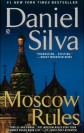
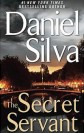
Praise

A passionate, intelligently crafted entry that cements the series’ place among today’s top spy fiction. The structure is classic.”
Publishers Weekly (starred review)

[A] TENSE CAT-AND-MOUSE PLOT.”
The New Yorker

“AN INTRICATE WEB OF DECEIT AND DOUBLE-CROSS.”
USA Today

A STORY THAT SEEMS RIPPED FROM THE HEADLINES…CHILLING SUSPENSE.”
Booklist

[A] rare combination of fine characters, compelling writing and suspenseful plotting that will reach out and grab readers. Silva moves the story along quickly, creating a frightening network of spies and counterspies. [His] plotting is ingenious and clear. Silva handles the twists and turns so well it’s a waste of time to try to guess where it’s going. It goes places readers can’t predict and then goes further.”
Detroit Free Press

Daniel Silva…handles his theme of revenge-and its effect on those it touches-adroitly but without encroaching on the pure pleasure of reading a first-rate thriller.”
Rocky Mountain News

Allon puts together a Mission: Impossible team of Israelis to pursue the scion of a family dynasty of Palestinian militants. But nothing is easy or uncomplicated in spy thrillers. Allon and his buds are sucked into an intricate web of deceit and double-cross. Not to mention a lot of carnage.”
USA Today

Silva keeps getting better.”
Library Journal

Share

Excerpt

want to buy prednisone Chapter 1
London

IT WAS ALI MASSOUDI who unwittingly roused Gabriel Allon from his brief and restless retirement: Massoudi, the great Europhile intellectual and freethinker, who, in a moment of blind panic, forgot that the English drive on the left side of the road.

The backdrop for his demise was a rain-swept October evening in Bloomsbury. The occasion was the final session of the first annual Policy Forum for Peace and Security in Palestine, Iraq, and Beyond. The conference had been launched early that morning amid great hope and fanfare, but by day’s end it had taken on the quality of a traveling production of a mediocre play. Even the demonstrators who came in hope of sharing some of the flickering spotlight seemed to realize they were reading from the same tired script. The American president was burned in effigy at ten. The Israeli prime minister was put to the purifying flame at eleven. At lunchtime, amid a deluge that briefly turned Russell Square into a pond, there had been a folly having something to do with the rights of women in Saudi Arabia. At eight-thirty, as the gavel came down on the final panel, the two dozen stoics who had stayed to the end filed numbly toward the exits. Organizers of the affair detected little appetite for a return engagement next autumn.

A stagehand stole forward and removed a placard from the rostrum that read: GAZA IS LIBERATED-WHAT NOW? The first panelist on his feet was Sayyid of the London School of Economics, defender of the suicide bombers, apologist for al-Qaeda. Next was the austere Chamberlain of Cambridge, who spoke of Palestine and the Jews as though they were still the quandary of gray-suited men from the Foreign Office. Throughout the discussion the aging Chamberlain had served as a sort of Separation Fence between the incendiary Sayyid and a poor soul from the Israeli embassy named Rachel who had drawn hoots and whistles of disapproval each time she’d opened her mouth. Chamberlain tried to play the role of peacekeeper now as Sayyid pursued Rachel to the door with taunts that her days as a colonizer were drawing to an end.

Ali Massoudi, graduate professor of global governance and social theory at the University of Bremen, was the last to rise. Hardly surprising, his jealous colleagues might have said, for among the incestuous world of Middle Eastern studies, Massoudi had the reputation of one who never willingly relinquished a stage. Palestinian by birth, Jordanian by passport, and European by upbringing and education, Professor Massoudi appeared to all the world like a man of moderation. The shining future of Arabia, they called him. The very face of progress. He was known to be distrustful of religion in general and militant Islam in particular. In newspaper editorials, in lecture halls, and on television, he could always be counted on to lament the dysfunction of the Arab world. Its failure to properly educate its people. Its tendency to blame the Americans and the Zionists for all its ailments. His last book had amounted to a clarion call for an Islamic Reformation. The jihadists had denounced him as a heretic. The moderates had proclaimed he had the courage of Martin Luther. That afternoon he had argued, much to Sayyid’s dismay, that the ball was now squarely in the Palestinian court. Until the Palestinians part company with the culture of terror, Massoudi had said, the Israelis could never be expected to cede an inch of the West Bank. Nor should they. Sacrilege, Sayyid had cried. Apostasy.

Professor Massoudi was tall, a bit over six feet in height, and far too good looking for a man who worked in close proximity to impressionable young women. His hair was dark and curly, his cheekbones wide and strong, and his square chin had a deep notch in the center. The eyes were brown and deeply set and lent his face an air of profound and reassuring intelligence. Dressed as he was now, in a cashmere sport jacket and cream-colored rollneck sweater, he seemed the very archetype of the European intellectual. It was an image he worked hard to convey. Naturally deliberate of movement, he packed his papers and pens methodically into his well-traveled briefcase, then descended the steps from the stage and headed up the center aisle toward the exit.

Several members of the audience were loitering in the foyer. Standing to one side, a stormy island in an otherwise tranquil sea, was the girl. She wore faded jeans, a leather jacket, and a checkered Palestinian kaffiyeh round her neck. Her black hair shone like a raven’s wing. Her eyes were nearly black, too, but shone with something else. Her name was Hamida al-Tatari. A refugee, she had said. Born in Amman, raised in Hamburg, now a citizen of Canada residing in North London. Massoudi had met her that afternoon at a reception in the student union. Over coffee she had fervently accused him of insufficient outrage over the crimes of the Americans and Jews. Massoudi had liked what he had seen. They were planning to have drinks that evening at the wine bar next to the theater in Sloane Square. His intentions weren’t romantic. It wasn’t Hamida’s body he wanted. It was her zeal and her clean face. Her perfect English and Canadian passport.

She gave him a furtive glance as he crossed the foyer but made no attempt to speak to him. Keep your distance after the symposium, he had instructed her that afternoon. A man in my position has to be careful about who he’s seen with. Outside he sheltered for a moment beneath the portico and gazed at the traffic moving sluggishly along the wet street. He felt someone brush against his elbow, then watched as Hamida plunged wordlessly into the cloudburst. He waited until she was gone, then hung his briefcase from his shoulder and set out in the opposite direction, toward his hotel in Russell Square.

The change came over him-the same change that always occurred whenever he moved from one life to the other. The quickening of the pulse, the sharpening of the senses, the sudden fondness for small details. Such as the balding young man, walking toward him beneath the shelter of an umbrella, whose gaze seemed to linger on Massoudi’s face an instant too long. Or the newsagent who stared brazenly into Massoudi’s eyes as he purchased a copy of the Evening Standard. Or the taxi driver who watched him, thirty seconds later, as he dropped the same newspaper into a rubbish bin in Upper Woburn Place.

A London bus overtook him. As it churned slowly past, Massoudi peered through the fogged windows and saw a dozen tired-looking faces, nearly all of them black or brown. The new Londoners, he thought, and for a moment the professor of global governance and social theory wrestled with the implications of this. How many secretly sympathized with his cause? How many would sign on the dotted line if he laid before them a contract of death?

In the wake of the bus, on the opposite pavement, was a single pedestrian: oilskin raincoat, stubby ponytail, two straight lines for eyebrows. Massoudi recognized him instantly. The young man had been at the conference-same row as Hamida but on the opposite side of the auditorium. He’d been sitting in the same seat earlier that morning, when Massoudi had been the lone dissenting voice during a panel discussion on the virtue of barring Israeli academics from European shores.

Massoudi lowered his gaze and kept walking, while his left hand went involuntarily to the shoulder strap of his briefcase. Was he being followed? If so, by whom? MI5 was the most likely explanation. The most likely, he reminded himself, but not the only one. Perhaps the German BND had followed him to London from Bremen. Or perhaps he was under CIA surveillance.

But it was the fourth possibility that made Massoudi’s heart bang suddenly against his rib cage. What if the man was not English, or German, or American at all? What if he worked for an intelligence service that showed little compunction about liquidating its enemies, even on the streets of foreign capitals. An intelligence service with a history of using women as bait. He thought of what Hamida had said to him that afternoon.

I grew up in Toronto, mostly. 

And before that? 

Amman when I was very young. Then a year in Hamburg. I’m a Palestinian, Professor. My home is a suitcase.”

Massoudi made a sudden turn off Woburn Place, into the tangle of side streets of St. Pancras. After a few paces he slowed and looked over his shoulder. The man in the oilskin coat had crossed the street and was following after him.

HE QUICKENED his pace, made a series of turns, left and right. Here a row of mews houses, here a block of flats, here an empty square littered with dead leaves. Massoudi saw little of it. He was trying to keep his orientation. He knew London’s main thoroughfares well enough, but the backstreets were a mystery to him. He threw all tradecraft to the wind and made regular glances over his shoulder. Each glance seemed to find the man a pace or two closer.

He came to an intersection, looked left, and saw traffic rushing along the Euston Road. On the opposite side, he knew, lay King’s Cross and St. Pancras stations. He turned in that direction, then, a few seconds later, glanced over his shoulder. The man had rounded the corner and was coming after him.

He began to run. He had never been much of an athlete, and years of academic pursuits had robbed his body of fitness. The weight of the laptop computer in his briefcase was like an anchor. With each stride the case banged against his hip. He secured it with his elbow and held the strap with his other hand, but this gave his stride an awkward galloping rhythm that slowed him even more. He considered jettisoning it but clung to it instead. In the wrong hands the laptop was a treasure trove of information. Personnel, surveillance photographs, communications links, bank accounts

He stumbled to a stop at the Euston Road. Glancing over his shoulder, he saw his pursuer still plodding methodically toward him, hands in his pockets, eyes down. He looked to his left, saw empty asphalt, and stepped off the curb.

The groan of the lorry horn was the last sound Ali Massoudi ever heard. At impact the briefcase broke free of him. It took flight, turned over several times as it hovered above the road, then landed on the street with a solid thud. The man in the oilskin raincoat barely had to break stride as he bent down and snared it by the strap. He slipped it neatly over his shoulder, crossed the Euston Road, and followed the evening commuters into King’s Cross.


Chapter 2
Jerusalem

THE BRIEFCASE HAD REACHED Paris by dawn, and by eleven it was being carried into an anonymous-looking office block on King Saul Boulevard in Tel Aviv. There the professor’s personal effects were hastily inspected, while the hard drive of his laptop computer was subjected to a sustained assault by a team of technical wizards. By three that afternoon the first packet of intelligence had been forwarded to the Prime Minister’s Office in Jerusalem, and by five a manila file folder containing the most alarming material was in the back of an armored Peugeot limousine heading toward Narkiss Street, a quiet leafy lane not far from the Ben Yehuda Mall.

The car stopped in front of the small apartment house at Number 16. Ari Shamron, the twice former chief of the Israeli secret service, now special adviser to the prime minister on all matters dealing with security and intelligence, emerged from the backseat. Rami, the black-eyed chief of his personal security detail, moved silently at his heels. Shamron had made countless enemies during his long and turbulent career, and because of Israel’s tangled demographics, many were uncomfortably close. Shamron, even when he was inside his fortresslike villa in Tiberias, was surrounded always by bodyguards.

He paused for a moment on the garden walkway and looked up. It was a dowdy little building of Jerusalem limestone, three floors in height, with a large eucalyptus tree in front that cast a pleasant shadow over the front balconies. The limbs of the tree were swaying in the first cool wind of autumn, and from the open window on the third floor came the sharp odor of paint thinner.

Shamron, as he entered the foyer, glanced at the mailbox for apartment number three and saw it was absent a nameplate. He mounted the stairs and tramped slowly upward. He was short of stature and was dressed, as usual, in khaki trousers and a scuffed leather jacket with a tear in the right breast. His face was full of cracks and fissures, and his remaining fringe of gray hair was cropped so short as to be nearly invisible. His hands were leathery and liver-spotted and seemed to have been borrowed from a man twice his size. In one was the file.

The door was ajar when he arrived on the third-floor landing. He placed his fingers against it and gently pushed. The flat he entered had once been meticulously decorated by a beautiful Italian-Jewish woman of impeccable taste. Now the furniture, like the beautiful Italian woman, was gone, and the flat had been turned into an artist’s studio. Not an artist, Shamron had to remind himself. Gabriel Allon was a restorer-one of the three or four most sought-after restorers in the world. He was standing now before an enormous canvas depicting a man surrounded by large predatory cats. Shamron settled himself quietly on a paint-smudged stool and watched him work for a few moments. He had always been mystified by Gabriel’s ability to imitate the brushstrokes of the Old Masters. To Shamron it was something of a parlor trick, just another of Gabriel’s gifts to be utilized, like his languages or his ability to get a Beretta off his hip and into firing position in the time it takes most men to clap their hands.

“It certainly looks better than when it first arrived,” Shamron said, “but I still don’t know why anyone would want to hang it his home.”

“It won’t end up in a private home,” Gabriel said, his brush to the canvas. “This is a museum piece.”

“Who painted it?” Shamron asked abruptly, as though inquiring about the perpetrator of a bombing.

“Bohnams auction house in London thought it was Erasmus Quellinus,” Gabriel said. “Quellinus might have laid the foundations, but it’s clear to me that Rubens finished it for him.” He moved his hand over the large canvas. “His brushstrokes are everywhere.”

“What difference does it make?”

“About ten million pounds,” Gabriel said. “Julian is going to do very nicely with this one.”

Julian Isherwood was a London art dealer and sometime secret servant of Israeli intelligence. The service had a long name that had very little to do with the true nature of its work. Men like Shamron and Gabriel referred to it as the Office and nothing more.

“I hope Julian is giving you fair compensation.”

“My restoration fee, plus a small commission on the sale.”

“What’s the total?”

Gabriel tapped his brush against his palette and resumed working.

“We need to talk,” Shamron said.

“So talk.”

“I’m not going to talk to your back.” Gabriel turned and peered at Shamron once more through the lenses of his magnifying visor. “And I’m not going to talk to you while you’re wearing those things. You look like something from my nightmares.”

Gabriel reluctantly set his palette on the worktable and removed his magnifying visor, revealing a pair of eyes that were a shocking shade of emerald green. He was below average in height and had the spare physique of a cyclist. His face was high at the forehead and narrow at the chin, and he had a long bony nose that looked as though it had been carved from wood. His hair was cropped short and shot with gray at the temples. It was because of Shamron that Gabriel was an art restorer and not one of the finest painters of his generation-and why his temples had turned gray virtually overnight when he was in his early twenties. Shamron had been the intelligence officer chosen by Golda Meir to hunt down and assassinate the perpetrators of the 1972 Munich Massacre, and a promising young art student named Gabriel Allon had been his primary gunman.

He spent a few moments cleaning his palette and brushes, then went into the kitchen. Shamron sat down at the small table and waited for Gabriel to turn his back before hurriedly lighting one of his foul-smelling Turkish cigarettes. Gabriel, hearing the familiar click-click of Shamron’s old Zippo lighter, pointed toward the Rubens in exasperation, but Shamron made a dismissive gesture and defiantly raised the cigarette to his lips. A comfortable silence settled between them while Gabriel poured bottled water into the teakettle and spooned coffee into the French press. Shamron was content to listen to the wind moving in the eucalyptus trees outside in the garden. Devoutly secular, he marked the passage of time not by the Jewish festivals but by the rhythms of the land-the day the rains came, the day the wildflowers exploded in the Galilee, the day the cool winds returned. Gabriel could read his thoughts. Another autumn, and we’re still here. The covenant had not been revoked.

“The prime minister wants an answer.” Shamron’s gaze still was focused on the tangled little garden. “He’s a patient man, but he won’t wait forever.”

“I told you that I’d give him an answer when I was finished with the painting.”

Shamron looked at Gabriel. “Does your arrogance know no bounds? The prime minister of the State of Israel wants you to be chief of Special Operations, and you put him off over some five-hundred year-old piece of canvas.”

Four hundred.”

Gabriel carried the coffee to the table and poured two cups. Shamron scooped sugar into his and gave it a single violent stir.

“You said yourself the painting is nearly finished. What is your answer going to be?”

“I haven’t decided.”

“May I offer you a piece of helpful advice?”

“And if I don’t want your advice?”

“I’d give it to you anyway.” Shamron squeezed the life out of his cigarette butt. “You should accept the prime minister’s offer before he makes it to someone else.”

“Nothing would make me happier.”

“Really? And what will you do with yourself?” Greeted by silence, Shamron pressed on. “Allow me to paint a picture for you, Gabriel. I’ll do the best I can. I’m not gifted like you. I don’t come from a great German-Jewish intellectual family. I’m just a poor Polish Jew whose father sold pots from the back of a handcart.”

Shamron’s murderous Polish accent had grown thicker. Gabriel couldn’t help but smile. He knew that whenever Shamron played the downtrodden Jew from Lvov, something entertaining was certain to follow.

“You have nowhere else to go, Gabriel. You said it yourself when we offered you the job the first time. What will you do when you’re finished with this Rubens of yours? Do you have any more work lined up?” Shamron’s pause was theatrical in nature, for he knew the answer was no. “You can’t go back to Europe until you’re officially cleared in the bombing of the Gare de Lyon. Julian might send you another painting, but eventually that will end, too, because the packing and shipping costs will cut into his already tenuous bottom line. Do you see my point, Gabriel?”

“I see it very clearly. You’re trying to use my unfortunate situation as a means of blackmailing me into taking Operations.”

“Blackmail? No, Gabriel. I know the meaning of blackmail, and God knows I’ve been known to use it when it suits my needs. But this is not blackmail. I’m trying to help you.”

“Help?”

“Tell me something, Gabriel: What do you plan to do for money?”

“I have money.”

“Enough to live like a hermit, but not enough to live.” Shamron lapsed into a momentary silence and listened to the wind. “It’s quiet now, isn’t it? Tranquil almost. It’s tempting to think it can go on like this forever. But it can’t. We gave them Gaza without demanding anything in return, and they repaid us by freely electing Hamas to be their rulers. Next they’ll want the West Bank, and if we don’t surrender it in short order, there’s going to be another round of bloodletting, much worse than even the second intifada. Trust me, Gabriel, one day soon it will all start up again. And not just here. Everywhere. Do you think they’re sitting on their hands doing nothing? Of course not. They’re planning the next campaign. They’re talking to Osama and his friends, too. We now know for a fact that the Palestinian Authority has been thoroughly penetrated by al-Qaeda and its affiliates. We also know that they are planning major attacks against Israel and Israeli targets abroad in the very near future. The Office also believes the prime minister has been targeted for assassination, along with senior advisers.”

“You included?”

“Of course,” Shamron said. “I am, after all, the prime minister’s special adviser on all matters dealing with security and terrorism. My death would be a tremendous symbolic victory for them.”

He looked out the window again at the wind moving in the trees. “It’s ironic, isn’t it? This place was supposed to be our sanctuary. Now, in an odd way, it’s left us more vulnerable than ever. Nearly half the world’s Jews live in this tiny strip of land. One small nuclear device, that’s all it would take. The Americans could survive one. The Russians might barely notice it. But us? A bomb in Tel Aviv would kill a quarter of the country’s population- maybe more.”

“And you need me to prevent this apocalypse? I thought the Office was in good hands these days.”

“Things are definitely better now that Lev has been shown the door. Amos is an extraordinarily competent leader and administrator, but sometimes I think he has a bit too much of the soldier in him.”

“He was chief of both the Sayeret Matkal and Aman. What did you expect?”

“We knew what we were getting with Amos, but the prime minister and I are now concerned that he’s trying to turn King Saul Boulevard into an outpost of the IDF. We want the Office to retain its original character.”

“Insanity?”

“Boldness,” countered Shamron. “Audacity. I just wish Amos would think a little less like a battlefield commander and a little more like . . .” His voice trailed off while he searched for the right word. When he found it, he rubbed his first two fingers against his thumb and said, “Like an artist. I need someone by his side who thinks more like Caravaggio.”

“Caravaggio was a madman.”

“Exactly.”

Shamron started to light another cigarette, but this time Gabriel managed to stay his hand before he’d struck his lighter. Shamron looked at him, his eyes suddenly serious.

“We need you now, Gabriel. Two hours ago the chief of Special Operations handed Amos his letter of resignation.”

“Why?”

“London.” Shamron looked down at his captured hand. “May I have that back?”

Gabriel let go of the thick wrist. Shamron rolled the unlit cigarette between his thumb and forefinger.

“What happened in London?” Gabriel asked.

“I’m afraid we had a bit of a mishap there last night.”

“A mishap? When the Office has a mishap, someone usually ends up dead.”

Shamron nodded in agreement. “Well, at least there’s something to be said for consistency.”

“DOES THE NAME Ali Massoudi mean anything to you?”

“He’s professor of something or other at a university in Germany,” Gabriel replied. “Likes to play the role of an iconoclast and a reformer. I actually met him once.”

Shamron’s eyebrows went up in surprise. “Really? Where?”

“He came to Venice a couple of years ago for a big Middle East symposium. As part of their stipend the participants got a guided tour of the city. One of their stops was the Church of San Zaccaria, where I was restoring the Bellini altarpiece.”

For several years Gabriel had lived and worked in Venice under the name Mario Delvecchio. Six months earlier he had been forced to flee the city after being discovered there by a Palestinian masterterrorist named Khaled al-Khalifa. The affair had ended at the Gare de Lyon, and in the aftermath Gabriel’s name and secret past had been splashed across the French and European press, including an exposé in The Sunday Times that referred to him as “Israel’s Angel of Death.” He was still wanted for questioning by the Paris police, and a Palestinian civil rights group had filed a lawsuit in London alleging war crimes.

“And you actually met Massoudi?” Shamron asked incredulously. “You shook his hand?”

“As Mario Delvecchio, of course.”

“I suppose you didn’t realize that you were shaking hands with a terrorist.”

Shamron stuck the end of the cigarette between his lips and struck his Zippo. This time Gabriel didn’t intervene.

“Three months ago we got a tip from a friend at the Jordanian GID that Professor Ali Massoudi, that great moderate and reformer, was actually a talent scout for al-Qaeda. According to the Jordanians, he was looking for recruits to attack Israeli and Jewish targets in Europe. Peace conferences and anti-Israel demonstrations were his favorite hunting grounds. We weren’t surprised by that part. We’ve known for some time that the peace conferences have become a meeting place for al-Qaeda operatives and European extremists of both the left-wing and right-wing variety. We decided it would be wise to put Professor Massoudi under watch. We got to the telephone in his apartment in Bremen, but the yield was disappointing, to put it mildly. He was very good on the phone. Then about a month ago, London Station chipped in with a timely piece of information. It seems the Cultural section of the London embassy had been asked to provide a warm body for something called the Policy Forum for Peace and Security in Palestine, Iraq, and Beyond. When Cultural asked for a list of the other participants, guess whose name appeared on it?”

“Professor Ali Massoudi.”

“Cultural agreed to send a representative to the conference, and Special Ops set its sights on Massoudi.”

“What kind of operation was it?”

“Simple,” Shamron said. “Catch him in the act. Compromise him. Threaten him. Turn him around. Can you imagine? An agent inside the al-Qaeda personnel department? With Massoudi’s help we could have rolled up their European networks.”

“So what happened?”

“We put a girl on his plate. She called herself Hamida al-Tatari. Her real name is Aviva and she’s from Ramat Gan, but that’s neither here nor there. She met Massoudi at a reception. Massoudi was intrigued and agreed to meet her again later that evening for a more lengthy discussion of the current state of the world. We followed Massoudi after the last session of the conference, but Massoudi apparently spotted the watcher and started to run. He looked the wrong way while crossing the Euston Road and stepped in front of a delivery truck.”

Gabriel winced.

“Fortunately we didn’t come away completely empty-handed,” Shamron said. “The watcher made off with Massoudi’s briefcase. Among other things it contained a laptop computer. It seems Professor Ali Massoudi was more than just a talent spotter.”

Shamron placed the file folder in front of Gabriel and, with a terse nod of his head, instructed Gabriel to open the cover. Inside he found a stack of surveillance photographs: St. Peter’s Square from a dozen different angles; the façade and interior of the Basilica; Swiss Guards standing watch at the Arch of Bells. It was clear the photos had not been taken by an ordinary tourist, because the cameraman had been far less interested in the visual aesthetics of the Vatican than the security measures surrounding it. There were several snapshots of the barricades along the western edge of the square and the metal detectors along Bernini’s Colonnade-and several more of the Vigilanza and Carabinieri who patrolled the square during large gatherings, including close-ups of their side arms. The final three photographs showed Pope Paul VII greeting a crowd in St. Peter’s Square in his glass-enclosed popemobile. The camera lens had been focused not on the Holy Father but on the plainclothes Swiss Guards walking at his side. Gabriel viewed the photos a second time. Based on the quality of the light and the clothing worn by the crowds of pilgrims, it appeared that they had been taken on at least three separate occasions. Repeated photographic surveillance of the same target, he knew, was a hallmark of a serious al-Qaeda operation. He closed the file and held it out to Shamron, but Shamron wouldn’t accept it. Gabriel regarded the old man’s face with the same intensity he’d studied the photographs. He could tell there was more bad news to come.

“Technical found something else on Massoudi’s computer,” Shamron said. “Instructions for accessing a numbered bank account in Zurich-an account we’ve known about for some time, because it’s received regular infusions of money from something called the Committee to Liberate al-Quds.” Al-Quds was the Arabic name for Jerusalem.

“Who’s behind it?” Gabriel asked.

“Saudi Arabia,” said Shamron. “To be more specific, the interior minister of Saudi Arabia, Prince Nabil.”

Inside the Office, Nabil was routinely referred to as the Prince of Darkness for his hatred of Israel and the United States and his support of Islamic militancy around the globe.

“Nabil created the committee at the height of the second intifada,” Shamron continued. “He raises the money himself and personally oversees the distribution. We believe he has a hundred million dollars at his disposal, and he’s funneling it to some of the most violent terror groups in the world, including elements of al-Qaeda.”

“Who’s giving Nabil the money?”

“Unlike the other Saudi charities, the Committee for the Liberation of al-Quds has a very small donor base. We think Nabil raises the money from a handful of Saudi multimillionaires.”

Shamron peered into his coffee for a moment. “Charity,” he said, his tone disdainful. “A lovely word, isn’t it? But Saudi charity has always been a two edged sword. The Muslim World League, the International Islamic Relief Organization, the al-Haramayn Islamic Foundation, the Benevolence International Foundation-they are to Saudi Arabia what the Comintern was to the old Soviet Union. A means of propagating the faith. Islam. And not just any form of Islam. Saudi Arabia’s puritanical brand of Islam. Wahhabism. The charities build mosques and Islamic centers around the world and madrassas that churn out the Wahhabi militants of tomorrow. And they also give money directly to the terrorists, including our friends in Hamas. The engines of America run on Saudi oil, but the networks of global Islamic terrorism run largely on Saudi money.”

“Charity is the third pillar of Islam,” Gabriel said. “zakat.”

“And a noble quality,” Shamron said, “accept when the zakat ends up in the hands of murderers.”

“Do you think Ali Massoudi was connected to the Saudis by more than money?”

“We may never know because the great professor is no longer with us. But whomever he was working for clearly has his sights set on the Vatican- and someone needs to tell them.”

“I suspect you have someone in mind for the job.”

“Consider it your first assignment as chief of Special Ops,” Shamron said. “The prime minister wants you to step into the breach.Immediately.”

“And Amos?”

“Amos has another name in mind, but the prime minister and I have made it clear to him who we want in the job.”

“My own record is hardly free of scandal, and unfortunately the world now knows about it.”

“The Gare de Lyon affair?” Shamron shrugged. “You were lured into it by a clever opponent. Besides, I’ve always believed that a career free of controversy is not a proper career at all. The prime minister shares that view.”

“Maybe that’s because he’s been involved in a few scandals of his own.”Italian soil-”

“There’s no need for you to go to Rome,” Shamron said, cutting him off. “Rome is coming to you.”

“Donati?”

Shamron nodded.

“How much did you tell him?”

“Enough for him to ask Alitalia if he could borrow a plane for a few hours,” Shamron said. “He’ll be here first thing in the morning. Show him the photographs. Tell him as much as you need to in order to impress upon him that we think the threat is credible.”

“And if he asks for help?”

Shamron shrugged. “Give him whatever he needs.”

Share

Praise

Silva, a master craftsman, offers a perfect blend of all that matters most in fiction — a significant theme, believable and engaging characters, authentic settings, and an engrossing plot — -detailed in precise prose that flows with seductive ease. Unlike other thriller writers who rely on tricks and seemingly endless (and ultimately unrealistic) twists for effect, Silva builds suspense through realistic threats, harrowing situations, and gripping action.”
Library Journal, starred review

An engrossing and beautifully written contemporary spy thriller.”
Booklist

Bestseller Silva continues to warrant comparisons to John le Carré, as shown by his latest thriller starring Israeli art restorer and spymaster Gabriel Allon…. The way Silva resolves his plot will keep readers right where he wants them: on the edges of their seats.”
Publishers Weekly

Share

Excerpt

1
Amsterdam

It was Professor Solomon Rosner who sounded the first alarm, though his name would never be linked to the affair except in the secure rooms of a drab office building in downtown Tel Aviv. Gabriel Allon, the legendary but wayward son of Israeli intelligence, would later observe that Rosner was the first asset in the annals of Office history to have proven more useful to them dead than alive. Those who overheard the remark found it uncharacteristically callous but in keeping with the bleak mood that by then had settled over them all.

The backdrop for Rosner’s demise was not Israel, where violent death occurs all too frequently, but the normally tranquil quarter of Amsterdam known as the Old Side. The date was the first Friday in December, and the weather was more suited to early spring than the last days of autumn. It was a day to engage in what the Dutch so fondly refer to as gezelligheid, the pursuit of small pleasures: an aimless stroll through the flower stalls of the Bloemenmarkt, a lager or two in a good bar in the Rembrandtplein, or, for those so inclined, a bit of fine cannabis in the brown coffeehouses of the Haarlemmerstraat. Leave the fretting and the fighting to the hated Americans, stately old Amsterdam murmured that golden late-autumn afternoon. Today we give thanks for having been born blameless and Dutch.

Solomon Rosner did not share the sentiments of his countrymen, but then he seldom did. Though he earned a living as a professor of sociology at the University of Amsterdam, it was Rosner’s Center for European Security Studies that occupied the lion’s share of his time. His legion of detractors saw evidence of deception in the name, for Rosner served not only as the center’s director but was its only scholar in residence. Despite those obvious shortcomings, the center had managed to produce a steady stream of authoritative reports and articles detailing the threat posed to the Netherlands by the rise of militant Islam within its borders. Rosner’s last book, The Islamic Conquest of the West, had argued that Holland was now under a sustained and systematic assault by jihadist Islam. The goal of this assault, he maintained, was to colonize the Netherlands and turn it into a majority Muslim state, where, in the not-too-distant future, Islamic law, or sharia, would reign supreme. The terrorists and the colonizers were two sides of the same coin, he warned, and unless the government took immediate and drastic action, everything the freethinking Dutch held dear would soon be swept away.

The Dutch literary press had been predictably appalled. Hysteria, said one reviewer. Racist claptrap, said another. More than one took pains to note that the views expressed in the book were all the more odious given the fact that Rosner’s grandparents had been rounded up with a hundred thousand other Dutch Jews and sent off to the gas chambers at Auschwitz. All agreed that what the situation required was not hateful rhetoric like Rosner’s but tolerance and dialogue. Rosner stood steadfast in the face of the withering criticism, adopting what one commentator described as the posture of a man with his finger wedged firmly in the dike. Tolerance and dialogue by all means, Rosner responded, but not capitulation. “We Dutch need to put down our Heinekens and hash pipes and wake up,” he snapped during an interview on Dutch television. “Otherwise, we’re going to lose our country.”

The book and surrounding controversy had made Rosner the most vilified and, in some quarters, celebrated man in the country. It had also placed him squarely in the sights of Holland’s homegrown Islamic extremists. Jihadist websites, which Rosner monitored more closely than even the Dutch police, burned with sacred rage over the book, and more than one forecast his imminent execution. An imam in the neighborhood known as the Oud West instructed his flock that “Rosner the Jew must be dealt with harshly” and pleaded for a martyr to step forward and do the job. The feckless Dutch interior minister responded by proposing that Rosner go into hiding, an idea Rosner vigorously refused. He then supplied the minister with a list of ten radicals he regarded as potential assassins. The minister accepted the list without question, for he knew that Rosner’s sources inside Holland’s extremist fringe were in most cases far better than those of the Dutch security services.

At noon on that Friday in December, Rosner was hunched over his computer in the second-floor office of his canal house at Groenburgwal 2A. The house, like Rosner himself, was stubby and wide, and tilted forward at a precarious angle, which some of the neighbors saw as fitting, given the political views of its occupant. If it had one serious drawback it was its location, for it stood not fifty yards from the bell tower of the Zuiderkirk church. The bells tolled mercilessly each day, beginning at the stroke of noon and ending forty-five minutes later. Rosner, sensitive to interruptions and unwanted noise, had been waging a personal jihad against them for years. Classical music, white-noise machines, soundproof headphones—all had proven useless in the face of the onslaught. Sometimes he wondered why they were rung at all. The old church had long ago been turned into a government housing office, a fact that Rosner, a man of considerable faith, saw as a fitting symbol of the Dutch morass. Confronted by an enemy of infinite religious zeal, the secular Dutch had turned their churches into bureaus of the welfare state. A church without faithful, thought Rosner, in a city without God.

At ten minutes past twelve he heard a faint knock and looked up to find Sophie Vanderhaus leaning against the doorjamb with a batch of files clutched to her breast. A former student of Rosner’s, she had come to work for him after completing a graduate degree on the impact of the Holocaust on postwar Dutch society. She was part secretary and research assistant, part nursemaid and surrogate daughter. She kept his office in order and typed the final drafts of all his reports and articles. She was the minder of his impossible schedule and tended to his appalling personal finances. She even saw to his laundry and made certain he remembered to eat. Earlier that morning she had informed him that she was planning to spend a week in Saint-Maarten over the New Year. Rosner, upon hearing the news, had fallen into a profound depression.

“You have an interview with De Telegraaf in an hour,” she said. “Maybe you should have something to eat and focus your thoughts.”

“Are you suggesting my thoughts lack focus, Sophie?”

“I’m suggesting nothing of the sort. It’s just that you’ve been working on that article since five-thirty this morning. You need something more than coffee in your stomach.”

“It’s not that dreadful reporter who called me a Nazi last year?”

“Do you really think I’d let her near you again?” She entered the office and started straightening his desk. “After the interview with De Telegraaf, you go to the NOS studios for an appearance on Radio One. It’s a call-in program, so it’s sure to be lively. Do try not to make any more enemies, Professor Rosner. It’s getting harder and harder to keep track of them all.”

“I’ll try to behave myself, but I’m afraid my forbearance is now gone forever.”

She peered into his coffee cup and pulled a sour face. “Why do you insist on putting out your cigarettes in your coffee?”

“My ashtray was full.”

“Try emptying it from time to time.” She poured the contents of the ashtray into his rubbish bin and removed the plastic liner. “And don’t forget you have the forum this evening at the university.”

Rosner frowned. He was not looking forward to the forum. One of the other panelists was the leader of the European Muslim Association, a group that campaigned openly for the imposition of sharia in Europe and the destruction of the State of Israel. It promised to be a deeply unpleasant evening.

“I’m afraid I’m coming down with a sudden case of leprosy,” he said.

“They’ll insist that you come anyway. You’re the star of the show.”

He stood and stretched his back. “I think I’ll go to Café de Doelen for a coffee and something to eat. Why don’t you have the reporter from De Telegraaf meet me there?”

“Do you really think that’s wise, Professor?”

It was common knowledge in Amsterdam that the famous café on the Staalstraat was his favorite haunt. And Rosner was hardly inconspicuous. Indeed, with his shock of white hair and rumpled tweed wardrobe, he was one of the most recognizable figures in Holland. The geniuses in the Dutch police had once suggested he utilize some crude disguise while in public, an idea Rosner had likened to putting a hat and a false mustache on a hippopotamus and calling it a Dutchman.

“I haven’t been to the Doelen in months.”

“That doesn’t mean it’s any safer.”

“I can’t live my life as a prisoner forever, Sophie.” He gestured toward the window. “Especially on a day like today. Wait until the last possible minute before you tell the reporter from De Telegraaf where I am. That will give me a jump on the jihadists.”

“That isn’t funny, Professor.” She could see there was no talking him out of it. She handed him his mobile phone. “At least take this so you can call me in an emergency.”

Rosner slipped the phone into his pocket and headed downstairs. In the entry hall he pulled on his coat and trademark silk scarf and stepped outside. To his left rose the spire of the Zuiderkirk; to his right, fifty yards along a narrow canal lined with small craft, stood a wooden double drawbridge. The Groenburgwal was a quiet street for the Old Side: no bars or cafés, only a single small hotel that never seemed to have more than a handful of guests. Directly opposite Rosner’s house was the street’s only eyesore, a modern tenement block with a lavender-and-lime pastel exterior. A trio of housepainters dressed in smudged white coveralls was squatting outside the building in a patch of sunlight.

Rosner glanced at the three faces, committing each to memory, before setting off in the direction of the drawbridge. When a sudden gust of wind stirred the bare tree limbs along the embankment, he paused for a moment to bind his scarf more tightly around his neck and watch a plump Vermeer cloud drift slowly overhead. It was then that he noticed one of the painters walking parallel to him along the opposite side of the canal. Short dark hair, a high flat forehead, a heavy brow over small eyes: Rosner, connoisseur of immigrant faces, judged him to be a Moroccan from the Rif Mountains. They arrived at the drawbridge simultaneously. Rosner paused again, this time to light a cigarette he did not want, and watched with relief as the man turned to the left. When he disappeared round the next corner, Rosner headed in the opposite direction toward the Doelen.

He took his time making his way down the Staalstraat, now dawdling in the window of his favorite pastry shop to gaze at that day’s offerings, now sidestepping to avoid being run down by a pretty girl on a bicycle, now pausing to accept a few words of encouragement from a ruddy-faced admirer. He was about to step through the entrance of the café when he felt a tug at his coat sleeve. In the few remaining seconds he had left to live, he would be tormented by the absurd thought that he might have prevented his own murder had he resisted the impulse to turn around. But he did turn around, because that is what one does on a glorious December afternoon in Amsterdam when one is summoned in the street by a stranger.

He saw the gun only in the abstract. In the narrow street the shots reverberated like cannon fire. He collapsed onto the cobblestones and watched helplessly as his killer drew a long knife from the inside of his coveralls. The slaughter was ritual, just as the imams had decreed it should be. No one intervened—hardly surprising, thought Rosner, for intervention would have been intolerant—and no one thought to comfort him as he lay dying. Only the bells spoke to him. A church without faithful, they seemed to be saying, in a city without God.

Share

Praise

Allon is Israel’s Jack Bauer. In true Bauer fashion, shootouts, kidnappings and international terror plots follow him wherever he goes.”
—USA Today

The action moves quickly, the subject matter feels impressively current, and Silva’s multidimensional characters instantly seem like old friends.”
—The Washington Post

…newsy sensibility and frightening possibilities: It reads like a prediction of continuing terrorism in Europe”
—The Wall Street Journal

In [Gabriel] Allon and his cadre of fellow Israeli agents, Silva has created an authentic band of brothers.…there is a kind of melodrama in the way the novel unfolds, moving from London and various European locations, to Tel Aviv and back again, with time ticking away in each chapter in the manner of Frederick Forsyth’s classic, “Day of the Jackal.”…Silva’s growing mastery of psychology and narrative suspense and the integration of serious research into the forward motion of the story is…quite evident.”
—Alan Cheuse, All Things Considered/NPR, also ran in the Dallas Morning News

Daniel Silva’s The Secret Servant is a textured espionage novel in the tradition of John le Carré…”
—GQ Online, Men.Style.com

A former foreign correspondent who has reported from Cairo and the Persian Gulf, Silva knows the deadly terrain and has thought deeply about the issues and choices confronting Israel and the West. His fictional treatment of those issues has always been sobering and timely. His latest is that and more: the summer’s best thriller and perhaps most important novel.”
—Military.com

Bestseller Silva’s superlative seventh novel to feature Gabriel Allon…puts Silva squarely atop the spy thriller heap.”
—Publishers Weekly

[The Secret Servant] is extremely exciting, suspenseful, and complex…the exploits of Allon and his team make for great entertainment and a thought-provoking cautionary tale. Highly recommended.”
—Library Journal

Daniel Silva has done it again!…[The Secret Servant] is filled with suspense, measuring up fully to the high standard set by Silva in his previous novels. Anyone interested in spy thrillers, current events, and international intrigue will thoroughly enjoy Silva’s latest effort. It is a spirited tale that greatly enhances Silva’s well-deserved reputation and makes us look forward eagerly to the next Gabriel Allon adventure.”
Jewish Journal

Daniel Silva gets better with each new exploit of Gabriel Allon. Highly recommended…”
Association of Jewish Libraries

[The Secret Servant has] all the elements for a great summer read – a cool Israeli agent, beautiful women, evil enemies, Middle East intrigue and terrorism, all wrapped up in a fast-paced story.”
Chicago Jewish Star Magazine

brings new life to the international thriller”
Newsday

a rare combination of fine characters, compelling writing and suspenseful plotting”
Detroit Free Press

Silva is an adept craftsman and chronicler … Very fast-paced … compulsive reading.”
Booklist

Share

Excerpt

1

COURCHEVEL, FRANCE

The invasion began, as it always did, in the last days of December. They came by armored caravan up the winding road from the floor of the Rhône Valley or descended onto the treacherous mountaintop airstrip by helicopter and private plane. Billionaires and bankers, oil tycoons and metal magnates, supermodels and spoiled children: the moneyed elite of a Russia resurgent. They streamed into the suites of the Cheval Blanc and the Byblos and commandeered the big private chalets along the rue de Bellecôte. They booked Les Caves nightclub for private all- night parties and looted the glittering shops of the Croissette. They snatched up all the best ski instructors and emptied the wineshops of their best champagne and cognac. By the morning of the twenty- eighth there was not a hair appointment to be had anywhere in town, and Le Chalet de Pierres, the famous slope- side restaurant renowned for its fire- roasted beef, had stopped taking reservations for dinner until mid- January. By New Year’s Eve, the conquest was complete. Courchevel, the exclusive ski resort high in the French Alps, was once more a village under Russian occupation.

Only the Hôtel Grand Courchevel managed to survive the onslaught from the East. Hardly surprising, devotees might have said, for, at the Grand, Russians, like those with children, were quietly encouraged to find accommodations elsewhere. Her rooms were thirty in number, modest in size, and discreet in appointment. One did not come to the Grand for gold fixtures and suites the size of football pitches. One came for a taste of Europe as it once was. One came to linger over a Campari in the lounge bar or to dawdle over coffee and Le Monde in the breakfast room. Gentlemen wore jackets to dinner and waited until after breakfast before changing into their ski attire. Conversation was conducted in a confessional murmur and with excessive courtesy. The Internet had not yet arrived at the Grand and the phones were moody. Her guests did not seem to mind; they were as genteel as the Grand herself and trended toward late middle age. A wit from one of the flashier hotels in the Jardin Alpin once described the Grand’s clientele as “the elderly and their parents.”

The lobby was small, tidy, and heated by a well- tended wood fire. To the right, near the entrance of the dining room, was Reception, a cramped alcove with brass hooks for the room keys and pigeonholes for mail and messages. Adjacent to Reception, near the Grand’s single wheezing lift, stood the concierge desk. Early in the afternoon of the second of January, it was occupied by Philippe, a neatly built former French paratrooper who wore the crossed golden keys of the International

Concierge Institute on his spotless lapel and dreamed of leaving the hotel business behind for good and settling permanently on his family’s truffle farm in Périgord. His thoughtful dark gaze was lowered toward a list of pending arrivals and departures. It contained a single entry:Lubin, Alex. Arriving by car from Geneva. Booked into Room 237. Ski rental required.

Philippe cast his seasoned concierge’s eye over the name. He had a flair for names. One had to in this line of work. Alex … short for Alexander,he reckoned. Or was it Aleksandr? Or Aleksei? He looked up and cleared his throat discreetly. An impeccably groomed head poked from Reception. It belonged to Ricardo, the afternoon manager.

“I think we have a problem,” Philippe said calmly.

Ricardo frowned. He was a Spaniard from the Basque region. He didn’t like problems.

“What is it?”

Philippe held up the arrivals sheet. “Lubin, Alex.”

Ricardo tapped a few keys on his computer with a manicured forefinger.

“Twelve nights? Ski rental required? Who took this reservation?”

“I believe it was Nadine.”

Nadine was the new girl. She worked the graveyard shift. And for the crime of granting a room to someone called Alex Lubin without first consulting Ricardo, she would do so for all eternity.

“You think he’s Russian?” Ricardo asked.

“Guilty as charged.”

Ricardo accepted the verdict without appeal. Though senior in rank, he was twenty years Philippe’s junior and had come to rely heavily upon the older man’s experience and judgment.

“Perhaps we can dump him on our competitors.”

“Not possible. There isn’t a room to be had between here and Albertville.”

“Then I suppose we’re stuck with him—unless, of course, he can be convinced to leave on his own.”

“What are you suggesting?”

“Plan B, of course.”

“It’s rather extreme, don’t you think?”

“Yes, but it’s the only way.”

The former paratrooper accepted his orders with a crisp nod and began planning the operation. It commenced at 4:12 p.m., when a dark gray Mercedes sedan with Geneva registration pulled up at the front steps and sounded its horn. Philippe remained at his pulpit for a full two minutes before donning his greatcoat at considerable leisure and heading slowly outside. By now the unwanted Monsieur Alex Lubin—twelve nights, ski rental required—had left his car and was standing angrily next to the open trunk. He had a face full of sharp angles and pale blond hair arranged carefully over a broad pate. His narrow eyes were cast downward into the trunk, toward a pair of large nylon suitcases. The concierge frowned at the bags as if he had never seen such objects before, then greeted the guest with a glacial warmth.

“May I help you, Monsieur?”

The question had been posed in English. The response came in the same language, with a distinct Slavic accent.

“I’m checking into the hotel.”

“Really? I wasn’t told about any pending arrivals this afternoon. I’m sure it was just a slipup. Why don’t you have a word with my colleague at Reception? I’m confident he’ll be able to rectify the situation.”

Lubin murmured something under his breath and tramped up the steep steps. Philippe took hold of the first bag and nearly ruptured a disk trying to hoist it out. He’s a Russian anvil salesman and he’s brought along a case filled with samples. By the time he had managed to heave the bags into the lobby, Lubin was slowly reciting his confirmation number to a perplexed- looking Ricardo, who, try as he might, had been unable to locate the reservation in question. The problem was finally resolved—“A small mistake by one of our staff, Monsieur Lubin. I’ll be certain to have a word with her”—only to be followed by another. Due to an oversight by the housekeeping staff, the room was not yet ready. “It will just be a few moments,” Ricardo said in his most silken voice. “My colleague will place your bags in the storage room. Allow me to show you to our lounge bar. There will be no charge for your drinks, of course.” There would be a charge—a rather bloated one, in fact—but Ricardo planned to spring that little surprise when Monsieur Lubin’s defenses were at their weakest.

Sadly, Ricardo’s optimism that the delay would be brief turned out to be misplaced. Indeed, ninety additional minutes would elapse before Lubin was shown, sans baggage, to his room. In accordance with Plan B, there was no bathrobe for trips to the wellness center, no vodka in the minibar, and no remote for the television. The bedside alarm clock had been set for 4:15 a.m. The heater was roaring. Philippe covertly removed the last bar of soap from the bathroom, then, after being offered no gratuity, slipped out the door, with a promise that the bags would be delivered in short order. Ricardo was waiting for him as he came off the lift.

“How many vodkas did he drink in the bar?”

“Seven,” said Ricardo.

The concierge put his teeth together and hissed contemptuously.

Only a Russian could drink seven vodkas in an hour and a half and still remain on his feet.

“What do you think?” asked Ricardo. “Mobster, spy, or hit man?”

It didn’t matter, thought Philippe gloomily. The walls of the Grand had been breached by a Russian. Resistance was now the order of the day. They retreated to their respective outposts, Ricardo to the grotto of Reception, Philippe to his pulpit near the lift. Ten minutes later came the first call from Room 237. Ricardo endured a Stalinesque tirade before murmuring a few soothing words and hanging up the phone. He looked at Philippe and smiled.

“Monsieur Lubin was wondering when his bags might arrive.”

“I’ll see to it right away,” said Philippe, smothering a yawn.

“He was also wondering whether something could be done about the heat in his room. He says it’s too warm, and the thermostat doesn’t seem to work.”

Philippe picked up his telephone and dialed Maintenance.

“Turn the heat up in Room 237,” he said. “Monsieur Lubin is cold.”

Had they witnessed the first few moments of Lubin’s stay, they would have felt certain in their belief that a miscreant was in their midst. How else to explain that he removed all the drawers from the chest and the bedside tables and unscrewed all the bulbs from the lamps and the light fixtures? Or that he stripped bare the deluxe queensize bed and pried the lid from the two- line message- center telephone? Or that he poured a complimentary bottle of mineral water into the toilet and hurled a pair of chocolates by Touvier of Geneva into the snow- filled street? Or that, having completed his rampage, he then returned the room to the near-pristine state in which he had found it?

It was because of his profession that he took these rather drastic measures, but his profession was not one of those suggested by Ricardo the receptionist. Aleksandr Viktorovich Lubin was neither a mobster nor a spy, nor a hit man, only a practitioner of the most dangerous trade one could choose in the brave New Russia: the trade of journalism. And not just any type of journalism: independent journalism. His magazine,Moskovsky Gazeta, was one of the country’s last investigative weeklies and had been a persistent stone in the shoe of the Kremlin. Its reporters and photographers were watched and harassed constantly, not only by the secret police but by the private security services of the powerful oligarchs they attempted to cover. Courchevel was now crawling with such men. Men who thought nothing of sprinkling transmitters and poisons around hotel rooms. Men who operated by the creed of Stalin:Death solves all problems. No man, no problem.

Confident the room had not been tampered with, Lubin again dialed the concierge to check on his bags and was informed they would arrive “imminently.” Then, after throwing open the balcony doors to the cold evening air, he settled himself at the writing desk and removed a file folder from his dog- eared leather briefcase. It had been given to him the previous evening by Boris Ostrovsky, the Gazeta’s editor in chief. Their meeting had taken place not in the Gazeta’s offices, which were assumed to be thoroughly bugged, but on a bench in the Arbatskaya Metro station.

I’m only going to give you part of the picture, Ostrovsky had said, handing Lubin the documents with practiced indifference. It’s for your own protection. Do you understand, Aleksandr? Lubin had understood perfectly. Ostrovsky was handing him an assignment that could get him killed.

He opened the file now and examined the photograph that lay atop the dossier. It showed a well- dressed man with cropped dark hair and a prizefighter’s rugged face standing at the side of the Russian president at a Kremlin reception. Attached to the photo was a thumbnail biography—wholly unnecessary, because Aleksandr Lubin, like every other journalist in Moscow, could recite the particulars of Ivan Borisovich Kharkov’s remarkable career from memory. Son of a senior KGB officer … graduate of the prestigious Moscow State University … boy wonder of the KGB’s Fifth Main Directorate … As the empire was crumbling, Kharkov had left the KGB and earned a fortune in banking during the anarchic early years of Russian capitalism. He had invested wisely in energy, raw materials, and real estate, and by the dawn of the millennium had joined Moscow’s growing cadre of newly minted multimillionaires. Among his many holdings was a shipping and air freight company with tentacles stretching across the Middle East, Africa, and Asia. The true size of his financial empire was impossible for an outsider to estimate. A relative newcomer to capitalism, Ivan Kharkov had mastered the art of the front company and the corporate shell.

Lubin flipped to the next page of the dossier, a glossy magazine-quality photograph of “Château Kharkov,” Ivan’s winter palace on the rue de Nogentil in Courchevel.

He spends the winter holiday there along with every other rich and famous Russian, Ostrovsky had said. Watch your step around the house. Ivan’s goons are all former Spetsnaz and OMON. Do you hear what I’m saying to you, Aleksandr? I don’t want you to end up like Irina Chernova.

Irina Chernova was the famous journalist from the Gazeta’s main rival who had exposed one of Kharkov’s shadier investments. Two nights after the article appeared, she had been shot to death by a pair of hired assassins in the elevator of her Moscow apartment building. Ostrovsky, for reasons known only to him, had included a photograph of her bullet- riddled body in the dossier. Now, as then, Lubin turned it over quickly.

Ivan usually operates behind tightly closed doors. Courchevel is one of the few places where he actually moves around in public. We want you to follow him, Aleksandr. We want to know who he’s meeting with. Who he’s skiing with. Who he’s taking to lunch. Get pictures when you can, but never approach him. And don’t tell anyone in town where you work. Ivan’s security boys can smell a reporter a mile away.

Ostrovsky had then handed Lubin an envelope containing airline tickets, a rental car reservation, and hotel accommodations. Check in with the office every couple of days, Ostrovsky had said. And try to have some fun, Aleksandr. Your colleagues are all very jealous. You get to go to Courchevel and party with the rich and famous while we freeze to death in Moscow.

On that note, Ostrovsky had risen to his feet and walked to the edge of the platform. Lubin had slipped the dossier into his briefcase and immediately broken into a drenching sweat. He was sweating again now. The damn heat! The furnace was still blazing away. He was starting to reach for the telephone to lodge another complaint when finally he heard the knock. He covered the length of the short entrance hall in two resentful strides and flung open the door without bothering to ask who was on the other side. A mistake, he thought immediately, for standing in the semidarkness of the corridor was a man of medium height, dressed in a dark ski jacket, a woolen cap, and mirrored goggles.

Lubin was wondering why anyone would wear goggles inside a hotel at night when the first blow came, a vicious sideways chop that seemed to crush his windpipe. The second strike, a well- aimed kick to the groin, caused his body to bend in half at the waist. He was able to emit no protest as the man slipped into the room and closed the door soundlessly behind him. Nor was he able to resist when the man forced him onto the bed and sat astride his hips. The knife that emerged from the inside of the ski jacket was the type wielded by elite soldiers. It entered Lubin’s abdomen just below the ribs and plunged upward toward his heart. As his chest cavity filled with blood, Lubin was forced to suffer the additional indignity of watching his own death reflected in the mirrored lenses of his killer’s goggles. The assassin released his grip on the knife and, with the weapon still lodged in Lubin’s chest, rose from the bed and calmly collected the dossier. Aleksandr Lubin felt his heart beat a final time as his killer slipped silently from the room. The heat, he was thinking. The damn heat . . .

It was shortly after seven when Philippe finally collected Monsieur Lubin’s bags from storage and loaded them onto the lift. Arriving at Room 237, he found the do not disturb sign hanging from the latch. In accordance with the conventions of Plan B, he gave the door three thunderous knocks. Receiving no reply, he drew his passkey from his pocket and entered, just far enough to see two size- twelve Russian loafers hanging a few inches off the end the bed. He left the bags in the entrance hall and returned to the lobby, where he delivered a report of his findings to Ricardo.

“Passed out drunk.”

The Spaniard glanced at his watch. “It’s early, even for a Russian. What now?”

“We’ll let him sleep it off. In the morning, when he’s good and hungover, we’ll initiate Phase Two.”

The Spaniard smiled. No guest had ever survived Phase Two. Phase Two was always fatal.
Reprinted from MOSCOW RULES by Daniel Silva by arrangement with G.P. Putnam’s Sons, a member of Penguin Group (USA) Inc., Copyright (c) 2008 by Daniel Silva.

Share

Praise

There is a reason that each successive book featuring Allon sells more than the last. Silva continues to provide some of the most exciting spy fiction since Ian Fleming put down his martini and invented James Bond.”
Rocky Mountain News

A masterwork… Some long-running series get tired; Silva’s just improves with each new book. Highly recommended.”
Library Journal

Silva packs his pages with detailed tradecraft — and with local color that lives and breathes of such settings as the French Riviera, London, Paris and (of course, given the title) Moscow.”
St. Louis Post-Dispatch

Put Moscow Rules atop your summer beach book list.”
St. Louis Post-Dispatch

Silva’s plot is wonderfully constructed, with plenty of action and suspense… Silva just gets better as the questions get harder.”
Chicago Sun-Times

A crackling yarn that keeps the pages turning.”
Manchester Journal

Daniel Silva has created some of the most memorable spy thrillers in the past 10 years.”
South Florida Sun-Sentinel (online)

Silva’s latest is both fast-past thriller with all the appropriate twists and turns and a fascinating look at the inner workings of Russian society today.”
Houston Press (online)

Moscow Rules is an addictive thriller and a cautionary tale.”
Military.com

Expertly written and plotted, with lots of suspense and a charming hero, this mystery entertains.”
Mystery Scene Magazine

You will find it a highly charged book that will keep you on the edge of your seat as you try to assist Gabriel in his endeavors. You will run with him, suffer with him, and love with him.”
—Texomaland.com (Community News Website for North Texas and Oklahoma)

Gabriel Allon-art restorer, master spy, and sanctioned assassin-returns in Silva’s 11th thriller about terrorism in our violent world. After the murder of an informant in St. Peter’s Basilica, Allon is sent to the newly wealthy but corrupt Moscow to stop arms dealer Ivan Kharkov from selling sophisticated weapons to al-Qaeda. Allon is caught and expelled after some nasty nights in a Russian prison. If the Russians won’t play fair, then it’s up to Allon and the rest of Israel’s intelligence network to do the job. The key to Kharkov is his wife, Elena, who collects the works of a particular American artist, and Allon’s art background enables him to get close to her. This results in an intricate dance that is a masterwork of technology and human foibles. Like all plans, however, Allon’s go awry, and this leads to a tense and exciting conclusion. Some long-running series get tired; Silva’s just improves with each new book. Highly recommended.”
—Robert Conroy, Library Journal

In Silva’s latest international thriller featuring Gabriel Allon, art restorer and sometimes Israeli secret agent, a former KGB colonel turned arms dealer is poised to deliver Russia’s most sophisticated weapons system to al-Qaeda and unleash an unprecedented wave of terrorist attacks—unless Allon can discover the details and derail the plan in time. Silva, a renowned master of suspense, delivers a compelling and fast-paced novel that may be his best yet.”
—MSN.com

Share

Excerpt

1

Vladimirskaya Oblast, Russia

Pyotr Luzhkov was about to be killed, and for that he was grateful.

It was late October, but autumn was already a memory. It had been brief and unsightly, an old babushka hurriedly removing a threadbare frock. Now this: leaden skies, arctic cold, windblown snow. The opening shot of Russia’s winter without end.

Pyotr Luzhkov, shirtless, barefoot, hands bound behind his back, was scarcely aware of the cold. In fact, at that moment he would have been hard-pressed to recall his name. He believed he was being led by two men through a birch forest but could not be certain. It made sense they were in a forest. That was the place Russians liked to do their blood work. Kurapaty, Bykivnia, Katyn, Butovo. . . Always in the forests. Luzhkov was about to join a great Russian tradition. Luzhkov was about to be granted a death in the trees.

There was another Russian custom when it came to killing: the intentional infliction of pain. Pyotr Luzhkov had been forced to scale mountains of pain. They had broken his fingers and his thumbs. They had broken his arms and his ribs. They had broken his nose and his jaw. They had beaten him even when he was unconscious. They had beaten him because they had been told to. They had beaten him because they were Russians. The only time they had stopped was when they were drinking vodka. When the vodka was gone, they had beaten him even harder.

Now he was on the final leg of his journey, the long walk to a grave with no marker. Russians had a term for it: vyshaya mera, the highest form of punishment. Usually, it was reserved for traitors, but Pyotr Luzhkov had betrayed no one. He had been duped by his master’s wife, and his master had lost everything because of it. Someone had to pay. Eventually, everyone would pay.

He could see his master now, standing alone amid the matchstick trunks of the birch trees. Black leather coat, silver hair, head like a tank turret. He was looking down at the large-caliber pistol in his hand. Luzhkov had to give him credit. There weren’t many oligarchs who had the stomach to do their own killing. But then there weren’t many oligarchs like him.

The grave had already been dug. Luzhkov’s master was inspecting it carefully, as if calculating whether it was big enough to hold a body. As Luzhkov was forced to kneel, he could smell the distinctive cologne. Sandalwood and smoke. The smell of power. The smell of the devil.

The devil gave him one more blow to the side of his face. Luzhkov didn’t feel it. Then the devil placed the gun to the back of Luzkhov’s head and bade him a pleasant evening. Luzhkov saw a pink flash of his own blood. Then darkness. He was finally dead. And for that he was grateful.

2

London: January

The murder of Pyotr Luzhkov went largely unnoticed. No one mourned him; no women wore black for him. No Russian police officers investigated his death, and no Russian newspapers bothered to report it. Not in Moscow. Not in St. Petersburg. And surely not in the Russian city sometimes referred to as London. Had word of Luzhkov’s demise reached Bristol Mews, home of Colonel Grigori Bulganov, the Russian defector and dissident, he would not have been surprised, though he would have felt a pang of guilt. If Grigori hadn’t locked poor Pyotr in Ivan Kharkov’s personal safe, the bodyguard might still be alive.

Among the lords of Thames House and Vauxhall Cross, the riverfront headquarters of MI5 and MI6, Grigori Bulganov had always been a source of much fascination and considerable debate. Opinion was diverse, but then it usually was when the two services were forced to take positions on the same issue. He was a gift from the gods, sang his backers. He was a mixed bag at best, muttered his detractors. One wit from the top floor of Thames House famously described him as the defector Downing Street needed like a leaky roof—as if London, now home to more than a quarter million Russian citizens, had a spare room for another malcontent bent on making trouble for the Kremlin. The MI5 man had gone on the record with his prophecy that one day they would all regret the decision to grant Grigori Bulganov asylum and a British passport. But even he was surprised by the speed with which that day came.

A former colonel in the counterintelligence division of the Russian Federal Security Service, better known as the FSB, Grigori Bulganov had washed ashore late the previous summer, the unexpected by-product of a multinational intelligence operation against one Ivan Kharkov, Russian oligarch and international arms dealer. Only a handful of British officials were told the true extent of Grigori’s involvement in the case. Fewer still knew that, if not for his actions, an entire team of Israeli operatives might have been killed on Russian soil. Like the KGB defectors who came before him, Grigori vanished for a time into a world of safe houses and isolated country estates. A joint Anglo-American team hammered at him day and night, first on the structure of Ivan’s arms trafficking network, for which Grigori had shamefully worked as a paid agent, then on the tradecraft of his former service. The British interrogators found him charming; the Americans less so. They insisted on fluttering him, which in Agencyspeak meant subjecting him to a lie-detector test. He passed with flying colors.

When the debriefers had had their fill, and it came time to decide just what to do with him, the bloodhounds of internal security conducted highly secret reviews and issued their recommendations, also in secret. In the end, it was deemed that Grigori, though reviled by his former comrades, faced no serious threat. Even the once-feared Ivan Kharkov, who was licking his wounds in Russia, was deemed incapable of concerted action. The defector made three requests: he wanted to keep his name, to reside in London, and to have no overt security. Hiding in plain sight, he argued, would give him the most protection from his enemies. MI5 readily agreed to his demands, especially the third. Security details required money, and the human resources could be put to better use elsewhere, namely against Britain’s homegrown jihadist extremists. They bought him a lovely mews cottage in a backwater of Maida Vale, arranged a generous monthly stipend, and made a onetime deposit in a City bank that would surely have caused a scandal if the amount ever became public. An MI5 lawyer quietly negotiated a book deal with a respected London publisher. The size of the advance raised eyebrows among the senior staff of both services, most of whom were working on books of their own—in secret, of course.

For a time it seemed Grigori would turn out to be the rarest of birds in the intelligence world: a case without complications. Fluent in English, he took to life in London like a freed prisoner trying to make up for lost time. He frequented the theater and toured the museums. Poetry readings, ballet, chamber music: he did them all. He settled into work on his book and once a week lunched with his editor, who happened to be a porcelain-skinned beauty of thirty-two. The only thing missing in his life was chess. His MI5 minder suggested he join the Central London Chess Club, a venerable institution founded by a group of civil servants during the First World War. His application form was a masterpiece of ambiguity. It supplied no address, no home telephone, no mobile, and no e-mail. His occupation was described as “translation services,” his employer as “self.” Asked to list any hobbies or outside interests, he had written “chess.”

But no high-profile case is ever entirely free of controversy—and the old hands warned they had never met a defector, especially a Russian defector, who didn’t lose a wheel from time to time. Grigori’s came off the day the British prime minister announced a major terrorist plot had been disrupted. It seemed al-Qaeda had planned to simultaneously shoot down several jetliners using Russian-made antiaircraft missiles—missiles they had acquired from Grigori’s former patron, Ivan Kharkov. Within twenty-four hours, Grigori was seated before the cameras of the BBC, claiming he had played a major role in the affair. In the days and weeks that followed, he would remain a fixture on television, in Britain and elsewhere. His celebrity status now cemented, he began to move in Russian émigré circles and cavort with Russian dissidents of every stripe. Seduced by the sudden attention, he used his newfound fame as a platform to make wild accusations against his old service and against the Russian president, whom he characterized as a Hitler in the making. When the Kremlin responded with uncomfortable noises about Russians plotting a coup on British soil, Grigori’s minder suggested he tone things down. So, too, did his editor, who wanted to save something for the book.

Grudgingly, the defector lowered his profile, but only by a little. Rather than pick fights with the Kremlin, he focused his considerable energy on his forthcoming book and on his chess. That winter he entered the annual club tournament and moved effortlessly through his bracket—like a Russian tank through the streets of Prague, grumbled one of his victims. In the semifinals, he defeated the defending champion without breaking a sweat. Victory in the finals appeared inevitable.

On the afternoon of the championship, he lunched in Soho with a reporter from Vanity Fair magazine. Returning to Maida Vale, he purchased a house plant from the Clifton Nurseries and collected a parcel of shirts from his laundry in Elgin Avenue. After a brief nap, a prematch ritual, he showered and dressed for battle, departing his mews cottage a few minutes before six.

All of which explains why Grigori Bulganov, defector and dissident, was walking along London’s Harrow Road at 6:12 p.m. on the second Tuesday of January. For reasons that would be made clear later, he was moving at a faster pace than normal. As for chess, it was by then the last thing on his mind.

The match was scheduled for half past six at the club’s usual venue, the Lower Vestry House of St. George’s Church in Bloomsbury. Simon Finch, Grigori’s opponent, arrived at a quarter past. Shaking the rainwater from his oilskin coat, he squinted at a trio of notices tacked to the bulletin board in the foyer. One forbade smoking, another warned against blocking the corridor in case of fire, and a third, hung by Finch himself, pleaded with all those who used the premises to recycle their rubbish. In the words of George Mercer, club captain and six-time club champion, Finch was “a Camden Town crusty,” bedecked with all the required political convictions of his tribe. Free Palestine. Free Tibet. Stop the Genocide in Darfur. End the War in Iraq. Recycle or Die. The only cause Finch didn’t seem to believe in was work. He described himself as “a social activist and freelance journalist,” which Clive Atherton, the club’s reactionary treasurer, accurately translated as “layabout and sponge.” But even Clive was the first to admit that Finch possessed the loveliest of games: flowing, artistic, instinctive, and ruthless as a snake. “Simon’s costly education wasn’t a total waste,” Clive was fond of saying. “Just misapplied.”

His surname was a misnomer, for Finch was long and languid, with limp brown hair that hung nearly to his shoulders and wire-rimmed spectacles that magnified the resolute gaze of a revolutionary. To the bulletin board he added a fourth item now—a fawning letter from the Regent Hall Church thanking the club for hosting the first annual Salvation Army chess tournament for the homeless—then he drifted down the narrow corridor to the makeshift cloakroom, where he hung his coat on the rollaway rack. In the kitchenette, he deposited twenty pence in a giant piggy bank and drew a cup of tepid coffee from a silver canister marked chess club. Young Tom Blakemore—a misnomer as well, for Young Tom was eighty-five in the shade—bumped into him as he was coming out. Finch seemed not to notice. Interviewed later by a man from MI5, Young Tom said he had taken no offense. After all, not a single member of the club gave Finch even an outside chance of winning the cup. “He looked like a man being led to the gallows,” said Young Tom. “The only thing missing was the black hood.”

Finch entered the storage cabinet and from a row of sagging shelves collected a board, a box of pieces, an analog tournament clock, and a score sheet. Coffee in one hand, match supplies carefully balanced in the other, he entered the vestry’s main room. It had walls the color of mustard and four grimy windows: three peering onto the pavements of Little Russell Street and a fourth squinting into the courtyard. On one wall, below a small crucifix, was the tournament bracket. One match remained to be played: s. finch vs. g. bulganov.

Finch turned and surveyed the room. Six trestle tables had been erected for the evening’s play, one reserved for the championship, the rest for ordinary matches—“friendlies,” in the parlance of the club. A devout atheist, Finch chose the spot farthest from the crucifix and methodically prepared for the contest. He checked the tip of his pencil and wrote the date and the board number on the score sheet. He closed his eyes and saw the match as he hoped it would unfold. Then, fifteen minutes after taking his seat, he looked up at the clock: 6:42. Grigori was late. Odd, thought Finch. The Russian was never late.


He began moving pieces in his mind—saw a king lying on its side in resignation, saw Grigori hanging his head in shame—and he watched the relentless march of the clock.

6:45 . . . 6:51 . . . 6:58 . . .

Where are you, Grigori? he thought. Where the hell are you?

Ultimately, Finch’s role would be minor and, in the opinion of all involved, mercifully brief. There were some who wanted to have a closer look at a few of his more deplorable political associations. There were others who refused to touch him, having rightly judged Finch to be a man who would relish nothing more than a good public spat with the security services. In the end, however, it would be determined his only crime was one of sportsmanship. Because at precisely 7:05 p.m.—the time recorded in his own hand on the official score sheet—he exercised his right to claim victory by forfeiture, thus becoming the first player in club history to win the championship without moving a single piece. It was a dubious honor, one that the chess players of British intelligence would never quite forgive.

Ari Shamron, the legendary Israeli spymaster, would later say that never before had so much blood flowed from so humble a beginning. But even Shamron, who was guilty of the occasional rhetorical flourish, knew the remark was far from accurate. For the events that followed had their true origins not in Grigori’s disappearance but in a feud of Shamron’s own making. Grigori, he would confide to his most devoted acolytes, was but a shot over our complacent bow. A signal fire on a distant watchtower. And the bait used to lure Gabriel into the open.

By the following evening, the score sheet was in the possession of MI5, along with the entire tournament logbook. The Americans were informed of Grigori’s disappearance twenty-four hours later, but, for reasons never fully explained, British intelligence waited four long days before getting around to telling the Israelis. Shamron, who had fought in Israel’s war of independence and loathed the British to this day, found the delay predictable. Within minutes he was on the phone to Uzi Navot giving him marching orders. Navot reluctantly obeyed. It was what Navot did best.

Share

Praise

With a dollop of Simon Templar, a dash of Jack Bauer, the urbanity of Graham Greene and the humanity of John LeCarré, Daniel Silva has hit on the perfect formula to keep espionage-friendly fans’ fingers glued to his books, turning pages in nearly breathless expectation.”
Bookpage.com, Thane Tierney

Timely and at times almost unbearably tense, The Defector proves that of those writing spy novels today, Daniel Silva is quite simply the best.”
Kansas City Star, Leslie McGill

Gabriel Allon, Israeli superagent and government-sanctioned assassin comes out of retirement in Italy to repay a debt of honor. A Russian defector who twice saved Allon’s life has been kidnapped and returned to Russia by former KGB thug and illegal arms dealer, Ivan Kharkov. (we have edited out spoiler line here)…. A gripping tale of bloody vengeance, spycraft, international finance, and politics ensues. Using the ensemble cast from previous novels, Silva (Moscow Rules) takes the reader on a hair-raising ride through London, Italy, and Moscow.

Verdict Once again, Silva has written a suspenseful novel of espionage, violence, and corruption. His aging Allon is an assassin with a soul. He is tiring of violence; could this be the last Allon novel? One hopes not.”
Library Journal, Robert Conroy, Warren, MI

Silva’s thrillers bring readers the best of all spy worlds. The action roars along, touching down in both glamorous settings and godforsaken outposts…Silva juxtaposes scenes of great beauty, as when he details the Umbrian villa in which Allon does his restoration work, with shuddering scenes of violence. For readers who crave both deft characterization and old-fashioned, spy-novel action.”
Booklist

If an injury has to be done to a man it should be so severe that his vengeance need not be feared.” The ninth book in Daniel Silva’s smart, fast-paced series about enigmatic assassin and art restorer Gabriel Allon begins with an epigraph courtesy of Machiavelli. A fitting start to a twisty spy thriller chock full of clandestine meetings, tenuous alliances, and ruthless men. The beauty of Silva’s series is that it is easy on acronyms and byzantine operations (so you don’t have to be a spy novel aficionado to enjoy it), and each book gives you a discreet rundown on familiar characters and back-stories (so you don’t have to start at the beginning). In The Defector, the disappearance of Russian defector and dissident Grigori Bulganov draws Gabriel out of semi-retirement and into the path of Ivan Kharkov, the former KGB agent and Russian oligarch from Moscow Rules. Exotic locales, intriguing characters, and a breakneck pace make for a riveting summer read.
Amazon, Daphne Durham

Gabriel Allon has been and continues to be one of the most fascinating espionage agents for years in perhaps the best thriller series on the market in the past decade… The follow up to the super MOSCOW RULES is excellent… but as always Daniel Silva provides another great entry that will elate fans who will also wonder how the author can top THE DEFECTOR.”
—Harriet Klausner

Share

Behind the Series

In 2000, after publishing The Marching Season, the second book in the Michael Osbourne series, I decided it was time for a change. We were nearing the end of the Clinton administration, and the president was about to embark on a final, last-ditch effort to bring peace to the Middle East. I had the broad outlines of a story in mind. It was the story of a hard-line Palestinian terrorist who wanted to torpedo the peace process by carrying out a wave of high-profile attacks in Europe and America. And it was the story of an Israeli assassin and intelligence officer who would be given the assignment of stopping him. The Palestinian would be called Tariq al-Hourani. The Israeli, as yet, had no name, and I thought long and hard before giving him one. I wanted it to be biblical, like my own. I finally decided to name him after the archangel Gabriel. It is a beautiful name, and it is filled with much religious and historical symbolism. Gabriel is the mightiest of God’s angels and His most important messenger. He is the prince of fire and the guardian of Israel. And, perhaps most important, Gabriel is the angel of revenge. I decided that Gabriel’s last name should short, simple, and somewhat neutral: Allon. In Hebrew, it means “oak tree.” I liked the image it conveyed, for Gabriel Allon was definitely solid as an oak.

Unlike the archangel Gabriel, who is said to reside at the right hand of God, Gabriel Allon the man was born in a small, dusty agricultural town in the Jezreel Valley of Israel. His parents were German Holocaust survivors and spoke German at home. As a result, young Gabriel’s first language was German rather than Hebrew, and German remains the language of his dreams to this day. We know little about Gabriel’s father, other than the fact that he was killed during the Six-Day War in 1967. His mother, Irene, was the far more dominant force in his life. The daughter of Viktor Frankel, a well-known German expressionist painter who was murdered at Auschwitz in 1942, she was one of the most important painters in the young State of Israel. Gabriel inherited his mother’s artistic talent and, after completing his mandatory service in the Israeli army, entered the Bezalel Academy of Art and Design in Jerusalem, Israel’s national school of art. He was studying there in September 1972, when Palestinian terrorists kidnapped and murdered eleven Israeli athletes and coaches at the Olympic Games in Munich, Germany. A week after the massacre, a man came to Bezalel to see Gabriel. He was a small, wiry figure with hands that looked as though they had been borrowed from someone twice his size and teeth that looked like a steel trap. His name was Ari Shamron, and he was about to forever change the course of young Gabriel’s life.

Ari Shamron was a legendary operative in the Israeli secret service whose exploits included the 1960 capture of Adolf Eichmann, the architect of the Final Solution. On that day in September 1972, he had just been given a new assignment by Prime Minister Golda Meir: to hunt down and kill the Black September terrorists responsible for the massacre in Munich, many of whom were living openly in Europe. To carry out that task, he needed a young man who could move around the continent without attracting unwanted attention. He needed a young man who could speak a European language and who had the emotional coldness necessary to kill many men at close quarters. He chose the child of Holocaust survivors who still spoke German in his dreams. After undergoing a month of intense training, Gabriel was sent to Rome, where he killed a man named Wadal Abdel Zwaiter, Black September’s chief of operations in Italy. Over the next three years, Gabriel would kill five more terrorists, all at close range with a .22 caliber Beretta.

In 1975, when returned to Israel at the end of the mission, his appearance had changed dramatically. He looked much older than his twenty-five years and his hair had gone to gray at his temples—“smudges of ash on the prince of fire,” as Shamron liked to say. Haunted by the faces of the men whom he had killed, Gabriel found he could no longer paint. With Shamron’s help, he settled in Venice under an assumed identity and served an apprenticeship with master art restorer Umberto Conti. For the next fifteen years, he lived exclusively in Europe, restoring paintings under the name Mario Delvecchio and carrying out assassinations for the State of Israel. In 1991, at the beginning of the first Gulf War, he was tracking the movements of a terrorist in Vienna when a concealed bomb exploded in his car, killing his young son and grievously wounding his wife, Leah. The terrorist who carried out the attack was named Tariq al-Hourani, the man whom Gabriel would be assigned to kill nine years later.

The story of that assignment is told in The Kill Artist, which was supposed to be the first and only Gabriel Allon novel. I never liked the title. In fact, I loath it to this day. It was forced on me by an editor I otherwise adored because he didn’t like the title I had placed on the manuscript, which was Prince of Fire. Despite the title, the book was an instant New York Times bestseller. When I moved to Putnam in 2001, the legendary publisher Phyllis Grann suggested that I turn Gabriel into a continuing character. I thought it was a terrible idea, and I told her so. I felt there was too much anti-Semitism in the world, and far too much hatred of Israel, to make a continuing Israeli character palatable to a mass audience. She told me I was wrong and ordered me to get to work on the follow-up. It was called The English Assassin, and it sold nearly twice as many copies as The Kill Artist. The next book, The Confessor, sold even more. In fact, each of the novels as sold more than its predecessor. For the record, Phyllis Grann was right, and I was wrong.

I am asked often whether it is necessary to read the novels in order. The answer is no, but it probably doesn’t hurt. For the record, the order of publication is as follows: The Kill ArtistThe English AssassinThe ConfessorA Death in ViennaPrince of FireThe MessengerThe Secret Servant, and Moscow Rules. The stories follow a familiar pattern fans of the series have come to expect: Gabriel is drawn out of retirement or seclusion, usually by a murder or some other act of violence, and soon finds himself at the center of a fast-paced, swirling international adventure. Several memorable sub-characters appear throughout the series: Eli Lavon, the surveillance artist and Gabriel’s old friend from the Black September operation; Uzi Navot, the chief of the Special Operations directorate who forever toils in Gabriel’s shadow; Julian Isherwood, the London art dealer and volunteer helper of Israeli intelligence who provides legitimate work for Gabriel’s cover; Adrian Carter, the deputy director of the CIA; and, of course, Ari Shamron, the legendary former chief of Israeli intelligence who refuses to allow Gabriel to live in peace.

The series contains two internal trilogies. The first consists of The English AssassinThe Confessor, and A Death in Vienna and explores what I call “the unfinished business of the Holocaust.” The English Assassin deals with Nazi art looting and the actions of Switzerland during the Second World War. The Confessor wrestles with the role of the Roman Catholic Church during the Holocaust and the actions, or lack thereof, of Pope Pius XII. A Death in Vienna tells the story of Gabriel’s quest to bring justice to a Nazi war criminal, a man whom his mother encountered during the Death March from Auschwitz in January 1945. It remains my favorite.

The second internal trilogy consists of Prince of FireThe Messenger, and The Secret Servant and deals with the question of terrorism in the modern world. Prince of Fire explores the roots of Palestinian terrorism through a story of revenge, The Messenger takes a hard look at the role Saudi Arabia played in creating al-Qaeda and its affiliates, and The Secret Servant surveys the rise of militant Islam in Europe.

Moscow Rules, the eighth book in the series, finds Gabriel on assignment in the New Russia. He has changed much since we first met him. He is a bit older, much wiser, and his cover has been blown many times over. He is a friend of both the American president and the Pope, and moves at the highest levels of Western intelligence in London and Washington. He has returned to Europe and resides now on a secluded estate in Umbria, where he restores paintings in secret for the Vatican Picture Gallery. After many years of dithering, he has finally come to his senses and married Chiara Zolli, a beautiful Venetian Jew whom he first met during the course of The Confessor. Like Gabriel, Chiara works as an undercover operative for Israeli intelligence. She is interested in starting a family. Gabriel, who lost one family to his enemies, is not at all sure he’s capable of having another.

As for his first wife, Leah, she resides now in a psychiatric hospital on Mount Herzl in Jerusalem, locked in a prison of memory. From her favorite spot in the hospital’s garden, she can see across Jerusalem to the spot on the Mount of Olives, where her only son is buried. Gabriel’s encounters with Leah are some of the most touching and memorable scenes in the series. They are also highly symbolic. Scarred by fire, Leah resembles a canvas that has suffered significant paint losses. She is the one thing Gabriel cannot restore. She is the price he has paid for a life spent battling the forces of evil—a life that began one day in September 1972, when a man named Ari Shamron came to the Bezalel Academy of Fine Art and Design and asked a gifted young painter to lay down his brushes and pick up a gun instead.

Share