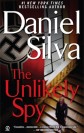
Ransom

buy dapoxetine powder Coming July 14, 2026

In the 26th book of the Gabriel Allon series, the art restorer and retired spy searches for a missing British socialite and uncovers dark secrets about her billionaire husband. Check back soon for the final cover and full description.

buy gabapentin online canada Order now:

amazon
bn
Get it on Apple Books
Buy: HC.com

Share

Excerpt

Part One: Sfumato

Chapter 1: San Polo

The straight-backed wooden chairs in Dottoressa Saviano’s anteroom were instruments of torture. Chiara, try as she might, could find no arrangement of her limbs that provided even a moment of comfort. At present she sat with the erect carriage of a dancer, with her hands folded atop her knees and her feet together on the scuffed wooden floor. The dottoressa’s secretary had cast several admiring glances at Chiara’s stylish pumps—and at her stylish husband as well. She was used to women staring at Gabriel; he was still impossibly handsome. He also happened to be one of the world’s finest art conservators, which conferred upon him an unwelcome local celebrity. Chiara managed the restoration company that employed him. For better or worse, they were among the most prominent couples in Venice.

Their young twins, a boy named for the painter Raphael and a girl called Irene, attended a public scuola primaria a few minutes’ walk from the family’s apartment overlooking the Grand Canal. DottoressaElenora Saviano, the school’s principal, had asked Chiara to drop by her office at 2:00 p.m. to address a matter of the utmost urgency, the nature of which she had refused to discuss over the telefonino. The dottoressa had insisted, however, that Gabriel attend the meeting as well, for what reason she declined to say. The implication was that the undisclosed problem was serious. Chiara was confident she knew the identity of the culprit.

The secretary stole another glance at Gabriel, who pretended not to notice. He was scrolling through the headlines on his new iPhone, a replacement for the device that was damaged during a recent visit to the west of England. His chair was identical to Chiara’s, and yet he looked the very picture of contentment.

“What’s your secret?” she asked.

“I spend all day on my feet in front of paintings. This is a welcome change of pace.”

“What about your back?”

“I swallowed a few of my little green friends before I left the apartment.”

Chiara turned her head toward the anteroom’s only window. It overlooked the school’s central courtyard, which was deserted and darkened by shadow. There was a climbing apparatus and a space for games involving balls, but otherwise the students were left to their own devices during recess. Such was the existence of children in Venice. They played in the calle or the campo and afterward went to the pasticceriafor a sweet. It had never occurred to Chiara, a Venetian by birth, that children might live any other way. When she was a young girl, she had loved her enchanted city of canals and bridges and ancient churches filled with art. Occasionally she went to the Giardini Pubblici for a bit of peace and quiet. But for the most part the only flora she saw were the six trees in the Campo di Ghetto Nuovo, the broad square in Cannaregio where her ancestors had lived for centuries.

She awakened her phone and discreetly checked the time. The ever-vigilant secretary noticed nevertheless.

“I’m sure it won’t be much longer, Signora Zolli.”

“We were told—”

The secretary’s phone rang before Chiara could finish the thought. It seemed the dottoressa would see them now. And only fifteen minutes later than promised.

She received them with a doge-like solemnity while seated behind her desk. She was a short woman of perhaps fifty with the figure of a wine barrel. Her hair was pulled back severely from her face. Oversize spectacles magnified a pair of unblinking eyes.

They settled first on Gabriel. “Is it true, Signore Allon?”

“Is what true, Dottoressa Saviano?”

“That you have received a commission to restore the Titian in Santa Maria della Salute.”

The painting, The Descent of the Holy Spirit, hung above one of the basilica’s chapels. The Tiepolo Restoration Company, under Chiara’s capable leadership, had been awarded the contract to conduct a long overdue cleaning of the canvas—with the proviso that the work be carried out by none other than the renowned director of the firm’s paintings department. A story to that effect had appeared the previous week in Il Gazzettino. Of course it was true, thought Chiara. Everyone in Venice knew it was true.

Gabriel’s reply was more diplomatic. “As a matter of fact, I began work on it yesterday.”

“Is it your first Titian?”

Chiara counted slowly to ten while her husband, with admirable forbearance, explained that he had restored numerous paintings by Titian and his workshop. He might have added that he had restored the Bellini altarpieces in San Zaccaria and San Giovanni Crisostomo, one of the Veroneses in San Sebastiano, and a Tintoretto in dell’Orte. And then, of course, there was Caravaggio’s magisterial Deposition of Christ, one of several paintings he had cleaned clandestinely for the Vatican Museums. As it happened, his old friend was now the supreme pontiff. Not surprisingly, Gabriel neglected to mention that as well.

“Might I impose on you for a small favor?” inquired the dottoressa.

“How small?”

“I was wondering whether you might agree to show the children how you go about restoring a painting. We won’t stay for long. Perhaps an hour or two.”

Gabriel, with a glance, requested Chiara’s assistance.

“I’m sorry, Dottoressa Saviano, but my husband never allows anyone to observe him while he works.”

“And why is that, Signore Allon?”

Once again it was Chiara who supplied the answer. “He believes the great artists of the Venetian Renaissance deserve to have their work presented in the best possible light. He opposes any public display of paintings in a damaged state.”

“He doesn’t want to spoil the illusion?”

Chiara frowned. “Surely this isn’t the reason you wanted to see us.”

“I wish it were so.”

Copies of the children’s files lay on Dottoressa Saviano’s desk. She set aside Raphael’s—the boy was a math prodigy who was now studying with a tutor at the university—and opened Irene’s instead. Chiara steeled herself for the worst.

“Your daughter is a remarkable child, Signora Zolli. I have been most impressed by her academic performance, not to mention the speed of her assimilation.”

Chiara raised an eyebrow.

“I was just pointing out that Irene is somewhat new to Venice.”

“But her mother is not. The Zolli family has been living here since the fifteenth century.”

“But your children were born abroad.”

“They are as Italian as their classmates.”

The dottoressa sighed. They had reached an impasse. “Perhaps we should begin again.”

“Yes, let’s. What seems to be the issue?”

“Irene is a natural leader. Even the older students look up to her. But I’m afraid she holds rather strident political opinions for one so young.”

“Since when is having an opinion a problem?”

Dottoressa Saviano opened Irene’s file and extracted a single sheet of paper. “Copies of this were posted throughout the school three days ago. We have reason to believe that Irene was responsible.”

“What is it?”

“See for yourself,” said Dottoressa Saviano, and handed over the document. It was a call for a one-day student strike to protest the Italian government’s inaction on the issue of climate change. “I have to admit, it’s extremely well written for a child of her age. Or perhaps you had a hand in its drafting.”

“I didn’t.”

“Does Irene have a computer at home?”

“Yes, of course.”

“Perhaps you should monitor it more carefully.”

Chiara handed the document to Gabriel. He smiled as he read it.

“You find it amusing, Signore Allon?”

“Quite.”

“I don’t. Not in the least. Evidently your daughter has managed to convince nearly the entire student body to boycott their classes next Wednesday. They plan to march through all six sestieri and stage a rally in the Piazza San Marco.”

“What would be the harm? In fact, it might actually do some good. The young have a right to be worried about their future.”

“The current government does not see it that way. The education minister is of the opinion that global warming is a hoax perpetrated by the political left.”

“There’s a lot of that going around.”

“If the boycott goes forward, there will be serious consequences.”

“For whom?”

“Your daughter, for one.”

Gabriel returned the document. “And what if we were able to find an elegant solution to the problem?”

“What did you have in mind?”

“I prefer not to negotiate with myself.”

“That’s where we’re different, you and I.”

“How so?”

The dottoressa smiled. “I never negotiate.”

* * * * *

Gabriel’s opening position was that the protest march would take place on a Saturday rather than a weekday, that there would be no disruption of classes and no further posting of flyers on school property, and that none of the participants, including the organizer, would be punished in any way. In exchange, the organizer’s father would agree to allow a small delegation of students to observe him carrying out one of the most important restorations undertaken in Venice in many years.

“The delegation,” countered Dottoressa Saviano, “will consist of the entire scuola primaria.”

“Out of the question.”

“And the visit will be two hours in duration, giving you sufficient time to deliver a lecture on the Renaissance in Venice before commencing your demonstration.”

Gabriel sighed. “Done.”

“Not quite.”

“What now?”

“A number of our students have shown artistic promise. I feel that with the proper instruction . . .”

Chiara began to object, but Gabriel placed a hand on her forearm. “I’d love nothing more. How soon can we start?”

“I’ll leave that to your discretion, Signore Allon.” The dottoressa returned the flyer to Irene’s academic file, then, upon further reflection, consigned it to the rubbish bin. “I know you’re terribly busy.”

Chiara managed to smile as she bade the dottoressa a pleasant afternoon, but her anger boiled over downstairs as she followed Gabriel into the street.

“The nerve of that woman.”

“She was a worthy opponent, I have to admit.”

“She’s an extortionist. And you, for some inexplicable reason, surrendered without a fight.”

“There was a method to my madness.”

“You were trying to protect your daughter?”

“I suppose I was.”

“Talk about madness,” murmured Chiara.

“She’s spirited. There’s a difference.”

Thirty minutes remained until the end of the school day, so they walked to Bar Dogale in the Campo dei Frari and ordered coffee. The counterman served Gabriel’s with un’ombra, a small glass of white wine. Chiara requested one as well.

“What are we going to do with her?” she asked. “The dottoressa?”

“Your daughter.”

“Enjoy every minute we have with her.”

“That’s easy for you to say.”

“What’s that supposed to mean?”

“It means that, for understandable reasons, Irene has you wrapped around her finger. Therefore, despite her frequent misbehavior, you have never once disciplined her.”

“Why would I want to do a thing like that?”

“Tell me something, Gabriel. Do you think your daughter is a normal child?”

“Of course not. But neither is her brother.”

“Or her father, for that matter,” added Chiara quietly.

“Let’s hope Dottoressa Saviano doesn’t find out. Otherwise she might have second thoughts about taking me on as a part-time art instructor.”

“Have you taken leave of your senses?”

“It’s something I’ve wanted to do for a long time.”

“Teach?”

Gabriel nodded.

“Why not teach at the university?”

“They won’t have me. Unlike you, I don’t possess an advanced degree from an esteemed institution of higher learning.”

The truth was, Gabriel had no degree at all; he had abandoned his formal study of art to undertake a mission of vengeance for his country’s secret intelligence service. Chiara, after completing her graduate studies at the University of Padua, had worked for the same service.

“Perhaps I should begin referring to myself as Dottoressa Zolli,” she said.

“It does have a nice ring to it.”

“But how will your students address you?”

“Signore Allon, I suppose.”

“What about Maestro Allon?”

“Can you imagine?”

“I can, actually. You’re looking more and more like a maestro every day.” Chiara trailed the tip of her forefinger through Gabriel’s platinum-colored hair. Then she turned to the barman and asked, “Wouldn’t you agree, Paolo?”

“By all means, Dottoressa Zolli. I shall refer to him by no other name from this day forward.” The barman winked at Gabriel. “Another glass of wine, Maestro?”

“A fine idea. And one for Dottoressa Zolli as well.” “I couldn’t possibly,” she protested.

“I must obey the maestro,” said the barman, and placed two more glasses of wine on the counter.

Chiara nudged hers toward Gabriel. “Have you decided what you’re going to say to your daughter?”

“I was planning to leave that in your capable hands.”

“Not this time, darling. It’s your turn.”

“Shall I read her the riot act?”

“You will explain that what she did was wrong. Then you will suggest she find a new hobby. Saving the world from the coming climate apocalypse is exhausting her mother.”

Gabriel eyed the barman. “What say you, Paolo? Do you think I should discipline my daughter for trying to organize a march about climate change?”

“Please don’t, Maestro Allon. Irene is a perfect child. Perhaps the most perfect child in the entire sestiere of San Polo.”

“That settles it, then.”

Gabriel laid a pair of banknotes on the counter and escorted Chiara back to the school. The first children were spilling from the doorway when they arrived. Irene and Raphael, as always, emerged simultaneously. They were surprised to see both of their parents waiting in the street. Irene, an unusually perceptive child, instinctively took Gabriel’s hand rather than her mother’s.

“Do you know why we’re here?” he asked as they walked along the Calle dei Saoneri.

The child nodded, then began to sob. Gabriel glanced helplessly at Chiara. With a circular gesture of her hand, she implored him to press his advantage.

“What were you thinking?” he asked.

“I thought it was the right thing to do.”

“That’s all well and good, but you went about it entirely the wrong way.”

“How?”

“The flyer, for one. It was a terrible mistake.” Gabriel brushed the tears from his daughter’s face. “You must never allow your adversary to know what you’re thinking.”

Chapter 2: Dorsoduro

It arrived in the summer of 1630, having made its way eastward from Milan, which had tried and failed to contain its spread. The Republic, with its busy port and humid air, proved a gracious host, as it had several times in the past. The fleas killed the rats first, then the people. Nearly twenty-one thousand perished between September and December alone. By the time it was finally over, a third of the population was gone. Though the doge and the Council of Ten did not know it then, Venice would never be the same.

The Venetian Senate, while the plague was still raging, decreed that a new basilica should be built on the Punta della Dogana in Dorsoduro, that it should be dedicated to the Virgin Mary, and that once each year, on the feast day celebrating her presentation at the Temple in Jerusalem, the senators and the doge would convene there after processing across the Grand Canal over a pontoon bridge. Gabriel arrived at the basilica early the following morning in a far less conspicuous manner—aboard a Number 1 vaporetto. He made his way across the deserted quay to a seldom-used side entrance crowned by a stone Venetian lion. Two knocks on the heavy wooden door summoned an elderly priest in a black cassock.

Buongiorno, Signore Allon. And how are you this day?”

“Not well, I’m afraid.”

“Are you under the weather?”

“No, Father Giovanni. It seems my wife is angry with me.”

“Again?” The priest gave a sigh of resignation. “What have you done now, my son?”

“It’s cumulative at this point, Father. Therefore, I have no hope of forgiveness.”

“Perhaps I might have a word with her.”

“I’d leave well enough alone, if I were you. Chances are it will only make matters worse.”

The old priest escorted Gabriel into the murky half-light of the basilica. Eight radiating chapels ringed the soaring octagonal central nave. The view of one of the chapels was obstructed by a shrouded scaffold.

“I’ll leave you to your work,” said the priest, and vanished into the gloom.

Gabriel slipped through a gap in the tarpaulin and climbed the scaffolding to his work platform. For now, his supplies were limited to a flask of carefully calibrated solvent, a package of wooden dowels, and four bags of cotton wool—enough cotton wool, he reckoned, to remove the dirty varnish from approximately half of the enormous canvas. Three months was the estimate he had given the Venetian cultural authorities, with another three months to execute the required retouching. He might have managed to complete the restoration in a timelier fashion were it not for the fact that the basilica, one of Venice’s most prominent tourist attractions, would remain open to the public for the duration of the project. It was not, for any number of reasons, Gabriel’s preferred method of working.

He switched on a pair of standing halogen lamps, casting a harsh white light over the surface of the painting, then wound a swatch of cotton wool around the end of a dowel. It was his habit to listen to opera or classical music while he worked—with an old portable CD player, a faithful companion during countless restorations past—but present circumstances forbade it. He dipped his first cotton swab in solvent and twirled it gently over the wing of the radiant white dove near the top of the canvas. The soiled varnish dissolved at once, exposing Titian’s masterly brushwork.

Buongiorno, Signore Vecellio,” said Gabriel quietly. “And how are you on this fine morning? Not well? I’m so sorry to hear that. Is your wife the problem, or has your child incurred the wrath of the doge by attempting to organize a march to protest the combustion of fossil fuels? What are fossil fuels, you ask? Perhaps another time, my old friend. It’s a long story.”

Gabriel discarded the soiled swath of cotton wool and fashioned another. He fell into the familiar rhythm of his craft—dip, twirl, discard . . . dip, twirl, discard—and by 9:00 a.m., when the doors of the basilica were thrown open, he had managed to clean a rectangle of canvas measuring about twenty by thirty centimeters. Before long he heard the squeak and shuffle of shoes over the marble floor, and by ten o’clock there was a persistent multilingual din of conversation. He persevered until ten thirty before switching off the lamps and descending the scaffold. As he emerged from behind the tarpaulin, a woman who spoke English with a British accent attempted to engage him in conversation. He feigned an inability to speak her language and, smiling apologetically, set off across the nave.

Outside, he stood on the steps of the basilica and inhaled the first cool, dry air of the season. On the opposite side of the Grand Canal, hidden away amid the luxury shops lining the Calle Larga XXII Marzo, were the business offices of the Tiepolo Restoration Company. He rang the firm’s general manager and asked if she was free for coffee.

“Sorry, darling. But I’m unavailable.”

“For how long?”

“The foreseeable future.”

“And what if I were to grovel?”

“I might consent to having a drink with you later.”

Gabriel crossed the wooden bridge spanning the Rio della Salute and set off toward Caffè Poggi, a quaint little bar near the Accademia. It was his second visit to the establishment, but the proprietor greeted him as though he had been coming there every morning for years. They exchanged pleasantries and banalities about the state of the world while Gabriel drank two coffees and devoured a cornetto filled with sweet almond paste.

“How goes the Titian?” the proprietor asked suddenly.

“How did you know?”

The proprietor indicated the display of Italian newspapers. “I read about it in Il Gazzettino, Signore Allon.”

“The Titian goes quite well.”

“Will I see you tomorrow?”

“I imagine so,” said Gabriel, and went into the street. He took his time walking back to the basilica and arrived to find a line of tourists stretching from the doorway. It was the late-morning rush, the busiest part of the day. Fortunately the doors would close at noon and remain shuttered for three blessed hours, during which time Gabriel would have the place to himself. Better to delay his return by a few minutes, he thought, than to deal with the disruptive noise of the crowds.

And so he continued along the fondamenta to the observation point at the tip of the Punta della Dogana. Perhaps a half kilometer to the east, across an expanse of sparkling water, was the magnificent church of San Giorgio Maggiore. Even Gabriel, a jaded Venetian, never tired of the view.

For several minutes it was his alone to enjoy. Eventually two tourists appeared—Americans, newlyweds apparently—and prevailed upon him to take their photograph. He posed them with Maggiore in the background and snapped the picture. The woman was on the left side of the image, her husband the right. Gabriel thought the photo rather good, though it was marred slightly by a dark mass floating on the surface of the water near the man’s outer shoulder.

He reframed the image, tapped the shutter icon, and surrendered the phone. The young Americans stayed another minute and then departed. Alone once more, Gabriel searched the white-flecked waters of the laguna for the object he had seen a moment ago. The dark floating mass, whatever it was, was gone.

* * * * *

There was a water taxi idling along the quay outside the basilica. Gabriel told the pilot about the object he had seen in the laguna, and the pilot, who spent fourteen hours a day navigating the waters of Venice, assured him it was probably nothing.

Gabriel handed the pilot a hundred euros. “Why don’t we have a look, just to be sure?”

“If you wish, Signore. It’s your money.”

Gabriel stood at the pilot’s shoulder as he eased away from the quay and headed toward Maggiore. “Here,” he said after a moment. “This is where I saw it.”

“There’s nothing, Signore.”

“Put your engine in neutral, please.”

Frowning, the pilot did as Gabriel asked, and the sleek wooden vessel slowed to a stop. The pilot searched the waters off the port side, Gabriel the starboard. Seeing no sign of the object, he ducked into the passenger cabin and headed aft.

“There!” he shouted. “There it is.”

It had resurfaced about thirty meters from the taxi’s stern. Gabriel rejoined the pilot as he engaged the inboard engines and came slowly about. But the object, visible a moment earlier, had once again disappeared from view.

“It’s probably just a plastic rubbish bag, Signore. The laguna is full of them.”

“Do you have a boat hook on board?”

It was a retractable model, four meters in length when fully extended, with a scratch-resistant plastic hook. Gabriel probed the waters off the starboard side of the vessel until he made contact with something heavy and sodden. After several failed attempts, he managed to snare the object and guide it gently toward the surface. The pilot fumbled for the handset of his radio as a human corpse, bloated and partially decomposed, floated into view.

“Don’t,” said Gabriel as he drew the phone from his pocket. “I’ll take care of everything.”

Chapter 3: San Zaccaria

The regional headquarters of the Arma dei Carabinieri, one of Italy’s two national police forces, were located in the Campo San Zaccaria. Capitano Luca Rossetti was attached to the Division for the Defense of Cultural Patrimony, better known as the Art Squad. Gabriel occasionally served as a consultant to the unit and had worked with Rossetti on a major international forgery investigation. Despite a regrettable case of mistaken identity in a darkened corte in San Polo—one that left Rossetti with a broken jaw and Gabriel with several fractured bones in his right hand—they remained the best of friends.

“Where?” asked the Italian policeman.

“Walk through the sotoportego. You can’t miss me.”

Rossetti hurried downstairs to the campo and, phone in hand, sprinted through the passageway that led to the Riva degli Schiavoni, the monumental waterfront promenade stretching along the Grand Canal. There were the usual tourists and vendors, but Rossetti saw no evidence of a dead body.

“I’m sorry, but I don’t see you.”

“I’m in the water taxi about a hundred meters due west of Maggiore.”

Rossetti spotted the vessel at once. Gabriel was hanging over the starboard side, a phone in one hand, a rescue pole in the other.

“Whatever you do,” said Rossetti, “don’t let it go.”

Because this was Venice, the Carabinieri maintained a substantial fleet of vessels, the first of which arrived just three minutes after Gabriel’s call. Five more craft appeared soon after, along with waterborne units of the Polizia di Stato, the Guardia di Finanza, and even the Coast Guard. The armada quickly established a blockade around the crime scene, temporarily halting traffic on both the Grand and Giudecca Canals. Gabriel grimly maintained control of the corpse for several more minutes before surrendering it to a pair of Carabinieri crime scene technicians. As they hauled the body into a f lat-bottomed pontoon boat, the pilot of the water taxi turned away and was violently sick over the port gunwale.

“Shall I take us back to the basilica?” asked Gabriel.

“It’s against regulations.”

“I think they’ll make an exception in this case.”

Gabriel started the taxi’s engines and crept forward, breaching the blockade between two of the police craft. The traffic on the Grand Canal was at a standstill. He guided the taxi past motionless barges and vaporetti and slid into an empty spot along the quay.

“Are you feeling any better?” he asked the pilot.

“A little. But I’m not sure I’ll ever forget what I saw this morning.” Neither would Gabriel. He had once discovered the body of a notorious Italian tomb raider in a vat of acid. This was worse.

He stepped onto the quay and headed up the steps of the basilica. The nave was teeming with tourists, seemingly unaware of the commotion outside. Gabriel was glad of their company. He climbed the scaffolding to his work platform and switched on the halogen lamps, flooding the Titian with dazzling white light.

“Sorry for the delay, Signore Vecellio,” he said quietly as he prepared his first swab. “But you’ll never guess what I just discovered in the Canal Grande.”

* * * * *

The doors of the basilica closed promptly at noon, and a heavy silence fell over the nave. Gabriel worked without a break until half past one, when he received a call from Luca Rossetti.

“We need a statement.”

“On what particular subject?”

“This morning’s discovery. The lead detective would like you to drop by the stazione.”

“I’m sure he would, but I’m rather busy at the moment.”

“In that case, we’ll come to you.”

They arrived twenty minutes later and, as instructed, knocked on the side door. The detective was a tall, gaunt figure called Baggio who wore on his shoulders the three silver stars of a colonnello. Gabriel explained that he had spotted something floating on the surface of the laguna at approximately 11:00 a.m., that he had hired a water taxi to investigate the matter, and that the object in the water, as he had feared, turned out to be a human corpse. The advanced state of decomposition made it impossible to say with any certainty whether the decedent was a man or a woman, but it appeared to Gabriel as though it was the latter.

“That is indeed the case,” replied Baggio.

“It looked as though she had been in the water for a while.”

“Perhaps, Signore Allon. But in my experience, the laguna is most unkind to the dead.”

“Is there any evidence of trauma?”

“Our investigation has just begun. But you needn’t concern yourself with such questions. As of this moment, your role in this unfortunate matter is officially over.”

“I would appreciate it if you kept my name out of the papers.”

Colonel Baggio shrugged his shoulders noncommittally. “Leaks happen, Signore Allon. But I assure you, the press won’t hear anything from me.”

Gabriel showed the two Carabinieri officers out and resumed work on the Titian. The crowds returned at three o’clock and remained until five, when the attendants herded them out the door. Gabriel waited until the nave was empty before switching off the lamps and descending the scaffolding.

Outside, he crossed the quay to the vaporetto stop. A Number 1 was traversing the Grand Canal diagonally from the direction of San Marco. He boarded it a moment later and went into the passenger cabin. Chiara was seated in the first row, her eyes on her mobile phone.

Gabriel sat down next to her. “I was promised a drink.”

“Tough day at the office?”

“Eventful.”

“So I heard,” said Chiara, and handed over her phone. The lead item in Il Gazzettino concerned a grisly discovery in the waters near the church of San Giorgio Maggiore. The story was accompanied by a photograph of a man with platinum-colored hair leaning over the side of a water taxi, a retractable pole in his hands. The object pinned against the side of the hull was faintly visible. “Care to explain?”

“I invited you to have coffee with me. And you, of course, refused.” Gabriel returned Chiara’s phone. “Do the children know?”

“Irene was the one who told me.”

Gabriel sighed. “You really should limit the amount of time she spends on the computer.”

* * * * *

The palazzo stood on the northern bank of the Grand Canal not far from the San Tomà vaporetto stop. From the broad loggia of its piano nobile, the Rialto Bridge was visible in the east. The furnishings in the spacious adjoining drawing rooms were contemporary and comfortable, and the walls were hung with an eclectic collection of paintings, including works by Gabriel’s mother and grandfather, a noted German Expressionist and disciple of Max Beckmann. In the master bedroom suite were a pair of Modigliani nudes that Gabriel had painted on something of a dare. Propped on the easel in his studio was a canvas by Sebastiano Florigerio, a pro bono favor for the director of the Courtauld Gallery in London.

Gabriel was supposed to be chipping away at the painting in his spare time, but tonight he hadn’t the strength, so he sat atop a stool at the kitchen counter, drinking from a large glass of Brunello, while Chiara prepared dinner. The menu, at Gabriel’s request, was vegetarian. Nothing with bones and flesh, nothing from the sea.

His phone lay face down before him. He turned it over and looked again at the photograph displayed on the screen. It had been snapped, according to Il Gazzettino, by a passenger on a Maggiorebound vaporetto. Precisely how the newspaper managed to identify the man holding the rescue pole was unclear, though the level of detail suggested a leak from a well-placed official source, probably Colonel Baggio of the Carabinieri. Gabriel shared his suspicions with his wife but received no reply. She was typing on her phone.

“Who is it now?”

“Bianca Locatelli from La Repubblica.”

“Please give her the same answer that you gave the reporters from Il Gazzettino and Corriere della Sera.”

“We should at least issue a statement.”

“Why?”

“If nothing else, it might be good for our business.”

“Only if our business was finding dead bodies. Besides, I’m not the story.”

Chiara placed an assortment of antipasti on the dining room table and summoned Irene and Raphael. Gabriel was suddenly ravenously hungry, but his appetite faded when the children began to question him about the awful events of the morning. The account he gave was nearly identical to the one he had provided to Colonel Baggio, though he left out any description of the condition of the body.

“Where is she now?” asked Irene.

“In the morgue, I imagine.”

“What’s a morgue?” inquired Raphael.

“It’s a place where the dead are kept until they can be buried. A specialist known as a forensic pathologist will try to determine what happened to her.”

“Who was she?”

“The police don’t know yet.”

“Did someone kill her?” asked Irene.

“They don’t know that either. It’s quite possible she simply had an accident of some sort.”

It was also possible that the woman had taken her own life, but Gabriel had no wish to spoil the meal further with talk of suicide. Chiara, sensing his discomfort, deftly shifted the topic of conversation to Saturday’s protest march. It had been Gabriel’s brilliant idea, but he had wisely left the planning in his wife’s hands. The march would begin, she explained, in the Campo Santi Giovanni e Paolo in Castello and conclude—three hours later, provided the children maintained a steady pace—in the Piazza San Marco. Eight other parents had agreed to help supervise the affair. Venetian social etiquette dictated that the arduous trek be followed by a celebratory lunch. Chiara had yet to settle on a venue.

“How many marchers are you expecting?”

“It could be as many as a hundred.”

“In that case, we’ll need outdoor seating.”

“Unless we hold the luncheon here.”

“Where?” asked Gabriel.

“In our apartment, darling. We have more than enough room, and I’m sure the other mothers will help me prepare the food. This is Venice, after all. It’s what we do.”

Chiara slipped into the kitchen and returned a few minutes later with a steaming bowl of risotto alla Milanese. Gabriel devoured two portions of the saffron-colored rice while Irene and Raphael excitedly worked out the details of hosting a luncheon for one hundred of their schoolmates. The sound of their voices chased the nightmarish vision of the corpse from his thoughts, but it returned later that evening as he stood at the balustrade of his loggia, watching a water taxi beating its way up the Grand Canal. The laguna, he thought, had indeed been unkind to her. Now she lay on a tray of cold metal in the Venice municipal morgue, alone and in darkness. A woman without a name. A woman without a face.

Share

An Inside Job

Sometimes the only way to recover a stolen masterpiece is to steal it back.

Art restorer and legendary spy Gabriel Allon must solve the perfect crime in the dazzling new tale of murder, greed, and corruption from #1 New York Times–bestselling novelist Daniel Silva.

Gabriel Allon has been awarded a commission to restore one of the most important paintings in Venice. But when he discovers the body of a mysterious woman floating in the waters of the Venetian Lagoon, he finds himself in a desperate race to recover a lost masterpiece by Leonardo da Vinci.

The painting, a portrait of a beautiful young girl, has been gathering dust in a storeroom at the Vatican Museums for more than a century, misattributed and hidden beneath a worthless picture by an unknown artist. Because no one knows that the Leonardo is there, no one notices when it disappears one night during a suspicious power outage. No one but the ruthless mobsters and moneymen behind the theft—and the mysterious woman whom Gabriel found in a watery grave in Venice. A woman without a name. A woman without a face.

The action moves at breakneck speed from the galleries and auction houses of London to an enclave of unimaginable wealth on the French Riveria—and, finally, to a shocking climax in St. Peter’s Square, where the life of a pope hangs in the balance. An elegant and stylish journey through the dark side of the art world and the Vatican’s murky finances, An Inside Job proves once again that Daniel Silva is the reigning master of international intrigue and suspense.

Order now:
amazon
bn
Get it on Apple Books
Buy: HC.com

Share

Praise

“Another winner from Daniel Silva’s Gabriel Allon series…”
— The Denver Post

“A symphony of elegance, suspense, and relentless action, A Death in Cornwall is a dazzling, hypnotic tale of murder and mayhem that showcases Daniel Silva’s unparalleled storytelling and highlights his prowess in the genre today. Prepare to be spellbound until the very last page . . . this is Daniel Silva at his absolute finest.”
The Real Book Spy

A Death in Cornwall will delight Silva’s legions of fans and those who love whirlwind, propulsive action, an invincible hero, and global political intrigue.”
New York Journal of Books

A Death in Cornwall is the twenty-fourth entry in this bestselling series and undoubtedly—and deservedly—will follow its predecessors to the top spot.”
–Bookreporter.com

“A novel that delivers pretty much everything Silva’s fans want.”
Kirkus Reviews

“Engaging, intelligent, and action-packed.”
Colchester Sun

“Daniel Silva proves to be a masterful storyteller . . . ratchet[ing] up the tension and intrigue.”
Mystery & Suspense

“Silva’s ability to craft a story that is simultaneously thrilling and thought-provoking . . . continues to set this series apart.”
Storizen

“Daniel Silva has delivered another stunning thriller in his action-packed tale of high-stakes international intrigue.”
Post and Courier (Charleston)

“Daniel Silva has once again written an entrancing novel of international suspense and unexpected detours that is both educational and satisfying. Beautifully yet simply written, the book’s characters are memorable and their dialogue compelling . . . Gabriel Allon’s escapades remain as captivating as ever.”
The Cipher Brief, 4 out of 4 trench coats

Share

Excerpt

1: The Lizard Peninsula

The first indication of trouble was the light burning in the kitchen window of Wexford Cottage. Vera Hobbs, owner of the Cornish Bakery in Gunwalloe, spotted it at 5:25 a.m. on the third Tuesday of January. The day of the week was noteworthy; the owner of the cottage, Professor Charlotte Blake, divided her time between Cornwall and Oxford. Typically, she arrived in Gunwalloe on a Thursday evening and departed the following Monday afternoon—three-day workweeks being one of the many perquisites of academic life. The absence of her dark blue Vauxhall suggested she had decamped at her usual time. The glowing light, however, was an aberration, as Professor Blake was a devout environmentalist who would sooner stand in the path of a speeding train than waste a single watt of electricity.

She had purchased Wexford Cottage with the proceeds of her bestselling exploration of Picasso’s life and work in wartime France. Her withering reappraisal of Paul Gauguin, published three years later, fared even better. Vera had attempted to organize a book party at the Lamb and Flag, but Professor Blake, after somehow getting wind of the project, had made it clear she had no wish to be fêted. “If there is indeed a hell,” she explained, “its inhabitants have been condemned to spend the rest of eternity celebrating the publication of someone else’s latest waste of paper.”

She had made the remark in her perfect BBC English, with the ironic drawl that comes naturally to those of privileged birth. She was not, however, from the upper classes herself, as Vera discovered one afternoon while stalking Professor Blake on the Internet. Her father had been a rabble-rousing trade unionist from Yorkshire and a leader of the bitter coal miners’ strike in the 1980s. A gifted student, she had won admission to Oxford, where she had studied the history of art. After a brief stint at the Tate Modern in London, and an even briefer one at Christie’s, she had returned to Oxford to teach. According to her official biography, she was considered one of the world’s foremost experts in something called APR, or artistic provenance research.

“What in heaven’s name does that mean?” asked Dottie Cox, proprietor of the Gunwalloe village store.

“Evidently, it has something to do with establishing a painting’s history of ownership and exhibition.”

“Is that important?”

“Tell me something, Dottie, dear. Why would someone be an expert in something if it wasn’t bloody important?”

Interestingly enough, Professor Blake was not the first art world figure to settle in Gunwalloe. But unlike her predecessor, the reclusive restorer who had lived for a time in the cottage down by the cove, she was unfailingly polite. Not the talkative sort, mind you, but always a pleasant greeting and an enchanting smile. The consensus among Gunwalloe’s male population was that the professor’s author photograph had not done her justice. Her hair was nearly black and shoulder length, with a single provocative streak of gray. Her eyes were an arresting shade of cobalt blue. The puffy pillows of dark flesh beneath them only added to her allure.

“Smoldering,” declared Duncan Reynolds, a retired conductor for the Great Western Railway. “Reminds me of one of those mysterious women you see in the cafés of Paris.” Though as far as anyone knew, the closest old Duncan had ever come to the French capital was Paddington Station.

There had been a Mr. Blake once, a painter of minor note, but they had divorced while she was still at the Tate. Now, at fifty-two years of age and in the prime of her professional life, Charlotte Blake remained unmarried and, by all outward appearances, romantically unattached. She never had guests and never entertained. Indeed, Dottie Cox was the only inhabitant of Gunwalloe who had ever seen her with another living soul. It was last November, down at Lizard Point. They were huddled on the windblown terrace at the Polpeor Café, the professor and her gentleman friend.

“Handsome devil, he was. A real charmer. Had trouble written all over him.”

But on that morning in January, with the rain falling in sheets and a cold wind blowing from Mount’s Bay, the state of Professor Charlotte Blake’s love life was of little concern to Vera Hobbs. Not with the Chopper still on the loose. It had been nearly a fortnight since he had struck last, a woman of twenty-seven from Holywell on the north Cornish coast. He had killed her with a hatchet, the same weapon he had used to murder three other women. Vera took a small measure of comfort in the fact that none of the murders had taken place during rainy weather. The Chopper, it seemed, was a fair-weather fiend.

Vera Hobbs nevertheless cast several anxious glances over her shoulder as she hastened along Gunwalloe’s only road—a road with neither a name nor a numeric designation. The Cornish Bakery was wedged between the Lamb and Flag and Dottie Cox’s Corner Market, which wasn’t on a corner at all. The Mullion Golf Club was about a mile down the road, next to the ancient parish church. With the exception of an incident at the restorer’s cottage a few years back, nothing much ever happened in Gunwalloe, which was just fine with the two hundred souls who lived there.

By seven o’clock Vera had finished baking the morning’s first batch of sausage rolls and traditional cottage loaf bread. She breathed a small sigh of relief when Jenny Gibbons and Molly Reece, her two employees, hurried through the door a few minutes before eight. Jenny settled in behind the counter while Molly helped Vera with the steak pasties, a staple of the Cornish diet. A Radio Cornwall newscast played quietly in the background. There had been no murders overnight—and no arrests, either. A twenty-four-year-old motorcyclist had been seriously injured in a crash near the Morrisons in Long Rock. According to the weather forecast, the wet and windy conditions would persist throughout the day, with the rain finally ending sometime in the early evening.

“Just in time for the Chopper to claim his next victim,” interjected Molly as she spooned meat-and-vegetable filling onto a circle of short-crust pastry dough. She was a dark-eyed beauty of Welsh extraction, a real handful. “He’s past due, you know. He’s never gone more than ten days without burying his hatchet into some poor girl’s skull.”

“Maybe he’s had his fill.”

“Got it out of his system? Is that your theory, Vera Hobbs?”

“And what’s yours?”

“I think he’s just getting started.”

“An expert now, are you?”

“I watch all the detective shows.” Molly folded the dough over the filling and crimped the edges. She had a lovely touch. “He might stop for a while, but eventually he’ll strike again. That’s the way these serial killers are. They can’t help themselves.”

Vera slid the first tray of pasties into the oven and rolled out the next sheet of short-crust dough and cut it into plate-size circles. The same thing every day for forty-two years, she thought. Roll, cut, fill, fold, crimp. Except Sundays, of course. On her so-called day of rest, she cooked a proper lunch while Reggie got drunk on stout and watched football on the telly.

She removed a bowl of chicken filling from the fridge. “Did you happen to notice the light burning in the window of Professor Blake’s cottage?”

“When?”

“This morning, Molly, dear.”

“Didn’t.”

“When was the last time you saw her?”

“Who?”

Vera sighed. She had a good pair of hands on her, did Molly, but she was simple. “Professor Blake, my love. When was the last time you actually laid eyes on her?”

“Can’t remember.”

“Try.”

“Maybe yesterday.”

“Afternoon, was it?”

“Could have been.”

“Where was she?”

“In her car.”

“Headed where?”

Molly inclined her head to the north. “Up-country.”

Because the Lizard Peninsula was the most southerly point in the British Isles, everywhere else in the United Kingdom was up-country. But it suggested that Professor Blake had been bound for Oxford. Even so, Vera thought there would be no harm in having a look through the window of Wexford Cottage—which she did at half past three during a break in the rain. She reported her findings to Dottie Cox an hour later at the Lamb and Flag. They were sitting in their usual snug near the window, with two glasses of New Zealand sauvignon blanc between them. The clouds had finally broken, and the sun was dropping toward the rim of Mount’s Bay. Somewhere out there beneath the black waters was a lost city called Lyonesse. At least that was the legend.

“And you’re sure there were dishes in the sink?” asked Dottie.

“And on the countertop as well.”

“Dirty?”

Vera nodded gravely.

“Rang the bell, did you?”

“Twice.”

“The latch?”

“Locked tight.”

Dottie didn’t like the sound of it. The light was one thing, the dirty dishes quite another. “I suppose we should probably ring her, just to be on the safe side.”

It took a bit of searching, but Vera eventually found the main number for the University of Oxford’s Department of the History of Art. The woman who answered the phone sounded as though she might have been a student. A lengthy silence ensued when Vera asked to be connected to Professor Charlotte Blake’s office.

“Who’s calling, please?” the young woman asked at last.

Vera gave her name.

“And how do you know Professor Blake?”

“She lives down the road from me in Gunwalloe.”

“When was the last time you saw her?”

“Is something wrong?”

“One moment, please,” said the woman, and transferred Vera to Professor Blake’s voicemail. She ignored the recorded invitation to leave a message and rang the Devon and Cornwall Police instead. Not the main number, but the special hotline. The man who answered didn’t bother to state his name or rank.

“I have a terrible feeling he’s struck again,” said Vera.

“Who?”

“The Chopper. Who else?”

“Go on.”

“Perhaps I should speak to someone a bit more senior.”

“I’m a detective sergeant.”

“Very impressive. And what’s your name, my love?”

“Peel,” he answered. “Detective Sergeant Timothy Peel.”

“Well, well,” said Vera Hobbs. “Imagine that.”


2: Queen’s Gate Terrace

It was a few minutes after 7:00 a.m. when Sarah Bancroft, still in the clutches of a turbulent dream, stretched a hand toward the opposite side of the bed and touched only cool Egyptian cotton. And then she recalled the text message that Christopher had sent her late the previous afternoon, the one about a sudden trip to an undisclosed destination. Sarah had been seated at her usual table at Wiltons at the time, partaking of a post-work Belvedere martini, three olives, Saharan dry. Depressed at the prospect of spending yet another evening alone, she had unwisely ordered a second. What followed was for the most part a blur. She recalled a rainy taxi ride home to Kensington and a search for something wholesome in the Sub-Zero. Finding nothing of interest, she had settled for a tub of Häagen-Dazs—gelato creamy fudge brownie. Afterward she had fallen into bed in time for the News at Ten. The lead story concerned the discovery of a body near Land’s End in Cornwall, by all appearances the fifth victim of a serial killer the lesser tabloids had christened the Chopper.

It would have been reasonable for Sarah to blame her unsettled dreams on the second martini or the Cornish axe murderer, but the truth was she had more than sufficient horrors buried in her subconscious to disturb her nights. Besides, she never slept well when Christopher was away. An officer of the Secret Intelligence Service, he traveled often, most recently to Ukraine, where he had spent the better part of the autumn. Sarah did not begrudge his work, for in a previous life she had served as a clandestine operative for the CIA. She now managed a sometimes-solvent Old Master art gallery in St. James’s. Her competitors knew nothing of her complicated past and even less about her ruggedly handsome husband, believing him to be a well-to-do business consultant called Peter Marlowe. Thus the handmade suits, the Bentley Continental motorcar, and the maisonette in Queen’s Gate Terrace, one of London’s poshest addresses.

The windows of their bedroom overlooked the garden and were streaked with rain. Not yet prepared to face the day, Sarah closed her eyes and dozed until nearly eight, when she finally roused herself from bed. Downstairs in the kitchen she listened to Today on Radio 4 while waiting for the Krups automatic to complete its labors. It seemed the corpse in Cornwall had acquired an identity overnight: Dr. Charlotte Blake, a professor of art history from Oxford University. Sarah recognized the name; Professor Blake was a world-renowned specialist in the field of provenance research. Moreover, a copy of her recent bestselling book about the turbulent life of Paul Gauguin was at that moment resting on Sarah’s bedside table.

The remainder of the morning’s news was little better. Taken together, it painted a picture of a nation in terminal decline. A recent study had concluded that the average British subject would soon be less affluent than his counterparts in Poland and Slovenia. And if the British subject were to suffer a stroke or heart attack, he would likely endure a wait of ninety minutes for an ambulance to take him to the nearest A&E ward, where some five hundred people were dying each week due to overcrowded conditions. Even the Royal Mail, one of Britain’s most revered institutions, was in danger of collapse.

It was the Conservatives, in power for more than a decade, who had presided over this state of affairs. And now, with the prime minister foundering, they were bracing for the prospect of a bruising leadership contest. Sarah wondered why any Tory politician would aspire to the job. Labour held a commanding lead in the polls and were expected to easily prevail in the next election. Sarah, however, would have no say in the composition of the next British government. She remained a guest in this country. A guest who moved in elite circles and was married to an SIS officer, she thought, but a guest nonetheless.

There was one piece of good news that morning—from the art world, of all places. Self-Portrait with Bandaged Ear by Vincent van Gogh, stolen from the Courtauld Gallery in a daring smash-and-grab robbery more than a decade ago, had been recovered under mysterious circumstances in Italy. The painting would be unveiled that evening during an invitation-only event in the gallery’s newly refurbished Great Room. Most of London’s art glitterati would be in attendance, as would Sarah. She had acquired an MA in art history from the Courtauld Institute before collecting a PhD from Harvard, and now served on the gallery’s board of trustees. She also happened to be a close friend and associate of the Venice-based conservator who had knocked the Van Gogh into shape before its repatriation to Britain. He, too, planned to attend the unveiling—clandestinely, of course. Otherwise, his very presence might well overshadow the return of the iconic painting.

The ceremony was on the early side—six o’clock, with a cocktail reception to follow—so Sarah dressed in a striking Stella McCartney double-breasted blazer and skirt. The heels of her Prada pumps tapped a metronomic rhythm, forty-five minutes later, as she crossed the paving stones of Mason’s Yard, a tranquil quadrangle of commerce concealed behind Duke Street. Isherwood Fine Arts, purveyors of museum-quality Old Master paintings since 1968, stood in the northeast corner of the courtyard, occupying three floors of a sagging Victorian warehouse once owned by Fortnum & Mason. As usual, Sarah was the first to arrive. After disarming the alarm, she unlocked the two doors, one fashioned of stainless-steel bars, the other of shatterproof glass, and went inside.

The gallery’s office was located on the second floor. Once there had been a desk for a receptionist—the ravishing but useless Ella was the last occupant—but Sarah, in a cost-cutting move, had eliminated the position. The telephone, email correspondence, and appointment book were now her responsibility. She also handled the day-to-day business affairs and had veto authority over all new acquisitions. Ruthlessly she had shed much of the gallery’s dead stock—manner of such-and-such, workshop of so-and-so—at bargain-basement prices. Even so, Sarah was the curator of one of the largest collections of Old Master paintings in Britain, enough to fill a small museum, if she were so inclined.

There were no appointments scheduled for that morning, so she tended to an outstanding billing matter, namely, a certain Belgian collector who seemed shocked to learn that he actually had to pay for the French School painting he had acquired from Isherwood Fine Arts. It was one of the oldest tricks in the book, effectively borrowing a painting from a dealer for a few months and then sending it back. Julian Isherwood, the gallery’s founder and namesake, seemed to specialize in these types of arrangements. By Sarah’s estimate, Isherwood Fine Arts was owed more than a million pounds for works that had already shipped. It was her intention to collect every last penny, beginning with the one hundred thousand pounds owed to the gallery by one Alexis De Groote of Antwerp.

“I would prefer to discuss this matter with Julian,” the Belgian sputtered.

“I’m sure you would.”

“Have him call me the minute he arrives.”

“Yes, of course,” said Sarah, and hung up the phone as Julian teetered through the doorway. It was a few minutes after eleven, considerably earlier than his normal arrival time. These days he typically dropped by the gallery around noon and by one o’clock was sitting down to lunch at one of London’s better tables, usually with female company.

“I assume you heard about poor Charlotte Blake,” he said by way of greeting.

“Awful,” replied Sarah.

“A terrible way to go, the poor thing. Her death will undoubtedly cast a pall over tonight’s proceedings.”

“At least until the veil comes off that Van Gogh.”

“Is our friend really planning to attend?”

“He and Chiara arrived last night. The Courtauld is putting them up at the Dorchester.”

“How are they possibly managing?” Julian removed his mackintosh and hung it on the coat tree. He wore a chalk stripe suit and a lavender necktie. His plentiful gray locks were in need of a pruning. “What in heaven’s name is that awful sound?”

“Could be the telephone.” “Shall I answer it?”

“Do you remember how?”

Frowning, he snatched up the receiver and raised it resolutely to his ear. “Isherwood Fine Arts. Isherwood himself speaking . . . As a matter of fact, she is. One moment, please.” He managed to place the call on hold without disconnecting it. “It’s Amelia March from ARTnews. She’d like a word.”

“About what?”

“Didn’t say.”

Sarah picked up the phone. “Amelia, darling. How can I be of help?”

“I’d love a comment from you for a rather intriguing story I’m working on.”

“The Charlotte Blake murder?”

“Actually, it concerns the identity of the mysterious art restorer who cleaned the Van Gogh for the Courtauld. You’ll never guess who he is.”

3: Berkeley Square

Where do you suppose she got the story?”

“It certainly wasn’t me,” said Gabriel. “I never speak to reporters.”

“Unless it suits your purposes, of course.” Chiara gave his hand a gentle squeeze. “It’s all right, darling. You’re entitled to a little recognition after toiling in anonymity all these years.”

Gabriel’s enormous body of work included paintings by Bellini, Titian, Tintoretto, Veronese, Caravaggio, Canaletto, Rembrandt, Rubens, and Anthony van Dyck—all while serving as an undercover operative of Israel’s vaunted secret intelligence service. Isherwood Fine Arts had been complicit in his decades-long deception. Now, having officially retired from the intelligence trade, he was the director of the paintings department at the Tiepolo Restoration Company, the most prominent such enterprise in Venice. Chiara was the firm’s general manager. Which meant that, for all intents and purposes, Gabriel worked for his wife.

They were walking in Berkeley Square. Gabriel wore a mid-length overcoat atop his zippered cashmere sweater and flannel trousers. His Beretta 92FS, which he had carried into the United Kingdom with the approval of his friends in the British security and intelligence services, pressed reassuringly against the base of his spine. Chiara, in stretch trousers and a quilted coat, was unarmed.

She plucked a phone from her handbag. Like Gabriel’s, it was an Israeli-made Solaris model, reputedly the world’s most secure.

“Anything?” he asked.

“Not yet.”

“What do you suppose she’s waiting for?”

“I imagine she’s hunched over her computer trying desperately to put you into words.” Chiara gave him a sidelong look. “An unenviable task.”

“How hard can it be?”

“You’d be surprised.”

“May I offer a more plausible explanation for the delay?”

“By all means.”

“Amelia March, being an ambitious and enterprising reporter, is at this moment fleshing out her exclusive story by gathering additional background material on her subject.”

“A career retrospective?”

Gabriel nodded.

“What would be wrong with that?”

“I suppose that depends on which side of my career she chooses to explore.”

The basic contours of Gabriel’s professional and personal biography had already managed to find their way into the public domain— that he had been born on a kibbutz in the Jezreel Valley, that his mother had been one of early Israel’s most prominent painters, that he had studied briefly at the Bezalel Academy of Art and Design in Jerusalem before joining Israeli intelligence. Less well known was that he had abruptly abandoned his service after a bomb exploded beneath his car in Vienna, killing his young son and leaving his first wife with catastrophic burns and acute post-traumatic stress disorder. He had placed her in a private psychiatric hospital in Surrey and locked himself away in a cottage in remotest Cornwall. And there he would have remained, broken and grieving, had he not accepted a commission in Venice, where he fell in love with the beautiful, opinionated daughter of the city’s chief rabbi, not knowing that she was an operative of the very service he had forsaken. A twisted tale, surely, but hardly beyond the reach of a writer like Amelia March. She always struck Gabriel as the sort of reporter who had a novel hidden in the bottom drawer of her desk, something sparkling and witty and full of art world intrigue.

Chiara was frowning at her phone.

“Is it that bad?” asked Gabriel.

“It’s only my mother.”

“What’s the problem?”

“She’s concerned that Irene is developing an unhealthy obsession with global warming.”

“Your mother only noticed this now?”

Their daughter, at the tender age of eight, was a fully fledged climate radical. She had taken part in her first demonstration earlier that winter, in the Piazza San Marco. Gabriel feared the child was now on a slippery slope to militancy and would soon be adhering herself to irreplaceable works of art or splashing them with green paint. Her twin brother, Raphael, was interested only in mathematics, for which he possessed an unusual aptitude. It was Irene’s ambition that he use his gifts to save the planet from disaster. Gabriel, however, had not given up hope that the boy might take up a paintbrush instead.

“I suppose your mother thinks I’m to blame for our daughter’s climate obsession.”

“Evidently it’s all my fault.”

“A wise woman, your mother.”

“Usually,” remarked Chiara.

“Can she keep Irene out of jail while we’re away, or should we skip the unveiling and go home tonight?”

“Actually, she thinks we should stay in London for another day or two and enjoy ourselves.”

“A fine idea.”

“But quite impossible,” said Chiara. “You have an altarpiece to finish.”

It was Il Pordenone’s rather pedestrian depiction of the annunciation, which he had painted for the church of Santa Maria degli Angeli in Murano. Several other works in the church, all of lesser merit, were also in need of cleaning. The project was their first since assuming control of the Tiepolo Restoration Company, and already they were running several weeks behind schedule. It was essential the restoration of the church be completed on time, with no cost overruns. Still, another forty-eight hours in London might prove advantageous, as it would give Gabriel a chance to drum up a few lucrative private commissions, the kind that supported their comfortable lifestyle in Venice. Their enormous piano nobile della loggia overlooking the Grand Canal had diminished the small fortune he had accumulated during a lifetime of restoration work. And then, of course, there was his Bavaria C42 sailboat. The Allon family finances were sorely in need of replenishment.

He made this point to his wife, judiciously, as they turned into Mount Street.

“I’m sure you’ll have no shortage of work after Amelia’s article appears,” she replied.

“Unless her article is less than flattering. Then I’ll be forced to sell knockoff Canalettos to the tourists on the Riva degli Schiavoni to help make ends meet.”

“Why would Amelia March write a hit piece about you, of all people?”

“Perhaps she doesn’t like me.”

“That’s not possible. Everyone loves you, Gabriel.”

“Not everyone,” he replied.

“Name one person who doesn’t adore you.”

“The barman at Cupido.”

It was a café and pizzeria located on the Fondamente Nove in Cannaregio. Gabriel stopped there most mornings before boarding the Number 4.1 vaporetto bound for Murano. And the barman, without fail, slid his cappuccino onto the glass countertop with a sneer of polite disdain.

“Not Gennaro?” asked Chiara.

“Is that his name?”

“He’s quite lovely. He always adds little hearts to my foam.”

“I wonder why.”

Chiara accepted the compliment with a demure smile. It had been twenty years since their first encounter, and yet Gabriel remained hopelessly in the thrall of his wife’s astonishing beauty—her sculptural nose and jawline, her riotous dark hair with its highlights of auburn and chestnut, the caramel-colored eyes that he had never succeeded in rendering accurately on canvas. Her body was his favorite subject matter, and his sketchbook was filled with nudes, many executed without the consent of his slumbering model. He hoped to explore the material further before tonight’s gathering at the Courtauld. Chiara was amenable to the idea but had insisted on a long walk first, followed by a proper lunch.

She slowed to a stop outside an Oscar de la Renta boutique. “I think I’ll let you buy me that delicious little pantsuit.”

“What’s wrong with the one you packed?”

“The Armani?” She shrugged. “I’m in the mood for something new. After all, I have a feeling my husband is going to be the center of attention tonight, and I want to make a good impression.”

“You could wear a burlap sack, and you’ll still be the most beautiful woman in the room.”

Gabriel followed her into the boutique, and fifteen minutes later, bags in hand, they went out again. Chiara held his arm as they rounded the gentle curve of Carlos Place.

“Do you remember the last time we went for a walk in London?” she asked suddenly. “It was the day you spotted that suicide bomber headed for Covent Garden.”

“Let’s hope Amelia doesn’t somehow find out about my role in that one.”

“Or the incident at Downing Street,” said Chiara.

“What about that business outside Westminster Abbey?”

“The ambassador’s daughter? Your name got into the newspapers, as I recall. Your picture, too.”

Gabriel sighed. “Maybe you should check the ARTnews website again.”

“You do it. I can’t bear to look.”

Gabriel drew his phone from his coat pocket.

“Well?” asked Chiara after a moment.

“It seems my fears about Amelia March being an ambitious and enterprising reporter were well founded.”

“What did she discover?”

“That I am regarded as one of the two or three best art restorers in the world.”

“Who else does she mention?”

“Dianne Modestini and David Bull.”

“Rarefied company.”

“Yes,” agreed Gabriel, and slipped the phone into his pocket. “I guess she likes me, after all.”

“Of course she does, darling.” Chiara smiled. “Who doesn’t?”

* * * * *

They had lunch at Socca, a pricey bistro in South Audley Street, and walked back to the Dorchester through a sudden burst of brilliant winter sunlight. Upstairs in their suite, their lovemaking was unhurried, excruciatingly so. Exhausted, Gabriel toppled into a dreamless sleep and woke to find Chiara standing at the foot of the bed in her new suit, a strand of pearls around her neck.

“You’d better hurry,” she said. “The car will be here in a few minutes.”

He swung his feet to the floor and went into the bathroom to shower. His labors before the mirror were perfunctory. No miracle creams or ointments, just a subtle rearrangement of his hair, which was longer than he had worn it in many years. Afterward he dressed in a Brioni single-breasted suit and a regimental necktie. His accessories were limited to a wedding band, a timepiece by Patek Philippe, and a pistol by Fabbrica d’Armi Pietro Beretta.

Chiara joined him before the full-length mirror. In her stiletto-heeled pumps she hovered over him.

“What do you think?” she asked.

“I think your jacket must be missing its top button.”

“That’s the way it’s supposed to fit, darling.”

“In that case, you should probably wear a nice rollneck sweater underneath it. It’s going to be quite chilly later.”

Downstairs, the car was waiting, a Jaguar saloon model, courtesy of the Courtauld Gallery. It was located in the Somerset House complex on the Strand, adjacent to King’s College. Amelia March, looking pleased with herself, stood outside the entrance along with several other reporters who covered the art world. Gabriel ignored their questions, in part because he was distracted by the sudden vibration of his mobile phone. He waited until he was inside the lobby before answering. He recognized the name of the caller, but the voice that greeted him seemed to have deepened an octave since he had heard it last.

“No,” said Gabriel. “It’s no trouble at all…The quay in Port Navas? I’ll be there tomorrow afternoon. Three o’clock at the latest.”

Share

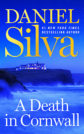
A Death in Cornwall

Now in paperback!

A brutal murder, a missing masterpiece, a mystery only Gabriel Allon can solve …

Art restorer and legendary spy Gabriel Allon has slipped quietly into London to attend a reception at the Courtauld Gallery celebrating the return of a stolen self-portrait by Vincent van Gogh. But when an old friend from the Devon and Cornwall Police seeks his help with a baffling murder investigation, he finds himself pursuing a powerful and dangerous new adversary.

The victim is Charlotte Blake, a celebrated professor of art history from Oxford who spends her weekends in the same seaside village where Gabriel once lived under an assumed identity. Her murder appears to be the work of a diabolical serial killer who has been terrorizing the Cornish countryside. But there are a number of telltale inconsistencies, including a missing mobile phone. And then there is the mysterious three-letter cypher she left behind on a notepad in her study.

Gabriel soon discovers that Professor Blake was searching for a looted Picasso worth more than a $100 million, and he takes up the chase for the painting as only he can—with six Impressionist canvases forged by his own hand and an unlikely team of operatives that includes a world-famous violinist, a beautiful master thief, and a lethal contract killer turned British spy. The result is a stylish and wildly entertaining mystery that moves at lightning speed from the cliffs of Cornwall to the enchanted island of Corsica and, finally, to a breathtaking climax on the very doorstep of 10 Downing Street.

Supremely elegant and suspenseful, A Death in Cornwall is Daniel Silva at his best—a dazzling tale of murder, power, and insatiable greed that will hold readers spellbound until they turn the final page.

Order now:

amazon

bn

ibooks

Buy: HC.com

Share

An excerpt of The Collector

1: Amalfi

It was possible, Sofia Ravello would tell the Carabinieri later that day, to spend the majority of one’s waking hours in another man’s home, to prepare his meals and wash his sheets and sweep his floors, and to know absolutely nothing about him. The officer from the Carabinieri, whose name was Caruso, did not take issue with her statement, for the woman who had shared his bed for the last twenty-five years was at times a perfect stranger to him. He also knew a bit more about the victim than he had thus far revealed to the witness. The man was a murder waiting to happen.

Still, Caruso insisted on a detailed statement, which Sofia was all too happy to provide. Her day began as it always did, at the dreadful hour of 5:00 a.m., with the bleating of her old-fashioned digital alarm clock. Having worked late the previous evening—her employer had entertained—she had granted herself fifteen minutes of additional sleep before rising from her bed. She had brewed a pot of espresso with the Bialetti stovetop, then showered and dressed in her black uniform, all the while asking herself how it was that she, an attractive twenty-four-year-old graduate of the esteemed University of Bologna, worked as a domestic servant in the home of a wealthy foreigner rather than in a sleek office tower in Milan.

The answer was that the Italian economy, reputedly the world’s eighth largest, was gripped by chronically high unemployment, leaving the young and educated little choice but to go abroad in search of work. Sofia, however, was determined to remain in her native Campania, even if it required taking a job for which she was vastly overeducated. The wealthy foreigner paid her well—indeed, she earned more than many of her friends from university—and the work itself was hardly backbreaking. Typically, she spent a not insignificant portion of her day staring at the blue-green waters of the Tyrrhenian Sea or at the paintings in her employer’s magnificent art collection.

Her tiny apartment was in a crumbling building on the Via della Cartiere, in the upper reaches of the town of Amalfi. From there, it was a lemon-scented walk of twenty minutes to the grandly named Palazzo Van Damme. Like most seaside estates on the Costiera Amalfitana, it was hidden behind a high wall. Sofia entered the passcode into the keypad, and the gate slid open. There was a second keypad at the entrance of the villa itself, with a separate passcode. Usually, the alarm system emitted a shrill chirp when Sofia opened the door, but on that morning it was silent. She did not think it odd at the time. Signore Van Damme sometimes neglected to activate the alarm before turning in.

Sofia proceeded directly to the kitchen and engaged in the first task of her day, which was the preparation of Signore Van Damme’s breakfast—a pot of coffee, a pitcher of steamed milk, a bowl of sugar, toasted bread with butter and strawberry preserves. She placed it on a tray and at seven o’clock exactly placed the tray outside his bedroom door. No, she explained to the Carabinieri, she did not enter the room. Nor did she knock. She had made that mistake only once. Signore Van Damme was a precise man who demanded precision from his employees. Needless knocks on doors were discouraged, especially the door to his bedroom.

It was just one of the many rules and edicts that he had transmitted to Sofia at the conclusion of the hour-long interrogation, conducted in his magnificent office, that preceded her hiring. He had described himself as a successful businessman, which he had pronounced beezneezman. The palazzo, he said, served as both his primary residence and the nerve center of a global enterprise. He therefore required a smooth-functioning household, free of unnecessary noise and interruptions, as well as loyalty and discretion on the part of those who worked for him. Gossiping about his affairs, or about the contents of his home, was grounds for immediate dismissal.

Sofia soon determined that her employer was the owner of a Bahamas-based shipping company called LVD Marine Transport— LVD being the acronym of his full name, which was Lukas van Damme. She also deduced that he was a citizen of South Africa who had fled his homeland after the fall of apartheid. There was a daughter in London, an ex-wife in Toronto, and a Brazilian woman named Serafina who dropped in on him from time to time. Otherwise, he seemed unencumbered by human attachments. His paintings were all that mattered to him, the paintings that hung in every room and corridor in the villa. Thus the cameras and the motion detectors, and the nerve-jangling weekly test of the alarm, and the strict rules about gossip and unwanted interruptions.

The sanctity of his office was of paramount concern. Sofia was permitted to enter the room only when Signore Van Damme was present. And she was never, never, to open the door if it was closed. She had intruded on his privacy only once, through no fault of her own. It had happened six months earlier, when a man from South Africa was staying at the villa. Signore Van Damme had requested a snack of tea and biscuits to be delivered to the office, and when Sofia arrived, the door was ajar. That was when she learned of the existence of the hidden chamber, the one behind the movable bookshelves. The one where Signore Van Damme and his friend from South Africa were at that moment excitedly discussing something in their peculiar native language.

Sofia told no one about what she had seen that day, least of all Signore Van Damme. She did, however, commence a private investigation of her employer, an investigation conducted mainly from within the walls of his seaside citadel. Her evidence, based largely on clandestine observation of her subject, led Sofia to the following conclusions—that Lukas van Damme was not the successful businessman he claimed to be, that his shipping company was less than legitimate, that his money was dirty, that he had links to Italian organized crime, and that he was hiding something in his past.

Sofia harbored no such suspicions about the woman who had come to the villa the previous evening—the attractive raven-haired woman, mid-thirties, whom Signore Van Damme had bumped into one afternoon at the terrace bar of the Santa Catarina Hotel. He had given her a rare guided tour of his art collection. Afterward they had dined by candlelight on the terrace overlooking the sea. They were finishing the last of their wine when Sofia and the rest of the staff departed the villa at half past ten. It was Sofia’s assumption that the woman was now upstairs in Signore Van Damme’s bed.

They had left the remnants of their dinner—a few soiled dishes, two garnet-stained wineglasses—outside on the terrace. Neither glass bore any trace of lipstick, which Sofia found unusual. There was nothing else out of the ordinary save for the open door on the villa’s lowest level. The likely culprit, Sofia suspected, was Signore Van Damme himself.

She washed and dried the dishes carefully—a single water mark on a utensil was grounds for a reprimand—and at eight o’clock exactly headed upstairs to collect the breakfast tray from outside Signore Van Damme’s door. Which was when she noticed that it had not been touched. Not his typical routine, she would tell the Carabinieri, but not unprecedented, either.

But when Sofia found the tray undisturbed at nine o’clock, she grew concerned. And when ten o’clock came and went with no sign that Signore Van Damme was awake, her concern turned to alarm. By then two other members of the staff—Marco Mazzetti, the villa’s longtime chef, and groundskeeper Gaspare Bianchi—had arrived. Both were in agreement that the attractive young woman who had dined at the villa the previous evening was the most likely explanation for Signore Van Damme’s failure to rise at his normal hour. Therefore, as men, it was their solemn advice to wait until noon before taking action.

And so Sofia Ravello, twenty-four years old, a graduate of the University of Bologna, took up her bucket and mop and gave the floors of the villa their daily scrubbing—which in turn provided her with the opportunity to take inventory of the paintings and other objets d’art in Signore Van Damme’s remarkable collection. There was nothing out of place, nothing missing, no sign that anything untoward had occurred.

Nothing but the untouched breakfast tray.

It was still there at noon. Sofia’s first knock was tepid and received no answer. Her second, several firm blows delivered with the side of her fist, met with the same result. Finally, she placed a hand on the latch and slowly opened the door. A call to the police proved unnecessary. Her screaming, Marco Mazzetti would later say, could be heard from Salerno to Positano.


2: Cannaregio

Where are you?”

“If I’m not mistaken, I’m sitting next to my wife in the Campo di Ghetto Nuovo.”

“Not physically, darling.” She placed a finger against his forehead. “Here.”

“I was thinking.”

“About what?”

“Nothing at all.”

“That’s not possible.”

“Wherever did you get an idea like that?”

It was a peculiar skill that Gabriel had honed in his youth, the capacity to silence all thoughts and memories, to create a private universe without sound or light or other inhabitants. It was there, in the empty quarter of his subconscious, that finished paintings had appeared to him, dazzling in their execution, revolutionary in their approach, and entirely absent of his mother’s domineering influence. He had only to awaken from his trance and swiftly copy the images onto canvas before they were lost to him. Lately, he had regained the power to clear his mind of sensory clutter—and with it the ability to produce satisfactory original work. Chiara’s body, with its many shapes and curves, was his favorite subject matter.

At present it was pressed tightly against his. The afternoon had turned cold, and a gusty wind was chasing around the perimeter of the campo. He was wearing a woolen overcoat for the first time in many months. Chiara’s stylish suede jacket and chenille scarf were inadequate to the conditions.

“Surely you must have been thinking about something,” she insisted.

“I probably shouldn’t say it aloud. The old ones might never recover.”

The bench upon which they were seated was a few paces from the doorway of the Casa Israelitica di Riposo, a rest home for aged members of Venice’s dwindling Jewish community.

“Our future address,” remarked Chiara, and dragged the tip of her finger through the platinum-colored hair at Gabriel’s temple. It was longer than he had worn it in many years. “Some of us sooner than others.”

“Will you visit me?”

“Every day.”

“And what about them?”

Gabriel directed his gaze toward the center of the broad square, where Irene and Raphael were engaged in a hard-fought contest of some sort with several other children from the sestiere. The apartment buildings behind them, the tallest in Venice, were awash with the sienna light of the declining sun.

“What on earth is the point of the game?” asked Chiara.

“I’ve been asking myself the same thing.”

The competition involved a ball and the campo’s ancient wellhead, but otherwise its rules and scoring system were, to a nonparticipant, indecipherable. Irene seemed to be clinging to a narrow advantage, though her twin brother had organized a furious counterattack among the other players. The boy had been cursed with Gabriel’s face and with his unusually green eyes. He also possessed an aptitude for mathematics and recently had begun working with a private tutor. Irene, a climate alarmist who feared that Venice would soon be swallowed by the sea, had decided that Raphael should use his gifts to save the planet. She had yet to choose a career for herself. For now, she enjoyed nothing more than tormenting her father.

An errant kick sent the ball bounding toward the doorway of the Casa. Gabriel hastened to his feet and with a deft flick of his foot sent the ball back into play. Then, after acknowledging the torpid applause of a heavily armed Carabinieri sentry, he turned to face the seven bas-relief panels of the ghetto’s Holocaust memorial. It was dedicated to the 243 Venetian Jews—including twenty-nine residents of the convalescent home—who were arrested in December 1943, interned in concentration camps, and later deported to Auschwitz. Among them was Adolfo Ottolenghi, the chief rabbi of Venice, who was murdered in September 1944.

The current leader of the Jewish community, Rabbi Jacob Zolli, was a descendant of Sephardic Jews from Andalusia who were expelled from Spain in 1492. His daughter was at that moment seated on a bench in the Campo di Ghetto Nuovo, watching over her two young children. Like the rabbi’s famous son-in-law, she was a former officer of Israel’s secret intelligence service. She now served as the general manager of the Tiepolo Restoration Company, the most prominent such enterprise in the Veneto. Gabriel, an art conservator of international renown, was the director of the firm’s paintings department. Which meant that, for all intents and purposes, he worked for his wife.

“What are you thinking now?” she asked.

 He was wondering, not for the first time, whether his mother had noticed the arrival of several thousand Italian Jews at Auschwitz beginning in the terrible autumn of 1943. Like many survivors of the camps, she had refused to talk about the nightmare world into which she had been cast. Instead, she had recorded her testimony on a few pages of onionskin and locked it away in the file rooms of Yad Vashem. Tormented by the past—and by an abiding guilt over having survived—she had been incapable of showing her only child genuine affection for fear he might be taken from her. She had bequeathed to him her ability to paint, her Berlin-accented German, and perhaps a modicum of her physical courage. And then she had left him. With each passing year, Gabriel’s memories of her grew more diffuse. She was a distant figure standing before an easel, a bandage on her left forearm, her back forever turned. That was the reason Gabriel had momentarily detached himself from his wife and children. He had been trying, without success, to see his mother’s face.

“I was thinking,” he answered, glancing at his wristwatch, “that we ought to be leaving soon.”

“And miss the end of the game? I wouldn’t dream of it. Besides,” added Chiara, “your girlfriend’s concert doesn’t begin until eight.”

It was the annual black-tie gala to benefit the Venice Preservation Society, the London-based nonprofit organization dedicated to the care and restoration of the city’s fragile art and architecture. Gabriel had prevailed upon the renowned Swiss violinist Anna Rolfe, with whom he had once had a brief romantic entanglement, to appear at the fundraiser. She had dined the previous evening at the Allon family’s luxurious four-bedroom piano nobile della loggia overlooking the Grand Canal. Gabriel was only pleased that his wife, who had expertly prepared and served the meal, was once again speaking to him.

She stared straight ahead, a Mona Lisa smile on her face, as he returned to the bench. “Now is the point in the conversation,” she said evenly, “when you remind me that the world’s most famous violinist is no longer your girlfriend.”

“I didn’t think it was necessary.”

“It is.”

“She isn’t.”

Chiara dug a thumbnail into the back of his hand. “And you were never in love with her.”

“Never,” vowed Gabriel.

Chiara released the pressure and gently massaged the crescent-shaped indentation in his skin. “She’s bewitched your children. Irene informed me this morning that she’d like to begin studying the violin.”

“She’s a charmer, our Anna.”

“She’s a train wreck.”

“But an extremely talented one.” Gabriel had attended Anna’s rehearsal earlier that afternoon at Teatro La Fenice, Venice’s historic opera house. He had never heard her play so well.

“It’s funny,” said Chiara, “but she’s not as pretty in person as she is on the covers of her CDs. I suppose photographers use special filters when shooting older women.”

“That was beneath you.”

“I’m allowed.” Chiara issued a dramatic sigh. “Has the train wreck settled on her repertoire?”

“Schumann’s Violin Sonata No. 1 and the D-minor Brahms.”

“You always loved the Brahms, especially the second movement.”

“Who doesn’t?”

“I suppose she’ll make us sit through an encore of the Devil’s Trill.”

“If she doesn’t play it, there’s likely to be a riot.”

Giuseppe Tartini’s technically demanding Violin Sonata in G Minor was Anna’s signature piece.

 “A satanic sonata,” said Chiara. “One can only imagine why your girlfriend would be drawn to a piece like that.”

“She doesn’t believe in the devil. Nor, for that matter, does she believe Tartini’s silly story about hearing the piece in a dream.”

“But you don’t deny that she’s your girlfriend.”

“I believe I’ve been quite clear on that point.”

“And you were never in love with her?” “Asked and answered.”

Chiara leaned her head against Gabriel’s shoulder. “And what about the devil?”

“He’s not my type.”

“Do you believe he exists?”

“Why would you ask such a question?”

“It might explain all the evil in this world of ours.”

She was referring, of course, to the war in Ukraine, now in its eighth month. It had been another dreadful day. More missiles directed against civilian targets in Kyiv. Mass graves with hundreds of bodies discovered in the town of Izium.

“Men rape and steal and murder all on their own,” said Gabriel, his eyes fixed on the Holocaust memorial. “And many of the worst atrocities in human history were committed by those who were motivated not by their devotion to the Evil One but by their faith in God.”

“How’s yours?”

“My faith?” Gabriel said nothing more.

“Perhaps you should talk to my father.”

“I talk to your father all the time.”

“About our work and the children and security at the synagogues, but not about God.”

“Next subject.”

“What were you thinking about a few minutes ago?”

“I was dreaming of your fettuccine and mushrooms.”

“Don’t make a joke about it.”

He answered truthfully.

“You really don’t remember how she looked?”

“At the end. But that wasn’t her.”

“Perhaps this will help.”

Rising, Chiara made her way to the center of the campo and took Irene by the hand. A moment later the child was sitting on her father’s knee, her arms around his neck. “What’s wrong?” she asked as he hurriedly wiped a tear from his cheek.

“Nothing,” he told her. “Nothing at all.”

3: San Polo

By the time Irene returned to the field of play, she had fallen into third place in the rankings. She lodged a formal protest and, receiving no satisfaction, withdrew to the sidelines and watched as the game dissolved into chaos and acrimony. Gabriel attempted to restore order, but to no avail; the contours of the dispute were Arab-Israeli in their complexity. Having no solution at the ready, he suggested a suspension of the tournament until the following afternoon, as the raised voices were liable to disturb the old ones in the Casa. The contestants agreed, and at half past four, peace returned to the Campo di Ghetto Nuovo.

Irene and Raphael, bookbags over their shoulders, scampered across the wooden footbridge on the southern edge of the square, with Gabriel and Chiara a step behind. A few centuries earlier, a Christian guard might have blocked their path, for the light was dwindling and the bridge would soon be sealed for the night. Now they strolled unmolested past gift shops and popular restaurants until they came to a small campooverlooked by a pair of opposing synagogues. Alessia Zolli, wife of the chief rabbi, waited outside the open doorway of the Levantine Synagogue, which served the community in winter. The children embraced their grandmother as though it had been untold months, not three short days, since they had seen her last.

“Remember,” explained Chiara, “they need to be at school tomorrow morning by eight o’clock at the latest.”

“And where is this school of theirs?” asked Alessia Zolli archly. “Is it here in Venice or on the mainland somewhere?” She looked at Gabriel and frowned. “It’s your fault she’s acting like this.”

“What have I done now?”

“I’d rather not say it aloud.” Alessia Zolli stroked her daughter’s riotous dark hair. “The poor thing has suffered enough already.”

“I’m afraid my suffering has only begun.”

Chiara kissed the children and set off with Gabriel toward the Fondamenta Cannaregio. While crossing the Ponte delle Guglie, they agreed that a light snack was in order. The recital was scheduled to conclude at 10:00 p.m., at which point they would repair to the Cipriani for a formal dinner with the director of the Venice Preservation Society and several deep-pocketed donors. Chiara had recently submitted bids to the group for a number of lucrative projects. She was therefore obliged to attend the dinner, even if it meant prolonging her exposure to her husband’s former lover.

“Where shall we go?” she asked.

Gabriel’s favorite bacaro in Venice was All’Arco, but it was near the Rialto Fish Market and their time was running short. “How about Adagio?” he suggested.

“A most unfortunate name for a wine bar, don’t you think?”

It was in the Campo dei Frari, near the foot of the campanile. Inside, Gabriel ordered two glasses of Lombardian white and an assortment of cicchetti. Venetian culinary etiquette demanded that the small, delectable sandwiches be consumed while standing, but Chiara suggested they take a table in the square instead. The previous occupant had left behind a copy of Il Gazzettino. It was filled with photographs of the rich and celebrated, including Anna Rolfe.

“My first evening alone with my husband in months,” said Chiara, folding the newspaper in half, “and I get to spend it with her, of all people.”

“Was it really necessary to further undermine my position with your mother?”

“My mother thinks you walk on water.”

“Only during an acqua alta.”

Gabriel devoured a cicchetto smothered in artichoke hearts and ricotta, and washed it down with some of the vino bianco. It was his second glass of the day. Like most male residents of Venice, he had consumed un’ombra with his midmorning coffee. For the past two weeks, he had been frequenting a bar in Murano, where he was restoring an altarpiece by the Venetian school artist known as Il Pordenone. In his spare time, he was chipping away at two private commissions, as the parsimonious wages paid to him by his wife were insufficient to keep her in the manner to which she was accustomed.

She was pondering the cicchetti, deliberating between the smoked mackerel and the salmon. Both lay on a bed of creamy cheese and were sprinkled with finely chopped fresh herbs. Gabriel settled the matter by snatching the mackerel. It paired beautifully with the flinty Lombardian wine.

“I wanted that one,” said Chiara with a pout, and reached for the salmon. “Have you given any thought as to how you’re going to react tonight when someone asks whether you’re that Gabriel Allon?”

“I was hoping to avoid the issue entirely.”

“How?”

“By being my usual unapproachable self.”

“I’m afraid that’s not an option, darling. It’s a social event, which means you’re expected to be sociable.”

“I’m an iconoclast. I flout convention.”

He was also the world’s most famous retired spy. He had settled in Venice with the approval of the Italian authorities—and with the knowledge of key figures in the Venetian cultural establishment— but his presence in the city was not widely known. For the most part, he dwelled in an uncertain realm between the overt and covert worlds. He carried a weapon, also with the approval of the Italian police, and maintained a pair of false German passports in the event he found it necessary to travel pseudonymously. Otherwise, he had shed the accoutrements of his previous life. Tonight’s gala, for better or worse, would be his coming-out party.

“Don’t worry,” he said. “I’ll be perfectly charming.”

“And if someone asks how it is you know Anna Rolfe?”

“I’ll feign sudden hearing loss and make a dash for the gents.”

“Excellent strategy. But then operational planning always was your strong suit.” A single cicchettoremained. Chiara nudged the plate toward Gabriel. “You eat it. Otherwise, I won’t be able to fit into my dress.”

“Giorgio?”

“Versace.”

“How bad is it?”

“Scandalous.”

“That’s one way to secure funding for our projects.”

“Trust me, it isn’t for the benefit of the donors.”

“You’re a rabbi’s daughter.”

“With a body that won’t quit.”

“Tell me about it,” said Gabriel, and devoured the final cicchetto.

* * * * * * * * * *

It was a pleasant ten-minute walk from the Campo dei Frari to their apartment. In the spacious master bathroom suite, Gabriel quickly showered and then confronted his reflection in the looking glass. He judged his appearance to be satisfactory, though marred by the raised, puckered scar on the left side of his chest. It was approximately half the size of the corresponding scar beneath his left scapula. His two other bullet wounds had healed nicely, as had the bite marks, inflicted by an Alsatian guard dog, on his left forearm. Unfortunately, he couldn’t say the same for the two fractured vertebrae in his lower back.

Faced with the prospect of a two-hour concert followed by a multicourse seated dinner, he swallowed a prophylactic dose of Advil before heading to his dressing room. His Brioni tuxedo, a recent addition to his wardrobe, awaited him. His tailor had not found it unusual when he requested additional room in the waistline; all his trousers were cut in that manner to accommodate a concealed weapon. His preferred handgun was a Beretta 92FS, a sizable firearm that weighed nearly two pounds when fully loaded.

Dressed, Gabriel wedged the gun into place at the small of his back. Then, turning slightly, he examined his appearance a second time. Once again, he was mostly pleased by what he saw. The elegantly cut Brioni jacket rendered the weapon all but invisible. Moreover, the fashionable double vent would likely reduce his draw time, which, despite his many bodily injuries, remained lightning-strike fast.

He strapped a Patek Philippe timepiece to his wrist and, switching off the lights, went into the sitting room to await the appearance of his wife. Yes, he thought as he surveyed his sweeping view of the Grand Canal, he was that Gabriel Allon. Once he had been Israel’s angel of vengeance. Now he was the director of the paintings department at the Tiepolo Restoration Company. Anna was someone he had encountered along the way. If the truth be told, he had tried to love her, but he wasn’t capable of it. Then he met a beautiful young girl from the ghetto, and the girl saved his life.

* * * * * * * * * *

The deep thigh slit and absence of shoulder straps notwithstanding, Chiara’s black Versace evening gown was by no means scandalous. Her shoes, however, were definitely a problem. Stiletto-heeled Ferragamo pumps, they added ten and a half desirable centimeters to her already statuesque frame. She gave Gabriel a discreet downward glance as they approached the pack of press photographers gathered outside Teatro La Fenice.

“Are you sure you’re ready for this?” she asked through a frozen smile.

“As ready as I’ll ever be,” he answered as a barrage of brilliant white flashes dazzled his eyes.

They passed beneath the blue-and-yellow Ukrainian flag hanging from the theater’s portico and entered the multilingual din of the crowded foyer. A few heads turned, but Gabriel received no excessive scrutiny. For the moment, at least, he was just another middleaged man of uncertain nationality with a beautiful young woman on his arm.

She squeezed his hand reassuringly. “That wasn’t so bad, was it?”

“The night is young,” murmured Gabriel, and surveyed the shimmering room around him. Faded aristocrats, magnates and moguls, a smattering of important Old Master dealers. Tubby Oliver Dimbleby, never one to miss a good party, had made the trip down from London. He was comforting a French collector of note who had been burned to a crisp by a recent forgery scandal, the one involving the late Phillip Somerset and his fraudulent art-based hedge fund, Masterpiece Art Ventures.

“Did you know he was coming?” asked Chiara.

“Oliver? I heard an alarming report to that effect from one of my many sources in the London art world. He’s under strict instructions to give us a wide berth.”

“What happens if he can’t help himself?”

“Pretend he has leprosy and walk away as quickly as possible.”

A reporter approached Oliver and solicited a comment, about what, heaven only knew. Several other journalists were gathered around Lorena Rinaldi, the minister of culture in Italy’s new coalition government. Like the prime minister, Rinaldi belonged to a far-right political party that could trace its lineage to the National Fascists of Benito Mussolini.

“At least she didn’t wear her armband,” said a male voice at Gabriel’s shoulder. It belonged to Francesco Tiepolo, owner of the prominent restoration company that bore his family’s famous name. “I only wish she’d had the decency not to show her photogenic face at an event like this.”

“Evidently, she’s a great admirer of Anna Rolfe.”

“Who isn’t?”

“Me,” said Chiara.

Francesco smiled. An enormous, bearlike man, he bore an uncanny resemblance to Luciano Pavarotti. Even now, more than a decade after the tenor’s death, autograph-seeking tourists flocked to Francesco on the streets of Venice. If he was feeling mischievous, which was usually the case, he indulged them.

“Did you see the minister’s interview on RAI last night?” he asked. “She vowed to purge Italian culture of wokeism. For the life of me, I hadn’t a clue what she was talking about.”

“Neither did she,” said Gabriel. “It was just something she overheard during her most recent visit to America.”

“We should probably take the opportunity to pay our respects.”

“Why on earth would we do that?”

“Because for the foreseeable future, Lorena Rinaldi will have the final say over all major restoration projects here in Venice, regardless of who’s footing the bill.”

Just then the lights in the foyer dimmed and a chime sounded. “Saved by the bell,” said Gabriel, and escorted Chiara into the theater. She managed to conceal her displeasure when settling into her VIP seat in the first row.

“How lovely,” she said. “I’m only sorry we’re not closer to the stage.”

Gabriel sat down next to her and made a small adjustment to the position of the Beretta. At length he said, “I think that went rather well, don’t you?”

“The night is young,” replied Chiara, and dug a thumbnail into the back of his hand.

Share

The Collector

In the electrifying new thriller from #1 New York Times bestselling author Daniel Silva, Gabriel Allon undertakes a search for a stolen Vermeer masterpiece and uncovers a conspiracy that could bring the world to the brink of nuclear Armageddon.

On the morning after the Venice Preservation Society’s annual black-tie gala, art restorer and legendary spy Gabriel Allon enters his favorite coffee bar on the island of Murano to find General Cesare Ferrari, the commander of the Art Squad, eagerly awaiting his arrival. The Carabinieri have made a startling discovery in the Amalfi villa of a murdered South African shipping tycoon—a secret vault containing an empty frame and stretcher matching the dimensions of the world’s most valuable missing painting. General Ferrari asks Gabriel to quietly track down the artwork before the trail goes cold.

“Isn’t that your job?”

“Finding stolen paintings? Technically speaking, yes. But you’re much better at it than we are.”

The painting in question is The Concert by Johannes Vermeer, one of thirteen works of art stolen from Boston’s Isabella Stewart Gardner Museum in 1990. With the help of a most unlikely ally, a beautiful Danish computer hacker and professional thief, Gabriel soon discovers that the painting has changed hands as part of an illicit billion-dollar business deal involving a man code-named the Collector, an energy executive with close ties to the highest levels of Russian power.

The missing masterpiece is the lynchpin of a conspiracy that if successful, could plunge the world into a conflict of apocalyptic proportions. To foil the plot, Gabriel must carry out a daring heist of his own, with millions of lives hanging in the balance.

Elegant, meticulously plotted, and filled with a cast of unforgettable characters, The Collector moves swiftly from the graceful canals of Venice to the windswept coast of northern Denmark to CIA headquarters in Langley, Virginia—and, finally, to a heart-pounding climax in Russia as current as tomorrow’s headlines.

This extraordinary novel—wildly entertaining, deeply illuminative, with flashes of wry humor—demonstrates why Daniel Silva is the unrivaled master of international intrigue and suspense, and “quite simply the best” (Kansas City Star).


Order Today:

amazon

bn

ibooks

Buy: HC.com

Share

Praise for Portrait of an Unknown Woman

“Another scorching read from the grand master of gripping spy thrillers…Each new offering is fresh, exciting, and captures the imagination of the reader. He has a gift for pulling one in and keeping them turning pages late into the night. I know because I’m one of those readers. To put it another way, in my mind, Daniel Silva is to the literary world a bit like what Mick Jagger is to rock music; he is timeless.”
The Sunday Telegraph

“Reading the latest Gabriel Allon is like visiting an old friend. Another tour de force by the master.”
— Bob Woodward

“Silva can really write. The bastard.”
— James Patterson

“A smart summer escape.”
— Kirkus, starred review

“The scheme is a doozy, but the real draw here is the meticulously detailed look at the art of the forger.”
— Booklist, starred review

“Few reading experiences bring me more joy than opening up the new Gabriel Allon novel every summer.”
— CrimeRead

“Silva always turns out a masterpiece.”
OKC Friday
Share

Excerpt

1

Mason’s Yard

On any other day, Julian would have tossed it straight into the rubbish bin. Or better yet, he would have fed it into Sarah’s professional-grade shredder. During the long, bleak winter of the pandemic, when they had sold but a single painting, she had used the contraption to mercilessly cull the gallery’s swollen archives. Julian, who was traumatized by the project, feared that when Sarah had no more needless sales records and shipping documents to destroy, it would be his turn in the machine. He would leave this world as a tiny parallelogram of yellowed paper, carted off to the recycler with the rest of the week’s debris. In his next life he would return as an environmentally friendly coffee cup. He supposed, not without some justification, there were worse fates.

The letter had arrived at the gallery on a rainy Friday in late March, addressed to M. Julian Isherwood. Sarah had nevertheless opened it; a former clandestine officer of the Central Intelligence Agency, she had no qualms about reading other people’s mail. Intrigued, she had placed it on Julian’s desk along with several inconsequential items from the morning’s post, the only sort of correspondence she typically allowed him to see. He read it for the first time while still clad in his dripping mackintosh, his plentiful gray locks in windblown disarray. The time was half past eleven, which in itself was noteworthy. These days Julian rarely set foot in the gallery before noon. It gave him just enough time to make a nuisance of himself before embarking on the three-hour period of his day he reserved for his luncheon.

His first impression of the letter was that its author, a certain Madame Valerie Bérrangar, had the most exquisite handwriting he had seen in ages. It seemed she had noticed the recent story in Le Monde concerning the multimillion-pound sale by Isherwood Fine Arts of Portrait of an Unknown Woman, oil on canvas, 115 by 92 centimeters, by the Flemish Baroque painter Anthony van Dyck. Apparently, Madame Bérrangar had concerns about the transaction—concerns she wished to discuss with Julian in person, as they were legal and ethical in nature. She would be waiting at Café Ravel in Bordeaux at four o’clock on Monday afternoon. It was her wish that Julian come alone.

“What do you think?” asked Sarah.

“She’s obviously mad as a hatter.” Julian displayed the handwritten letter, as though it proved his point. “How did it get here? Carrier pigeon?”

“DHL.”

“Was there a return address on the waybill?”

“She used the address of a DHL Express in Saint-Macaire. It’s about fifty kilometers—”

“I know where Saint-Macaire is,” said Julian, and immediately regretted his abrupt tone. “Why do I have this terrible feeling I’m being blackmailed?”

“She doesn’t sound like a blackmailer to me.”

“That’s where you’re wrong, petal. All the blackmailers and extortionists I’ve ever met had impeccable manners.”

“Then perhaps we should ring the Met.”

“Involve the police? Have you taken leave of your senses?”

“At least show it to Ronnie.”

Ronald Sumner-Lloyd was Julian’s pricey Berkeley Square attorney. “I have a better idea,” he said.

It was then, at 11:36 a.m., with Sarah looking on in disapproval, that Julian dangled the letter over his ancient metal dustbin, a relic of the gallery’s glory days, when it was located on stylish New Bond Street—or New Bondstrasse, as it had been known in some quarters of the trade. Try as he might, he couldn’t seem to let the damn thing slip from his fingers. Or perhaps, he thought later, it was Madame Bérrangar’s letter that had clung to him.

He set it aside, reviewed the remainder of the morning post, returned a few phone calls, and interrogated Sarah on the details of a pending sale. Then, having nothing else to do, he headed off to the Dorchester for lunch. He was accompanied by an employee of a venerable London auction house, female, of course, recently divorced, no children, far too young but not inappropriately so. Julian astonished her with his knowledge of Italian and Dutch Renaissance painters and regaled her with tales of acquisitional derring-do. It was a character he had been playing to modest acclaim for longer than he cared to remember. He was the incomparable Julian Isherwood, Julie to his friends, Juicy Julie to his partners in the occasional crime of drink. He was loyal as the day was long, trusting to a fault, and English to the core. English as high tea and bad teeth, as he was fond of saying. And yet, were it not for the war, he would have been someone else entirely.

Returning to the gallery, he found that Sarah had adhered a fuchsia-colored sticky note to Madame Bérrangar’s letter, advising him to reconsider. He read it a second time, slowly. Its tone was as formal as the linenlike stationery upon which it was written. Even Julian had to admit she sounded entirely reasonable and not at all like an extortionist. Surely, he thought, there would be no harm in merely listening to what she had to say. If nothing else, the journey would provide him with a much-needed respite from his crushing workload at the gallery. Besides, the weather forecast for London called for several days of nearly uninterrupted cold and rain. But in the southwest of France, it was springtime already.

* * * * *

Among the first actions that Sarah had taken after coming to work at the gallery was to inform Ella, Julian’s stunning but useless receptionist, that her services were no longer required. Sarah had never bothered to hire a replacement. She was more than capable, she said, of answering the phone, returning the emails, keeping the appointment book, and buzzing visitors upstairs when they presented themselves at the perpetually locked door in Mason’s Yard.

She drew a line, however, at making Julian’s travel arrangements, though she consented to peer over his shoulder while he performed the chore himself, if only to make certain he didn’t mistakenly book passage on the Orient Express to Istanbul rather than the Eurostar to Paris. From there, it was a scant two hours and fourteen minutes by TGV to Bordeaux. He successfully purchased a first-class ticket and then reserved a junior suite at the InterContinental—for two nights, just to be on the safe side.

The task complete, he repaired to the bar at Wiltons for a drink with Oliver Dimbleby and Roddy Hutchinson, widely regarded as London’s most disreputable art dealers. One thing led to another, as was usually the case when Oliver and Roddy were involved, and it was after 2:00 a.m. by the time Julian finally toppled into his bed. He spent Saturday tending to his hangover and devoted much of Sunday to packing a bag. Once he would have thought nothing about hopping on the Concorde with only an attaché case and a pretty girl. But suddenly the preparations for a jaunt across the English Channel required all of his powers of concentration. He supposed it was but another unwanted consequence of growing old, like his alarming absentmindedness, or the strange sounds he emitted, or his seeming inability to cross a room without crashing into something. He kept a list of self-deprecating excuses at the ready to explain his humiliating clumsiness. He had never been the athletic type. It was the bloody lamp’s fault. It was the end table that had assaulted him.

He slept poorly, as was frequently the case the night before an important journey, and awoke with a nagging sensation that he was about to make yet another in a long series of dreadful mistakes. His spirits lifted, however, as the Eurostar emerged from the Channel Tunnel and surged across the gray-green fields of the Pas-de-Calais toward Paris. He rode the métro from the Gare du Nord to the Gare Montparnasse and enjoyed a decent lunch in the buffet car of the TGV as the light beyond his window gradually took on the quality of a Cézanne landscape.

He recalled with startling clarity the instant he had seen it for the first time, this dazzling light of the south. Then, as now, he was riding a train bound from Paris. His father, the German Jewish art dealer Samuel Isakowitz, sat on the opposite side of the compartment. He was reading a day-old newspaper, as though nothing were out of the ordinary. Julian’s mother, her hands knotted atop her knees, was staring into space, her face without expression.

Hidden in the luggage above their heads, rolled in protective sheets of paraffin paper, were several paintings. Julian’s father had left a few lesser works behind at his gallery on the rue la Boétie, in the elegant Eighth Arrondissement. The bulk of his remaining inventory was already hidden in the château he had rented east of Bordeaux. Julian remained there until the terrible summer of 1942, when a pair of Basque shepherds smuggled him over the Pyrenees to neutral Spain. His parents were arrested in 1943 and deported to the Nazi extermination center at Sobibor, where they were gassed upon arrival.

Bordeaux’s Saint-Jean station lay hard against the river Garonne, at the end of the Cours de la Marne. The departure board in the refurbished ticket hall was a modern device—gone was the polite applause of the updates—but the Beaux-Arts exterior, with its two prominent clocks, was as Julian remembered it. So, too, were the honey-colored Louis XV buildings lining the boulevards along which he sped in the back of a taxi. Some of the facades were so bright they seemed to glow with an interior light source. Others were dimmed by grime. It was the porous quality of the local stone, his father had explained. It absorbed soot from the air like a sponge and, like oil paintings, required occasional cleaning.

By some miracle, the hotel hadn’t misplaced his reservation. After pressing an overly generous tip into the palm of the immigrant bellman, he hung up his clothes and withdrew to the bathroom to do something about his ragged appearance. It was gone three o’clock when he capitulated. He locked his valuables in the room safe and debated for a moment whether to bring Madame Bérrangar’s letter to the café. An inner voice—his father’s, he supposed—advised him to leave it behind, concealed within his luggage.

The same voice instructed him to bring along his attaché case, as it would confer upon him a wholly unwarranted patina of authority. He carried it along the Cours de l’Intendance, past a parade of exclusive shops. There were no motorcars, only pedestrians and bicyclists and sleek electric trams that slithered along their steel tracks in near silence. Julian proceeded at an unhurried pace, the attaché case in his right hand, his left lodged in his pocket, along with the card key for his hotel room.

He followed a tram around a corner and onto the rue Vital Carles. Directly before him rose the twin Gothic spires of Bordeaux Cathedral. It was surrounded by the scrubbed paving stones of a broad square. Café Ravel occupied the northwest corner. It was not the sort of place frequented by most Bordelais, but it was centrally located and easily found. Julian supposed that was the reason Madame Bérrangar had chosen it.

The shadow cast by the Hôtel de Ville darkened most of the café’s tables, but the one nearest the cathedral was sunlit and unoccupied. Julian sat down and, placing his attaché case at his feet, took stock of the other patrons. With the possible exception of the man sitting three tables to his right, none appeared to be French. The rest were tourists, primarily of the package variety. Julian was the café’s sore thumb; in his flannel trousers and gray sport jacket, he looked like a character from an E. M. Forster novel. At least she would have no difficulty spotting him.

He ordered a café crème before coming to his senses and requesting a half bottle of white Bordeaux instead, brutally cold, two glasses. The waiter delivered it as the bells of the cathedral tolled four o’clock. Julian reflexively smoothed the front of his jacket as his eyes searched the square. But at four thirty, as the lengthening shadows crept across his table, Madame Valerie Bérrangar was still nowhere to be found.


* * * * *

By the time Julian finished the last of the wine, it was approaching five o’clock. He paid the bill in cash and, taking up his attaché case, moved from table to table like a beggar, repeating Madame Bérrangar’s name and receiving only blank stares in return.

The interior of the café was deserted save the man behind the old zinc-topped bar. He had no recollection of anyone named Valerie Bérrangar but suggested Julian leave his name and phone number. “Isherwood,” he said when the barman squinted at the spidery lines scrawled on the back of a napkin. “Julian Isherwood. I’m staying at the InterContinental.”

Outside, the bells of the cathedral were tolling once more. Julian followed an earthbound pigeon across the paving stones of the square, then turned into the rue Vital Carles. He realized after a moment that he was berating himself for having come all the way to Bordeaux for no reason—and for having permitted this woman, this Madame Bérrangar, to stir up unwanted memories of the past.

“How dare she?” he shouted, startling a poor passerby. It was another unsettling development brought about by his advancing years, his recent propensity to say aloud the private thoughts running through his head.

At last the bells fell silent, and the pleasing low murmur of the ancient city returned. An electric tram glided past, sotto voce. Julian, his anger beginning to subside, paused outside a small art gallery and regarded with professional dismay the Impressionist-inspired paintings in the window. He was aware, vaguely, of the sound of an approaching motorbike. It was no scooter, he thought. Not with an engine note like that. It was one of those low-slung beasts ridden by men who wore special wind-resistant costumes.

The gallery’s owner appeared in the doorway and invited Julian inside for a closer look at his inventory. Declining, he continued along the street in the direction of his hotel, the attaché case, as usual, in his left hand. The volume of the motorcycle’s engine had increased sharply and was a half step higher in register. Suddenly Julian noticed an elderly woman—Madame Bérrangar’s doppelgänger, no doubt— pointing at him and shouting something in French he couldn’t make out.

Fearing he had once again uttered something inappropriate, he turned in the opposite direction and saw the motorcycle bearing down on him, a gloved hand reaching toward his attaché case. He drew the bag to his chest and pirouetted out of the machine’s path, directly into the cold metal of a tall, immovable object. As he lay on the pavement, his head swimming, he saw several faces hovering over him, each wearing an expression of pity. Someone suggested calling an ambulance; someone else, the gendarmes. Humiliated, Julian reached for one of his ready-made excuses. It wasn’t his fault, he explained. The bloody lamppost attacked him.

2

Venezia

It was Francesco Tiepolo, while standing atop Tintoretto’s grave in the church of the Madonna dell’Orto, who had assured Gabriel that one day he would return to Venice. The remark was not idle speculation, as Gabriel discovered a few nights later, during a candlelit dinner with his beautiful young wife on the island of Murano. He offered several considered objections to the scheme, without conviction or success, and in the aftermath of an electrifying conclave in Rome, the deal was concluded. The terms were equitable, everyone was happy. Chiara especially. As far as Gabriel was concerned, nothing else mattered.

Admittedly, it all made a great deal of sense. After all, Gabriel had served his apprenticeship in Venice and had pseudonymously restored many of its greatest masterpieces. Still, the arrangement was not without its potential pitfalls, including the agreed-upon organizational chart of the Tiepolo Restoration Company, the most prominent such enterprise in the city. Under the terms of their arrangement, Francesco would remain at the helm until his retirement, when Chiara, who was Venetian by birth, would assume control. In the meantime she would occupy the position of general manager, with Gabriel serving as the director of the paintings department. Which meant that, for all intents and purposes, he would be working for his wife.

He approved the purchase of a luxurious four-bedroom piano nobile overlooking the Grand Canal in San Polo but otherwise left the planning and execution of the pending move in Chiara’s capable hands. She oversaw the apartment’s renovation and decoration longdistance from Jerusalem while Gabriel served out the remainder of his term at King Saul Boulevard. The final months passed quickly— there always seemed to be one more meeting to attend, one more crisis to avert—and in late autumn he embarked on what a noted columnist at Haaretz described as “the long goodbye.” The events ranged from cocktail receptions and tribute-laden dinners to a blowout at the King David Hotel attended by espiocrats from around the globe, including the powerful chief of the Jordanian Mukhabarat and his counterparts from Egypt and the United Arab Emirates. Their presence was proof that Gabriel, who had cultivated security partnerships across the Arab world, had left an indelible mark on a region torn by decades of war. For all its problems, the Middle East had changed for the better on his watch.

Reclusive by nature and uncomfortable in crowded settings, he found all the attention unbearable. Indeed, he much preferred the quiet evenings he passed with the members of his senior staff, the men and women with whom he had carried out some of the most storied operations in the history of a storied service. He begged Uzi Navot for forgiveness. He dispensed career and marital advice to Mikhail Abramov and Natalie Mizrahi. He shed tears of laughter while telling uproarious tales about the three years he had spent living underground in Western Europe with the hypochondriacal Eli Lavon. Dina Sarid, archivist of Palestinian and Islamic terrorism, beseeched Gabriel to sit for a series of exit interviews so that she might record his exploits in an unclassified official history. Not surprisingly, he declined. He had no wish to dwell on the past, he told her. Only the future.

Two officers from his senior staff, Yossi Gavish of Research and Yaakov Rossman of Special Ops, were regarded as his most likely successors. But both were overjoyed to learn that Gabriel had chosen Rimona Stern, the chief of Collections, instead. On a blustery Friday afternoon in mid-December, she became the first female director-general in the history of the Office. And Gabriel, after affixing his signature to a stack of documents regarding his modest pension and the dire consequences he would suffer if he ever divulged any of the secrets lodged in his head, officially became the world’s most famous retired spy. His ritual disrobing complete, he toured King Saul Boulevard from top to bottom, shaking hands, drying tear-streaked cheeks. He assured his heartbroken troops that they had not seen the last of him, that he intended to keep his hand in the game. No one believed him.

That evening he attended one final gathering, this time on the shore of the Sea of Galilee. Unlike its predecessors, the encounter was at times contentious, though in the end a kind of peace was made. Early the next morning he made a pilgrimage to his son’s grave on the Mount of Olives—and to the psychiatric hospital near the old Arab village of Deir Yassin where the child’s mother resided in a prison of memory and a body ravaged by fire. With Rimona’s blessing, the Allon family flew to Venice aboard the Office’s Gulfstream, and at three that afternoon, after a windblown ride across the laguna in a gleaming wooden water taxi, they arrived at their new home.

Gabriel headed directly to the large light-filled room he had claimed as his studio and found an antique Italian easel, two halogen work lamps, and an aluminum trolley filled with Winsor & Newton sable-hair brushes, pigment, medium, and solvent. Absent was his old paint-smudged CD player. In its place was a British-made audio system and a pair of floor-standing speakers. His extensive music collection was organized by genre, composer, and artist.

“What do you think?” asked Chiara from the doorway.

“Bach’s violin concertos are in the Brahms section. Otherwise, it’s absolutely—”

“Amazing, I think.”

“How did you possibly manage all this from Jerusalem?” She waved a hand dismissively.

“Is there any money left?”

“Not much.”

“I’ll line up a few private commissions after we get settled.”

“I’m afraid that’s out of the question.”

“Why?”

“Because you shall do no work whatsoever until you’ve had a chance to properly rest and recuperate.” She handed him a sheet of paper. “You can start with this.”

“A shopping list?”

“There’s no food in the house.”

“I thought I was supposed to be resting.”

“You are.” She smiled. “Take your time, darling. Enjoy doing something normal for a change.”

The closest supermarket was the Carrefour near the Frari church. Gabriel’s stress level seemed to subside a notch with each item he placed in his lime-green basket. Returning home, he watched the latest news from the Middle East with only passing interest while Chiara, singing softly to herself, prepared dinner in the apartment’s showplace of a kitchen. They finished the last of the Barbaresco upstairs on the roof terrace, huddled closely together against the cold December air. Beneath them, gondolas swayed at their moorings. Along the gentle curve of the Grand Canal, the Rialto Bridge was awash with floodlight.

“And if I were to paint something original?” asked Gabriel. “Would that constitute work?”

“What did you have in mind?”

“A canal scene. Or perhaps a still life.”

“Still life? How boring.”

“In that case, how about a series of nudes?”

Chiara raised an eyebrow. “I suppose you’ll need a model.”

“Yes,” said Gabriel, tugging at the zipper of her coat. “I suppose I will.”

* * * * *

Chiara waited until January before taking up her new position at Tiepolo Restoration. The firm’s warehouse was on the mainland, but its business offices were located on the fashionable Calle Larga XXII Marzo in San Marco, a ten-minute commute by vaporetto. Francesco introduced her to the city’s artistic elite and dropped cryptic hints that a succession plan had been put in place. Someone leaked the news to Il Gazzettino, and in late February a brief article appeared in the newspaper’s Cultura section. It referred to Chiara by her maiden name, Zolli, and pointed out that her father was the chief rabbi of Venice’s dwindling Jewish community. With the exception of a few nasty reader comments, mainly from the populist far right, the reception was favorable.

The story contained no mention of a spouse or domestic partner, only two children, twins apparently, of indeterminate age and gender. At Chiara’s insistence, Irene and Raphael were enrolled in the neighborhood scuola elementare rather than one of Venice’s many private international schools. Perhaps fittingly, theirs was named for Bernardo Canal, the father of Canaletto. Gabriel deposited them at the entrance at eight o’clock each morning and collected them again at half past three. Along with a daily visit to the Rialto Market, where he fetched the ingredients for the family dinner, the two appointments represented the sum total of his domestic responsibilities.

Forbidden by Chiara to work, or to even set foot in the offices of Tiepolo Restoration, he devised ways of filling his vast reservoir of available time. He read dense books. He listened to his music collection on his new sound system. He painted his nudes—from memory, of course, for his model was no longer available to him. Occasionally she came to the apartment for “lunch,” which was the way they referred to the ravenous sessions of midday lovemaking in their glorious bedroom overlooking the Grand Canal.

Mainly, he walked. Not the punishing clifftop hikes of his Cornish exile, but aimless Venetian wanderings conducted in the unhurried manner of a flaneur. If he were so inclined, he would drop in on a painting he had once restored, if only to see how his work had held up. Afterward, he might slip into a bar for a coffee and, if it was cold, a small glass of something stronger to warm his bones. More often than not, one of the other patrons would attempt to engage him in conversation about the weather or the news of the day. Where once he would have spurned their overtures, he now reciprocated, in perfect if slightly accented Italian, with a witticism or keen observation of his own.

One by one, his demons took flight, and the violence of his past, the nights of blood and fire, receded from his thoughts and dreams. He laughed more easily. He allowed his hair to grow. He acquired a new wardrobe of elegant handmade trousers and cashmere jackets befitting a man of his position. Before long he scarcely recognized the figure he glimpsed each morning in the mirror of his dressing room. The transformation, he thought, was nearly complete. He was no longer Israel’s avenging angel. He was the director of the paintings department of the Tiepolo Restoration Company. Chiara and Francesco had given him a second chance at life. This time, he vowed, he would not make the same mistakes.

In early March, during a bout of drenching rains, he asked Chiara for permission to begin working. And when she once again denied his request, he ordered a twelve-meter Bavaria C42 yacht and spent the next two weeks preparing a detailed itinerary for a summer sailing trip around the Adriatic and Mediterranean. He presented it to Chiara over a particularly satisfying lunch in the bedroom of their apartment.

“I have to say,” she murmured approvingly, “that was one of your better performances.”

“It must be all the rest I’ve been getting.”

“Have you?”

“I’m so rested I’m on the verge of becoming bored stiff.”

“Then perhaps there’s something we can do to make your afternoon a bit more interesting.”

“I’m not sure that would be possible.”

“How about a drink with an old friend?”

“Depends on the friend.”

“Julian rang me at the office as I was leaving. He said he was in Venice and was wondering whether you had a minute or two to spare.”

“What did you say to him?”

“That you would meet him for a drink after you were finished having your way with me.”

“Surely you left the last bit out.”

“I don’t believe so, no.”

“What time is he expecting me?”

“Three o’clock.”

“What about the children?”

“Don’t worry, I’ll cover for you.” She glanced at her wristwatch. “The question is, what shall we do until then?”

“Since you’re not wearing any clothing . . .”

“Yes?”

“Why don’t you come to my studio and pose for me?”

“I have a better idea.”

“What’s that?”

Chiara smiled.

“Dessert.”

3

Harry’s Bar

Standing beneath a cascade of scalding water, drained of desire, Gabriel rinsed the last traces of Chiara from his skin. His clothing lay scattered at the foot of their unmade bed, wrinkled, a button ripped from his shirt. He selected clean apparel from his walk-in closet, dressed quickly, and headed downstairs. As luck would have it, a Number 2 was nudging against the pier of the San Tomà stop. He rode it to San Marco and at three o’clock sharp entered the intimate confines of Harry’s Bar.

Julian Isherwood was pondering his mobile phone at a corner table, a half-drunk Bellini hovering beneath his lips. When Gabriel joined him, he looked up and frowned, as though annoyed by an unwanted intrusion. Finally his features settled into an expression of recognition, followed by profound approval.

“I guess Chiara wasn’t joking about how you two spend your lunch hour.”

“This is Italy, Julian. We take at least two hours for lunch.”

“You look thirty years younger. What’s your secret?”

“Two-hour lunches with Chiara.”

Julian’s eyes narrowed. “But it’s more than that, isn’t it? You look as though you’ve been…” His voice trailed off.

“What, Julian?”

“Restored,” he answered after a moment. “You’ve removed the dirty varnish and repaired the damage. It’s almost as if none of it ever happened.”

“It didn’t.”

“That’s funny, because you bear a vague resemblance to a morose-looking boy who wandered into my gallery about a hundred years ago. Or was it two hundred?”

“That never happened, either. At least not officially,” added Gabriel. “I buried your voluminous file in the deepest reaches of Registry on my way out the door of King Saul Boulevard. Your ties to the Office are now formally severed.”

“But not to you, I hope.”

“I’m afraid you’re stuck with me.” A waiter delivered two more Bellinis to their table. Gabriel raised his glass in salutation. “So what brings you to Venice?”

“These olives.” Julian plucked one from the bowl at the center of the table and with a flourish popped it into his mouth. “They’re dangerously good.”

He was dressed in one of his Savile Row suits and a blue dress shirt with French cuffs. His gray hair was in need of a trimming, but then it usually was. All things considered, he looked rather well, except for the plaster adhered to his right cheek, perhaps two or three centimeters beneath his eye.

Cautiously Gabriel asked how it got there.

“I had an argument with my razor this morning, and I’m afraid the razor got the better of me.” Julian fished another olive from the bowl. “So what do you do with yourself when you’re not lunching with your beautiful wife?”

“I spend as much time as possible with my children.”

“Are they bored with you yet?”

“They don’t appear to be.”

“Don’t worry, they will be soon.”

“Spoken like a lifelong bachelor.”

“It has its advantages, you know.”

“Name one.”

“Give me a minute, I’ll think of something.” Julian finished his first Bellini and started in on the second. “And what about your work?” he asked.

“I painted three nudes of my wife.”

“Poor you. Any good?”

“Not bad, actually.”

“Three original Allons would fetch a great deal of money on the open market.”

“They’re for my eyes only, Julian.”

Just then the door opened, and in walked a handsome dark-haired Italian in slim-fitting trousers and a quilted Barbour jacket. He sat down at a nearby table and in the accent of a southerner ordered a Campari and soda.

Julian was contemplating the bowl of olives. “Cleaned anything lately?”

“My entire CD collection.”

“I was referring to paintings.”

“The Tiepolo Restoration Company was recently awarded a contract by the Culture Ministry to restore Giulia Lama’s four evangelists in the church of San Marziale. Chiara says that if I continue to behave myself, she’ll let me do the work.”

“And how much will the Tiepolo Restoration Company receive in compensation?”

“Don’t ask.”

“Perhaps I could tempt you with something a bit more lucrative.”

“Such as?”

“A lovely Grand Canal scene that you could knock into shape in a week or two while gazing upon the real thing from your studio window.”

“Attribution?”

“Northern Italian School.”

“How precise,” remarked Gabriel.

The “school” attribution was the murkiest designation for the origin of an Old Master painting. In the case of Julian’s canal scene, it meant that the work had been produced by someone working somewhere in the north of Italy, at some point in the distant past. The designation “by” occupied the opposite end of the spectrum. It declared that the dealer or auction house selling the painting was certain it had been produced by the artist whose name was attached to it. Between them lay a subjective and oftentimes speculative series of categories ranging from the respectable “workshop of” to the ambiguous “after,” each designed to whet the appetite of potential buyers while at the same time shielding the seller from legal action.

“Before you turn up your nose at it,” said Julian, “you should know that I’ll pay you enough to cover the cost of that new sailboat of yours. Two sailboats, in fact.”

“It’s too much for a painting like that.”

“You funneled a great deal of business my way while you were running the Office. It’s the least I can do.”

“It wouldn’t be ethical.”

“I’m an art dealer, petal. If I was interested in ethics, I’d be working for Amnesty International.”

“Have you run it past your partner?”

“Sarah and I are hardly partners,” said Julian. “My name might still be on the door, but these days I am largely underfoot.” He smiled. “I suppose I have you to thank for that, too.”

It was Gabriel who had arranged for Sarah Bancroft, a veteran covert operative and overeducated art historian, to take over day-to-day control of Isherwood Fine Arts. He had also played a facilitating role in her recent decision to wed. For reasons having to do with her husband’s complicated past, the ceremony was a clandestine affair, held at an MI6 safe house in the countryside of Surrey. Julian had been one of the few invited guests in attendance. Gabriel, who was late in arriving from Tel Aviv, had given away the bride.

“So where’s this masterpiece of yours?” he asked.

“Under armed guard in London.”

“Is there a deadline?”

“Have you another pressing commission?”

“That depends.”

“On what?”

“How you answer my next question.”

“You want to know what really happened to my face?”

Gabriel nodded. “The truth this time, Julian.”

“I was attacked by a lamppost.”

“Another one?”

“I’m afraid so.”

“Please tell me it was a foggy night in London.”

“Actually, it was yesterday afternoon in Bordeaux. I went there at the invitation of a woman named Valerie Bérrangar. She said she wanted to tell me something about a painting I sold not long ago.”

“Not the Van Dyck?”

“Yes, that’s the one.”

“Is there a problem?”

“I wouldn’t know. You see, Madame Bérrangar died in an automobile accident on the way to our meeting.”

“And the incident involving the lamppost?” asked Gabriel.

“Two men on a motorcycle tried to steal my briefcase as I was walking back to my hotel. At least I think that’s what they were doing. For all I know,” said Julian, “they were trying to kill me, too.”

Share